A critical analysis of the value of prototyping as part of a circular design process in the South African built environment
Celine Nel · University of Pretoria · 2024 · Research report (DIT 801)
In 2024 Booyens's practice was selected as one of four case studies in a University of
Pretoria research report by Celine Nel, examining prototyping as a tool for more circular
design in the South African built environment. Drawing on an interview with Booyens and an
analysis of the Buffelsdrift work, the study places his hands-on, experimental method
within a wider argument about how architects test the appropriateness of an
innovation before committing to it — and how that testing, rather than the drawing, becomes
the real design work.
The report characterises his approach as craft-mode: a critical engagement with
materials, techniques tested on and off site rather than resolved in advance. Grounded in
carpentry, welding, brick-laying and earthen construction, Booyens is described as an
architect who "advocates embracing calculated risks and using mistakes as learning
opportunities" — one who works from a "kit of details," analogue and digital, developed
alongside the concept and only then sized to the building, so that the knowledge earned in
one project carries into the next.
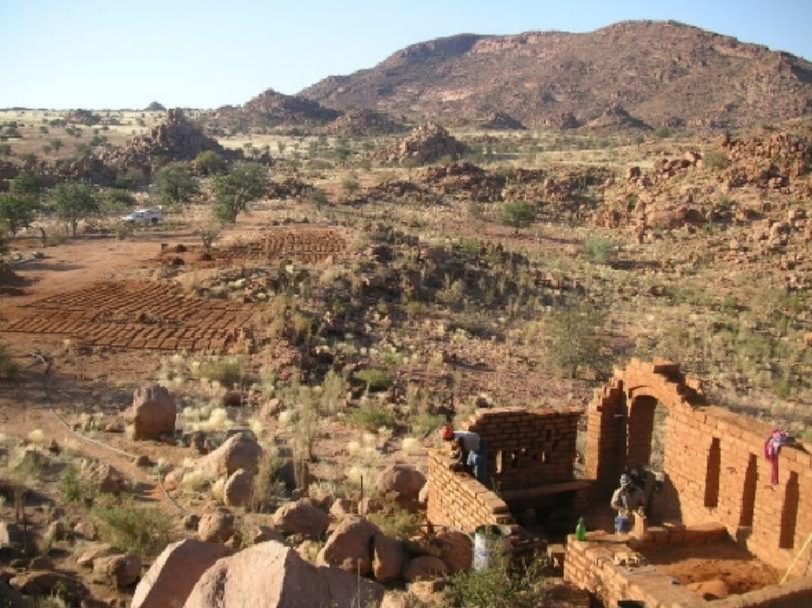
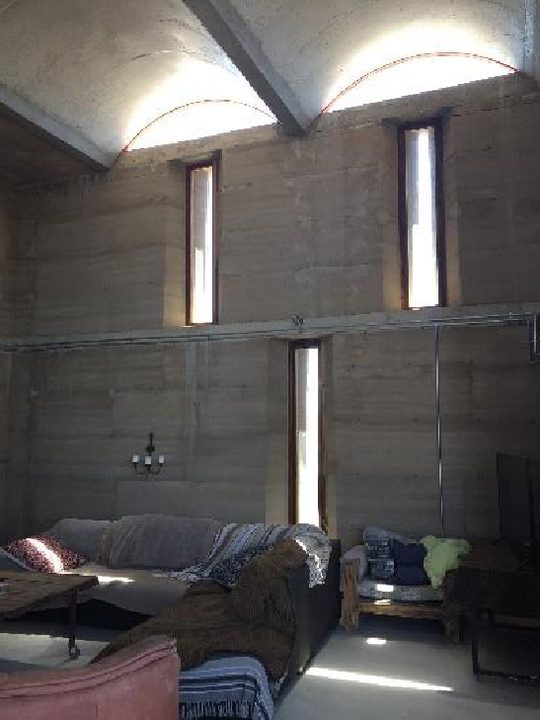
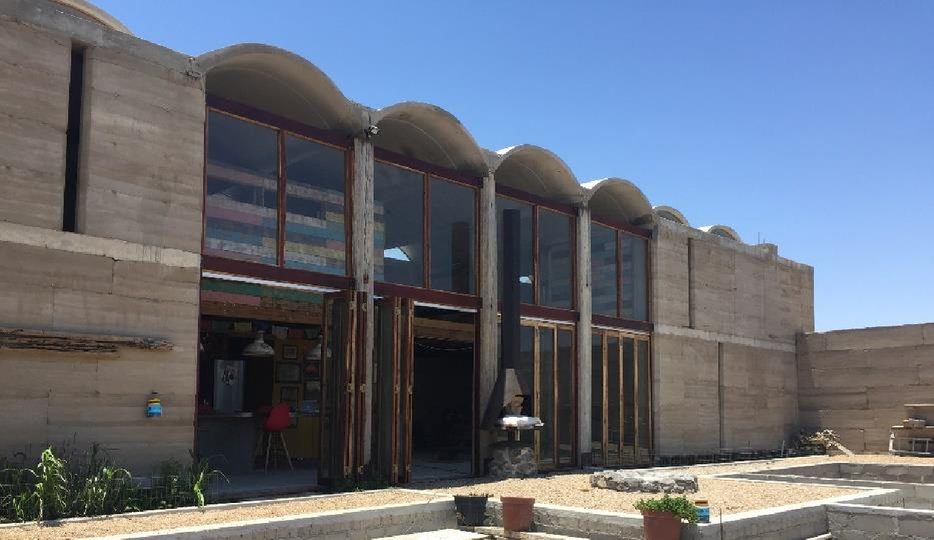
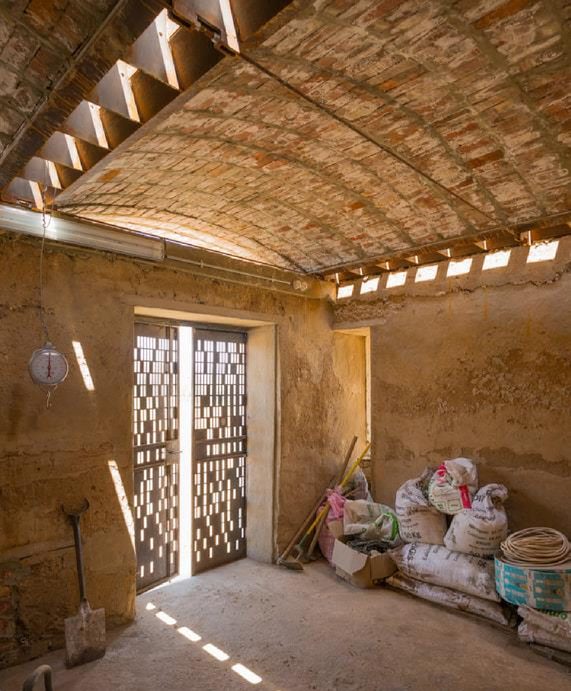
The Buffelsdrift pump room is read as the central case — a structural and aesthetic
prototype at once. Booyens convinced the client to invest in a series of brick vaults built
without formwork, cost-effectively and sustainably; the study traces the technique back to
the Damaraland Clay Project (2005–06), where clay vaults were built with mud mortar and flat
tiles, eliminating any sacrificial support work. Each prototype, built at full 1:1 scale,
fed the next, and taught client and labourers alike that the hand-based, formwork-free
vault was possible.
The study also records the constraint that shapes the work. Asked about prototyping,
Booyens observes: "It's appropriate, but it's not affordable." The tension —
shared across the profession — between the value of testing and the cost of it is, in his
practice, answered by the accumulation of tacit knowledge: prototypes built slowly over
years that eventually make the difficult thing quick.
Nel, C. (2024). A critical analysis of the value of prototyping as part of a circular
design process in the South African built environment. Research report, DIT 801,
Department of Architecture, University of Pretoria. Supervisor: C. Bothma. Jaco Booyens is
discussed as a case study (§4.3.1, pp. 52–55).
Architectural Alchemy
Jaco Booyens (1969–)
Michael Louw · 3 December 2019 · Commissioned essay
Reproduced in full, as written. The author's footnotes are numbered as in the original and
collected at the foot of the page. The original's twelve figures are reproduced in place, at the
resolution at which they are embedded in the author's document, with their captions as written.
Jaco Booyens was born in Pretoria on 17 April 1969. He spent his early years wandering in the
veld on the eastern outskirts of Pretoria near his parents' home in Constantia Park. It was
here where he first encountered structures that were made out of the surrounding earth;
besides observing the extensive scattering of termite mounds, a small number of modest
man-made structures also caught his attention1: He
was surprised by their "stubbornness to survive"2
and he felt compelled to attempt to repair one of these dilapidated and abandoned clay
houses, and despite having to abandon this ambition at the time due to technical
difficulties3, little did he suspect that later in
his life, he would become known for his structural innovation and his knowledge of natural
earth construction.
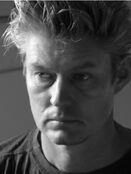
Figure 1. Jaco Booyens, 2019. (Photo by Hanneke Benade)
Early influences and education
His mother married his stepfather, the mathematician Professor Niko Sauer, when Booyens was
five years old. He describes his stepfather as an eccentric mathematician, scientist,
electronics expert and amateur botanist, and he acknowledges him as one of his biggest
influences4. He suspects that his own interest in
science and the observation of fine detail must, in part, be ascribed to his formative
influence.
During his schooling at the Hoërskool Waterkloof in Pretoria, Booyens spent much of his time
making observational drawings of animals and plants, citing the encouragement he received
from his art teacher Verona Higgs. He wished to be in nature, and he was considering studies
in nature conservation before his stepfather informed him that the University of Pretoria was
offering a new programme called Landscape Architecture under Professor Willem van Riet. This,
he felt, might offer him the opportunity for combining his love of nature with that of
design. Booyens enrolled for this programme. During his first year of study he attended
Professor Roger Fisher's Omgewingsgeskiedenis5
course. He also met a number of architecture students and he remembers being fascinated with
a white-line drawing by Marcus Smit and by Pierre Swanepoel's final year project of a Genetic
Research Centre6. After completing his first year of
Landscape Architecture, he switched to study architecture.
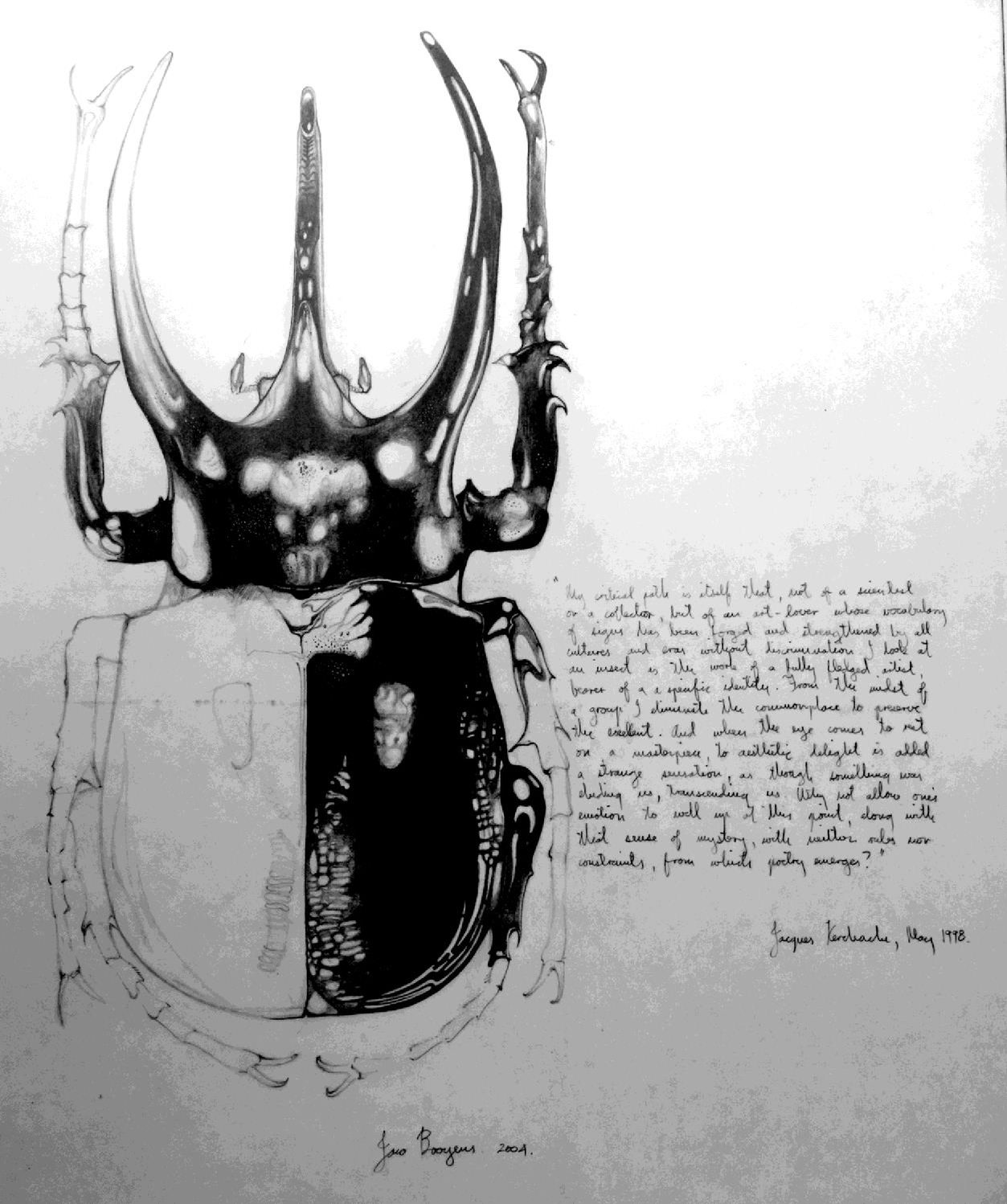
Figure 2. One of Booyens' observational pencil drawings of an insect, accompanied by a
Jacques Kerchache text. Jaco Booyens, 2004 (Image by Jaco Booyens, 1996, modified by author,
2019).
He acknowledges the influence that Professors Schalk le Roux, Roger Fisher and Joe Kemp (who
he describes as a "technical guy with common sense"7)
had on his development. Le Roux encouraged him to take a year out between his third and
fourth years, during which time he went to work for Erhard Roxin Architects in Swakopmund,
Namibia8 before returning to his studies at the
University of Pretoria. Here he notes that he had some differences with the then Head of
Department Professor Dieter Holm, but he says that Holm's course
Gebouklimaat9 triggered something in him:
It made him realise that a building can be made like an animal or a plant in order to fit
into a specific habitat10.
This concept must have resonated with some of his childhood experiences in the Richtersveld,
which is where Booyens suspects that his love of the desert
began11. Booyens' mother's family was originally
from Kakamas12, and the Sauer-Booyens family often
went to the Richtersveld to visit them, and to look for plants. His stepfather's botanical
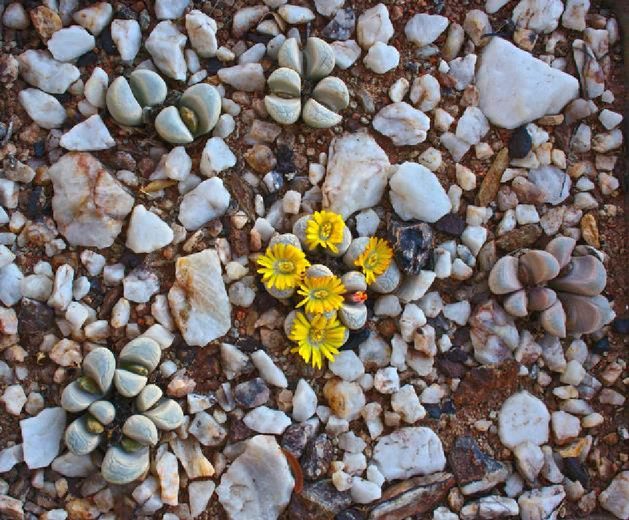
passion centered on lithops (succulents also known as living
stones)13, which are endemic to the Richtersveld.
These plants have adapted to survive in the extremes of dry climates. They, typically, have
two bulbous leaves that, in form and colour, resemble stones found in their natural
environment. This environmental mimicry reduces the likelihood of the plants being eaten, but
it is also what gives them their natural beauty. These tiny plants seem to personify Booyens'
philosophy that only through an immersion into an extreme environment, can an equally
heightened response be developed.
Contextual confrontations
Booyens remarks that with his final year project he "militantly" wanted to prove that a
building should fit into its context like an animal or a
plant14. This approach would be repeated in some
of later projects, including the Vertical Village on the River Tiber which he designed during
his time as a Rome scholar in Italy15. He says an
extreme environment elevates one's response to an equally extreme level and hence he worked
on the possibility of an apocalyptic event for his thesis. His final year project was entitled
Noodsentrum vir Aardbewings16, and it was
an earthquake-resistant building situated on the San Andreas fault in San Francisco. The
building's programme was an emergency hospital and logistics centre, and Booyens refers to it
as a "hibernating robot"17: It would harvest solar
energy by way of photovoltaic panels and store this energy in capacitors (which meant they
could be charged slowly over time, and that a large amount of energy could be released rapidly
when needed). In the event of an earthquake, sensors would cause the hibernating building to
"wake up", the capacitors would release their energy to activate large magnets that would
essentially allow the building to levitate just long enough to survive the quake and its
aftershocks. A system of hydraulics to adjust the building's structure depending on different
frequencies, and Teflon-coated slides below the building's supports would further augment its
responsiveness. It was an experiment in self-sufficiency, and besides harvesting its own
energy, a natural wetland underneath the building would act as a biofilter and water storage
device. His examiners described the project as "A technological fantasy of a sophisticated
nature bordering on industrial design and
engineering"18, a description that is also
applicable to much of his later work.
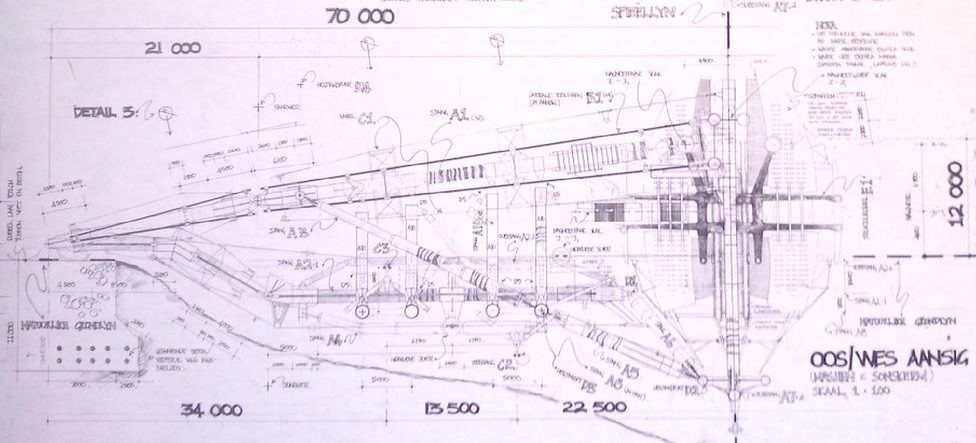
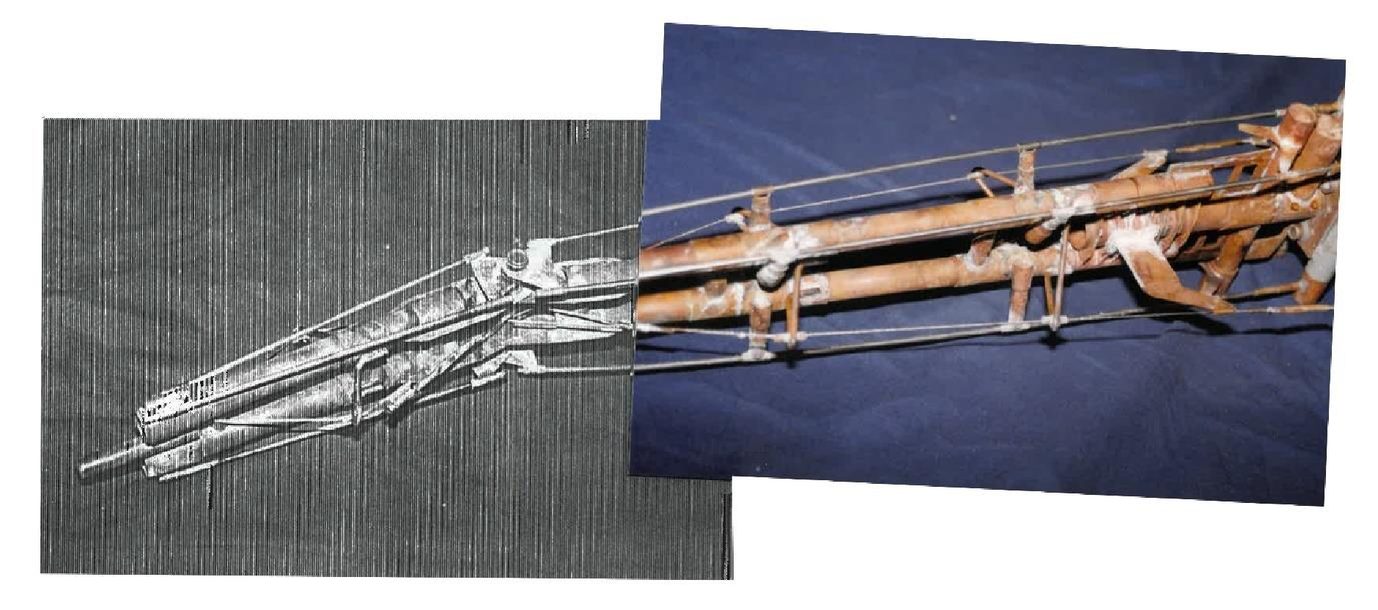
Figure 3. Above: The east/west elevation of the Emergency Centre for Earthquakes, Jaco
Booyens, 1996 (Drawing and photo by Jaco Booyens, 1996). Below: A partial photo of the
building's structural model, Jaco Booyens and Johan Bekker, 1996 (Image by Jaco Booyens,
1996, modified by author, 2019).
After approaching the South African National Antarctic Expedition (SANAE) a number of times,
he finally got the opportunity to go to Antarctica in 2003. He designed a logistics centre for
the Antarctic Logistics Company International (ALCI) which was never built, but the experience
served as a bridge between his thesis and his later work; he was struck by the conditions in
Antarctica, especially in terms of the environment which he experienced as having "completely
different rules" to most other places. The equipment and structures there highlighted the
importance of engineering for him, and they demonstrate how environmental circumstances can
dictate the "look" of a building.
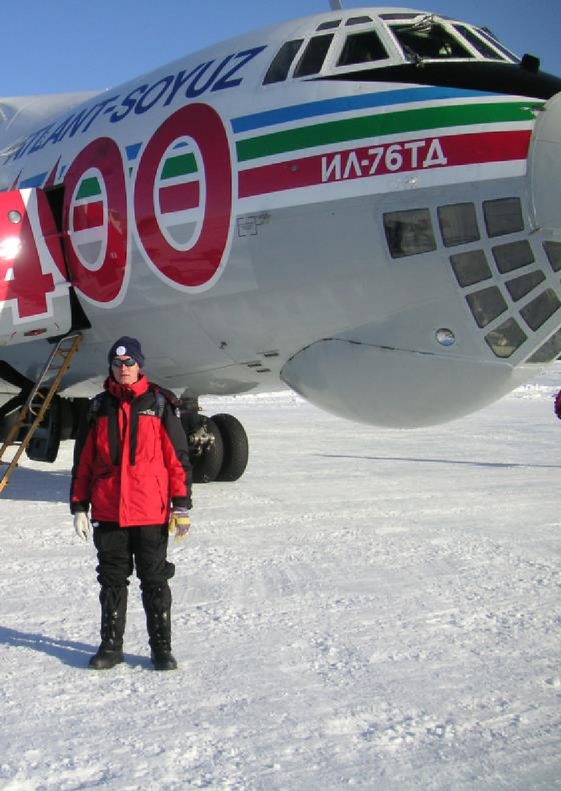
Figure 4. Booyens in Antarctica in front of the Russian Soyuz aeroplane which the ALCI used
for transportation purposes (Photographer unknown, 2003).
Early career
After completing his BArch degree cum laude in 1996, he did private work for a year before
returning to Namibia to work for Bob Mould
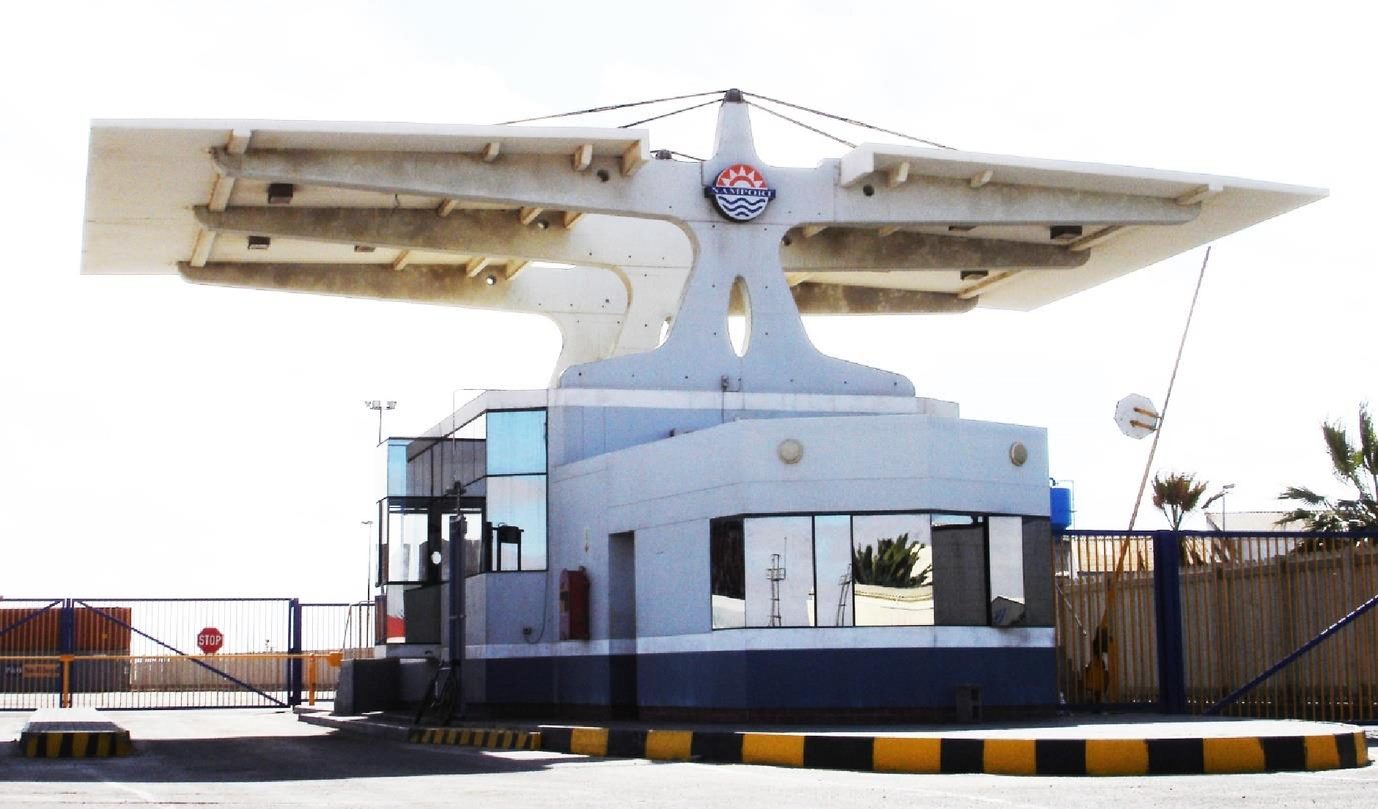
Architects19. His first project at the practice
was the Namport Container Terminal Entrance in Walvis Bay, which he worked on with Conrad
Scheffer. Booyens proposed a steel-framed roof covered with a stretched fabric, but due to the
highly corrosive environment the design was developed further to make use of a structurally
efficient reinforced concrete roof20. The building
received an Award of Merit from the Namibia Institute of Architects in 1999.
Figure 5. The Namport Container Terminal Entrance, Walvis Bay, 1999, Jaco Booyens and Conrad
Scheffer for Bob Mould Architects (Photo by author, 2006).
He did some work for Knolles Green, a former Roxin employee, before going to work on the
construction of film sets as a carpenter. During 1998 he worked on the construction of a set
in the desert east of Swakopmund near Rössing that resembled a town during the First World
War. This experience led him to believe that construction is easy, a belief that would be
tested a number of times later in his career.
At the beginning of 1999 he returned to South Africa where he was invited by Albrecht Holm and
Ferdinand Holm to participate in Project Phoenix for Holm Jordaan and
Partners21 in 1999. This was a two-stage design
competition for new premises for the then Pretoria
Municipality22 after the Munitoria building partly
burnt down in 1997. They won the competition with a building that was predominantly designed
with passive climate control in mind. Light-shelves, large glass-roofed atrium spaces with
delicate steel structures and slim elevated water tanks stand out as key features of the
design, which was never built23.
He then went to work in Knysna, South Africa, at Chris Mulder and Associates
Incorporated24 until 2001 when he entered and won
the South African Institute of Architects' prestigious Rome Scholarship. He spent nine months
in Rome and while Bernini's sculptures and Caravaggio's paintings made the biggest impression
on him during his stay there, the buildings that did fascinate him were the Pantheon and the
Colosseum. He remarks that "Rome displays to a person what time
is"25: He is of the opinion that many modern
buildings are only made from hard materials and he observed that older buildings and
structures like the Pantheon and Colosseum were made from hard and soft materials that weather
differently. He compares their materiality to bone, tissue and skin, and he carefully studied
the ancient Roman walls that were made from layers of earth and inward-angling stone slabs.
This discovery, along with his childhood experience with clay buildings, his love of the desert
as well as the onset of an opportune moment, eventually led him back to Namibia where he would
begin to experiment with earth construction in earnest.
Building with the earth
Booyens claims that his passion for earthen construction is not because he is a hippie or has
any Bohemian tendencies [this is open to debate!], but due to the abundance of earth, the low
level of skill required in its construction, and its low carbon footprint. He cannot understand
why, if earth is such an obvious choice as a building material, it is not being used more
often. While he acknowledges that building height and space constraints are often problems with
the use of thick earthen walls, he argues that one only has to understand earth's material
properties and constraints - as with those of any other building
material26 - as a material suitable for low-rise
buildings within an appropriate context.
Booyens saw vaults that the architect Frenus Rorich designed for his holiday accommodation
establishment in Swakopmund, Namibia in 1994 and he recalls that "Toe ek daai goed sien is ek
verlief"27. He also discovered other experiments
with earthen construction in Namibia during his first stay there in 1994 like the ones by
Wiebke Volkmann in Henties Bay28, and he eventually
got his chance to build with earth in northwestern Namibia in 2005. The Damaraland Clay Project
was situated in the Sorris Sorris Conservancy and it was a project that he designed and built
with long-time friend and collaborator Johannes
Haasbroek29. The buildings were built with sun-dried
clay bricks that were made on site with material obtained from within a radius of thirty
kilometers. A free-vaulting technique was used without formwork and approximately sixty local
community members were trained and employed during construction. Regrettably, the buildings did
not survive due to water damage at an unfortunate time of unseasonal tropical monsoon rains that
had moved southwards, funding constraints and unresolved political
difficulties30.
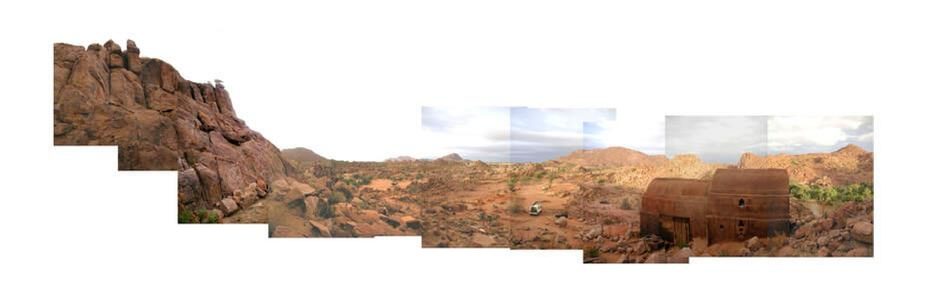
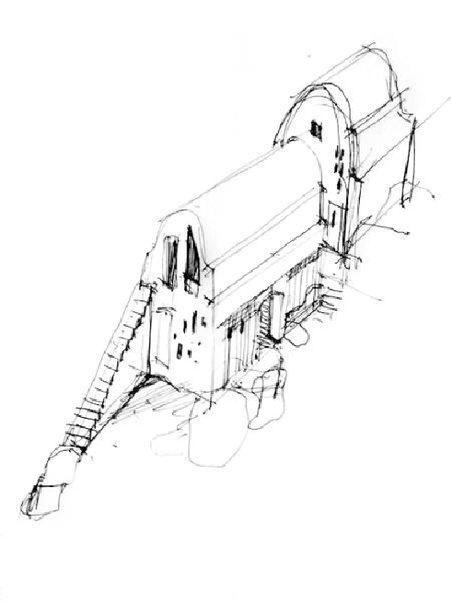
Figure 6. The Damaraland Clay Project, Sorris Sorris Conservancy, Namibia, 2005, Jaco Booyens
and Johannes Haasbroek (Drawing and photos by Jaco Booyens, 2006).
Booyens collaborated with Haasbroek again on the design and construction of Haasbroek's own
house which is suitably named Gaia31 (also referred
to as Fort Haasbroek32) near Swakopmund, Namibia.
This time they made use of 600mm thick rammed earth walls. Suitable material was found within
five kilometres of the site in the form of compactable soil that is typically used as sub-base
for road construction. This material was initially mixed with 5% cement, but it was found that
the cement was not needed due to the natural clay content in the material and its inherent
stability33. The roof is made of 100mm thick
ferro-cement vaults, while the Spanish Oak columns are salvaged piles that washed up on the
shore after an oyster platform was destroyed by a storm. Material properties and climate drove
the design, but this resulted in significant cost
savings34. The house is designed to be
self-sufficient with photovoltaic panels, a biogas digester, a borehole, a water treatment
facility, and an aquaponics system35.
Figure 7. Gaia, Swakopmund, Namibia, 2019-, Jaco Booyens and Johannes Haasbroek (Photos by
author, 2019).
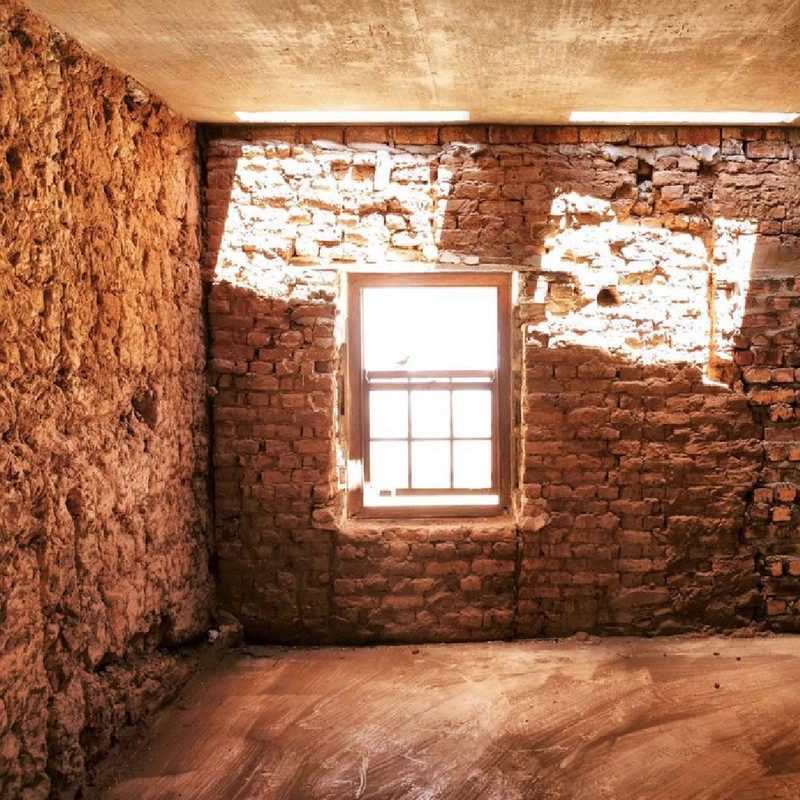
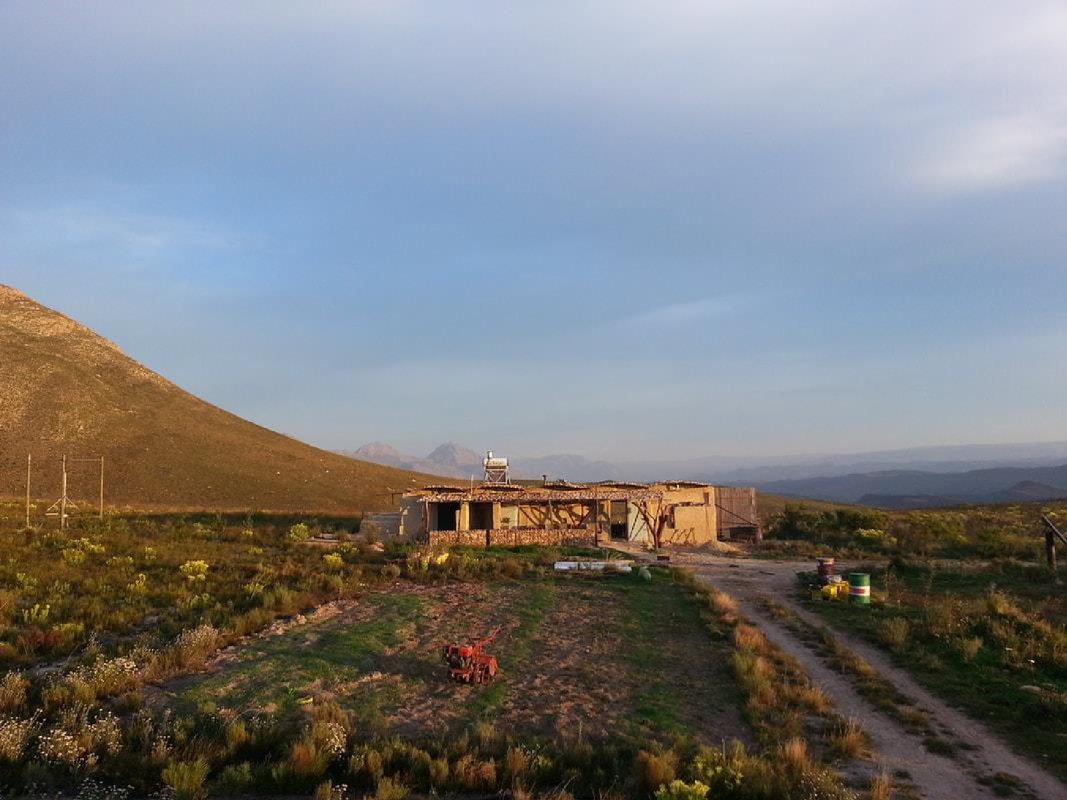
Booyens' desire to repair earth buildings came full circle when he was appointed to renovate
and repair six modest farm buildings on Buffelsdrift
Farm36 near Ladismith, South Africa in 2019. After
removing several different layers of plaster, he discovered that several of the damaged old
structures on the farm were built using the poured earth method (as opposed to the more common
practice of using sun-dried clay bricks). These were repaired using clay that was collected from
the dry irrigation dam, which seems to have been the source of the clay for the original
buildings too37. Once the initial structural
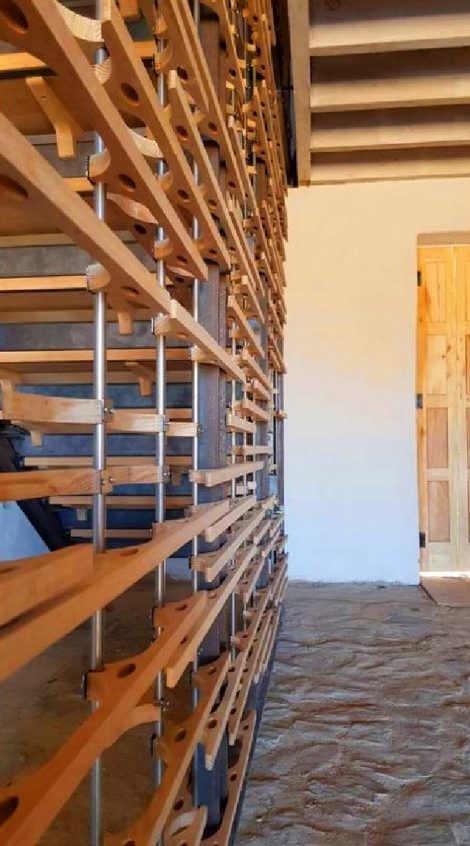
renovations were completed, he proceeded to design and build a staircase in the old tobacco
store. This highly tectonic assemblage (similar to a number of other tectonic assemblies that he
has designed and built) stands in stark contrast to the steoreotomic nature of the existing
structures, and it shows that he is comfortable to design and make, using both of these modes of
production.
Figure 8. Left: The existing structure during renovation after the plaster layers were removed
to reveal a combination of poured earth and sun-dried clay bricks. Right: The newly inserted
staircase made from steel and American Oak that was CNC38
cut. Buffelsdrift Farm, Ladismith, South Africa, 2019-, Jaco Booyens and Greg Truen (SAOTA
Architects) (Photos by Jaco Booyens and Greg Truen, 2019).
Steoreotomics, tectonics and material efficiency
Booyens' ability to work both stereotomically and tectonically is evident in another project on
Buffelsdrift Farm, where he had the chance to design and build experimental catenary shell
structures made from sun-dried clay bricks on a new pump room. He admits that shell structures
have become an "obsessive interest"39 for him, and
he is convinced that they can be built cost-effectively using unskilled labour. The shell
structures on Buffelsdrift Farm were combined with complex split steel beams with vertical
flanges that allow natural daylight to flood into the space between the vaults, while the vaults
themselves will be covered with soil and planting. Poured earth was used for the 1,2 metre thick
gable walls and steel tension rods were used to counteract the shallow vaults' lateral thrust.
Figure 9. The new pump room that was built using 1,2 metre wide poured earth gable walls,
sun-dried clay brick catenary arches and complex steel beams that also function as roof lights.
Buffelsdrift Farm, Ladismith, South Africa, 2019-, Jaco Booyens and Greg Truen (SAOTA
Architects) (Photo by Jaco Booyens, 2019).
His professional influences are equally balanced: On the stereotomic side he mentions Hassan
Fathy, Félix Candela40 and Rafael
Guastavino41; on the tectonic side he mentions
Nicholas Grimshaw42 and Renzo
Piano43. He notes that the common denominator
between all of these architects' work is an intensive investigation into material properties and
possibilities. In Booyens' opinion, material suitability and efficiency are the key to any
project. If one material cannot do something, he uses a different one. This requires some
fleet-footedness, but he states that, similar to those architects whose work he admires, all of
his projects are investigations into what a specific material can do in a specific application.
He argues that if one can emphasise a material's inherent properties by using it as efficiently
as possible, one does not have to bother too much with aesthetics since a pleasing appearance
will result naturally; the climate, structural properties, and connections between materials
become the determinants of the appearance of the building. His partner, the artist Hanneke
Benade, often reminds him that he cannot only be focused on utility, but he insists that
aesthetics lie in material efficiency44.
Since his thesis project, material efficiency has been combined with the notion of
self-sufficiency. The Oxford English dictionary describes efficiency as "the ratio of the useful
work performed by a machine or in a process to the total energy expended or heat taken in",
while sufficiency is described as "an adequate amount of something, especially of something
essential". Alessi45 describes Booyens' architecture
as "the result of a series of careful considerations regarding a self-sustainable use of energy,
the efficient functioning of the natural systems of energy supply, the implications of low impact
technology on the environment". Booyens wanted to be autonomous and self-sufficient himself, and
his search for the essential motivated him to purchase a piece of land in the foothills of the
Langeberg between Montagu and Barrydale. It became a long-term research and development project
where he spends a great deal of time researching various systems and techniques on the internet
before experimenting further on his own46. He admits
that he is a "nuuskierige agie"47, that he becomes
nervous or fearful if he does not understand something, but that that trait always makes him even
more determined in his quest. He constantly challenges himself and he admits the struggle to
establish his farm pushed him to his limits: He once said "Die volgende sukses is nie om geld te
hê nie, maar tyd48", but sadly his efforts on the farm
deprived him of both for quite some time. He says the experience made him feel like and artist and
an athlete49: He designed and built his own wind
turbine, installed a ram-pump to get fresh water from a nearby stream, he implemented a series of
permaculture initiatives, and he designed and built all of the structures on the property. He
refers to his own house as an "architectural shack"50
and he dryly remarks "Dit is 'n maaksel. Dis nie regtig 'n plek waar ordentlike mense sal wil woon
nie"51.
He designed and built this 'shack' almost single-handedly (except for three labourers who were
employed for three months only) using poured earth walls in combination with delicate steel
trusses that support recycled roof sheets covered with local
stones52. A 1950s Lister engine that was converted to
run on used vegetable oil provided electricity until photovoltaic panels could be installed.
Fortunately, the use of vegetable oil was not new to him: Having converted his
bakkie53 himself to run on used vegetable oil which he
collected from restaurants in Cape Town, he drove to Swakopmund in Namibia, not considering the
comparative lack of restaurants there. This resulted in him having to resort to using seal oil
obtained from seals that were culled at the Cape Cross seal colony north of the town. This did
enable him to make the trip back to Cape Town, although a small leak in the 500 litre rooftop
tanks left a number of people en route puzzled by a curious fish smell that seemed to linger all
the way from Swakopmund to Cape Town54.
Figure 10. Sketchplans for Subsistence farm Rysmierberg, Montagu/Barrydale, South Africa, 2014,
Jaco Booyens.
Figure 11. Booyens' farmhouse with its shallow arched roof covered with local stone. Subsistence
farm Rysmierberg, Montagu/Barrydale, South Africa, 2014, Jaco Booyens (Photo by Pierre Henry van
der Spuy, 2014).
While his stepfather taught him the value of struggling with problems, Booyens says the work on
Rysmierberg made him realise "Daar is nie genoeg breins in een kop
nie"55. There exists a tension between Booyens' desire
to live autonomously and not to be reliant on others and the fact that he seems to gravitate
towards collaborations with other architects and like-minded people. While these collaborations
are sometimes marked by friction, he thrives on them and seems to produce his most successful work
through them: Besides the collaborations with Haasbroek, Holm, Holm, and Truen as mentioned
previously, he designed and installed a multi-storey shading system on the National Prosecuting
Authority's building in Buitengracht Street, Cape Town, for DHK Architects, and he installed one on
the Graça Machel Women's Residence56 building at the
University of Cape Town in 2007 as a subcontractor to Gutco Manufacturing for KrugerRoos
Architects. He also collaborated with André Eksteen of Earthworld Architects and Interiors on the
innovative plywood structure at the Future Africa Innovation Campus' dining
hall57 in 2018.
Of alchemy and science
Jaco Booyens is a maker of artefacts. He generates his designs through an intensive observation of
nature and materials, and his work may be regarded as biomimicry by some. In his own manifesto, he
writes "Nature does not intend to be beautiful. It is focused on survival by accurate problem
solving" and he argues that a mutualistic relationship should be formed between buildings and
nature through the process of design.58 The drawings
that he made of animals and plants as a child now strangely resonate in his experimentations with
parametric design software. He spends much of his time experimenting with digital software to find
efficient structural geometries and patterns and he unconsciously he seems to be getting closer to
nature itself by doing this: His recent experimentations in Grasshopper are strangely reminiscent
of the lithops that his stepfather was so fascinated with.
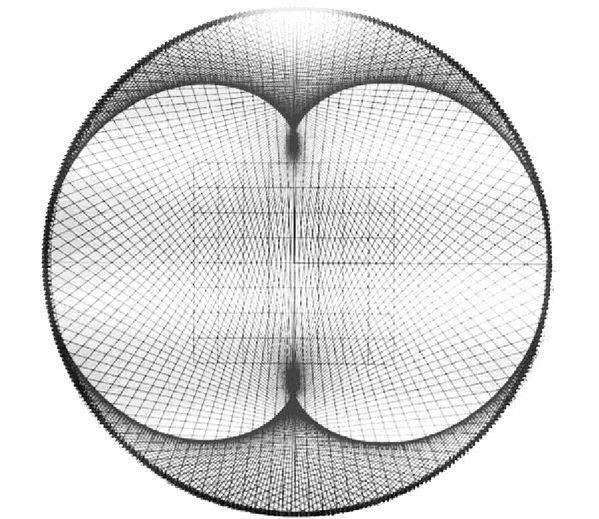
Figure 12. Left: A Mandelbrot set (which is a well-known example of the use of fractal geometry)
that Booyens generated using Grasshopper software (Booyens, 2019). Right: Lithops in the
Richtersveld showing how they manage to blend into their environment (Image by Niko Sauer,
undated).
Several early experiences weave like threads through Booyens' career: His early engagement with
termite mounds and clay buildings, the lithops that he learnt about from his stepfather, his
fascination with machines, and his architectural collaborations seem to develop and re-emerge
continuously in a cyclical fashion throughout his life, improving after each subsequent revolution.
He recognizes the diversity in his own body of work, but he argues that it reinforces the notion
that every project is rooted in a specific contextual response. His innovations and inventions are
not incidental but consistently regular, and they are both understood through and generated by
context, before being turned into architectural expression.
Alchemy refers to the transmutation of matter, where a base material is turned into gold. This can
very well be said of Booyens' work, especially where the earth is literally raised up to be turned
into objects of a high order. Taking a basic brief or palette of materials and transforming it into
something valuable, beautiful, and unexpected – perhaps that is the essence of architecture.
References
Alessi, A. 2002. Strangers at home. Strategies for a non-habitual inhabitance in Rome.
In British School in Rome. 2002. Fine Arts 2001-2002. Catalogue. London: The British
School at Rome. [Online] Available:
www.albertoalessi.com/files/t-2002-SH-t.pdf
(Accessed 2 December 2019)
Booyens, J. 2019. Manifesto. [Online] Available:
http://www.rysmierberg.com/design-philosophy.html (Accessed 2 December 2019)
Booyens, J. 2002. News from a Rome scholar. In SA Architect, March/April 2002: 15.
Booyens, J. 2019a. Telephonic communication. 31 October 2019.
Booyens, J. 2019b. Personal interview, conducted in Cape Town by Michael Louw on 7 November
2019.
Booyens, J. 2019c. Personal interview, conducted in Cape Town by Michael Louw on 17 November
2019.
Fischer, T. 2014. "Krag uit die aarde59". In Weg!
Platteland, Autumn 2014, number 2: 122-127.
Haasbroek, J. 2019. Personal interview, conducted in Swakopmund by Michael Louw on 9 November
2019.
Awards
1998. Winner of Project Phoenix with Ferdinand Holm and Albrecht Holm for Holm Jordaan and
Partners (now New Urban Architects and Urban Designers). This was a national, open two-stage
competition for the design of the new Municipal buildings in Pretoria after the previous
buildings were partly destroyed by fire.
1999. Winner of an Award of Merit from the Namibia Institute of Architects with Conrad Scheffer
on behalf of Bob Mould Architects (now Conrad Scheffer Architects) for the Namport Container
Entrance in Walvis Bay, Namibia.
2001. Winner of the South African Institute of Architects' Rome Scholarship.
Booyens, J. 2019. Contemporary mud house, Buffelsdrift. [Online] Available:
http://www.rysmierberg.com/contemporary-mud-house-buffelsdrift.html (Accessed 4 December 2019)
↩
These include, amongst others, his tender age, a lack of knowledge and tools, and
construction delays caused by him having to roll water to site by himself one drum at a time.
↩
A small town in South Africa's Northern Cape Province. ↩
These plants are of the genus Aizoaceae, and his stepfather developed a particular
interest in the Ophthalmophyllum latum, which is typically found in the Richtersveld in
South Africa (Booyens, 2019b). ↩
In a report that he wrote during his stay, he referred to holes in the building for
water filtration that are similar to those found in animals. It was a large structure and he
writes "…die plek moet amper soos i [sic] Kakamas op pale in Rome wees" which can be translated
as "…the place should almost be like a Kakamas on poles in Rome" (Booyens, 2002: 15).
↩
The project was eventually awarded to a practice that did not take part in the
original competition, and the competition winners were awarded a partial settlement after a
drawn-out legal process. (Booyens, 2019c) ↩
Her father wanted to use vaulted earth construction to build economical housing in
Namibia, and he invited Hassan Fathy to visit his projects. Unfortunately, Fathy could not travel
to Namibia at the time due to Apartheid, but one of his assistants managed to go shortly after his
death (Booyens, 2019b). ↩
Operations Director and Founder of Elephant-Human Relations Aid (EHRA).
↩
Booyens, J. 2019. Damaraland clay project. [Online] Available:
http://www.rysmierberg.com/damaraland-clay-project.html (Accessed 4 December 2019)
↩
According to comparative quotations procured by Haasbroek, the actual material cost
for the roof came to R8000.00 versus a quotation of R70 000.00 that was obtained for corrugated
sheeting and its associated structure. The rammed earth came to R250/cubic metre versus a local
quotation of R2200/cubic metre for reinforced concrete (Haasbroek, 2019). While one may have ended
up using less concrete than rammed earth, his preference was for a material with lower embodied
energy. ↩
The one challenge with the biogas digester and water treatment facility is that more
inhabitants are needed in order for it to work (Haasbroek, 2019). ↩
This property belongs to Greg Truen from SAOTA Architects, and Booyens was referred to
him by a well-known heritage consultant. ↩
Booyens, J. 2019. Buffelsdrift Farm. [Online] Available:
http://www.rysmierberg.com/buffelsdrift-renovation.html (Accessed 5 December 2019)
↩
Booyens, J. 2019. Buffelsdrift catenary vaults. [Online] Available:
http://www.rysmierberg.com/buffelsdrift-pumproom.html (Accessed 5 December 2019)
↩
He mentions having received a book on his work from a friend in 1998 (Booyens, 2019b).
↩
He was a Spanish building engineer who emigrated to the United States of America in
1881 and he became known for self-supporting arches and vaults that made use of the Guastavino
tile. ↩
He refers to his books and to a lecture of his that he attended in Rome. During his
stay in Rome, Bill McAlister invited him to the United Kingdom for two weeks, which gave him the
opportunity to visit the Eden Project which was designed by Grimshaw and completed in 2000
(Booyens, 2019b and 2019c). ↩
He also mentions Jean Nouvel, particularly his Institut du Monde Arabe (The Arab World
Institute) in Paris, 1987. He dryly remarks that he would like to offer the Institute some advice
on how to get the façade's lenses to work again (Booyens, 2019b). ↩
Booyens, 2019c. This material efficiency is, however, often offset against durational
inefficiencies since some of the building techniques take time to develop and execute.
↩
This included fellow architect Alwyn Bester whose scooter was transported in the back
of the bakkie, and it smelled of seal oil for a few months after the trip.
↩
"There are not enough brains in one head" (Booyens, 2019c). ↩
This building won an Award of Merit from the Cape Institute for Architecture in 2009,
and an Award for Excellence from the South African Institute of Architects in 2010.
↩
This building won an Award of Merit from the Pretoria Institute for Architecture in
2019. ↩
Booyens, J. 2019. Manifesto. [Online] Available:
http://www.rysmierberg.com/design-philosophy.html (Accessed 6 December 2019)
↩
Louw, M. 2019. Architectural alchemy: Jaco Booyens (1969–). Commissioned essay,
revision E, 3 December 2019. Reproduced with the author's permission.
Strangers at Home
Strategies for a non-habitual inhabitance in Rome
Alberto Alessi · Fine Arts 2001–2002, The British School at Rome · 2002
Reproduced in full, as written, with the author's permission. The essay considers the work of
both resident architects at the British School at Rome that year — Jaco Booyens and Megan
Williams — and both discussions are kept. The file the author publishes is a scan, and
optical character recognition has damaged a scattering of characters in it (for example
"carerul" for "careful", "rolds" for "folds", and a lower-case l standing in for a capital I).
These have been repaired. No word has been altered.
"Sir: You are desired to proceed to Georgetown where you will find Mr. Ellicott employed in
making a survey and Map of the Federal Territory. The special object of asking your aid is to
have a drawing of the particular grounds most likely to be approved for the site of the Federal
town and buildings. You will therefore be pleased to begin on the Eastern branch and proceed
from thence upwards, laying down the hills, valleys, morasses and waters between that and the
Potomac, the Tiber, and the road leading from Georgetown to the Eastern branch and connecting
the whole with certain fixed points on the map Mr. Ellicott is preparing. Some idea of the
height of the lands above the base on which they stand would be desirable. I will beg the
favour of you to mark to me your progress about twice a week, say every Wednesday and Saturday
evening, that I may be able in proper time to draw your attention to some other objects which I
have not at this moment sufficient information to define."
Thomas Jefferson, letter to Pierre Charles L'Enfant, French architect, author of the
master plan for Washington D.C., 1791
BEFORE ANY CITY OR ARCHITECTURE exists, there is a geography, a topography, a climate, a
possibility. In Rome as in Washington, someone saw a place rich in plains, hills and water,
studied its features and position, recognised its potential, and thus opened the way for a
history. In particular Rome, unlike its city colonies, accepted the weight of its natural
territory as its given foundation, structuring itself according to a topological discourse.
What applies to the act of foundation, also applies to the evolution which followed. Migration,
always a cultural event, plays a fundamental role in the redefinition of an acknowledged urban
meaning.
Each new citizenship, even a temporary one, proposes another system of settlement, a
multiplication of the space-city, a new mental skyline. Only the Piedmontese, with the building
of the Esquilino quarter, will bring to the Rome city plan a regular grid structure, in
accordance to their military Turinese Romaness.
The inhabitant of a place often has routines, habits, conventions that prevent aware vision.
One takes for granted what is only a custom, a way of being-in-the-world. An external, foreign
point of view often seizes on the structures of urban reality better than a city's own
inhabitants are able to. This depends on the traveller not having a Baedeker, not having
prejudice, nor the will to state that what they are seeing corresponds to what the tourist
brochures anticipated and promised.
Those who come from elsewhere may also misinterpret, willingly or through ignorance. It is a
potentially fruitful unawareness, because it allows one to pose all the questions and therefore
the answers without taking anything for granted or established. What is this city? What are the
structural elements of the place? How do we choose them in our daily inhabitance?
Those who come from elsewhere have always been here. The oh so Roman obelisks are Egyptian; the
Caestian Pyramid is but an imitation of much grander ones; the domes were born elsewhere;
Hadrian's Villa celebrates the nostalgia of the faraway, witnessed and dreamed. The construction
of the city took place through the appropriation and re-interpretation of parts or things
belonging to others, in the projection of images that were foreign.
Those who come from elsewhere can continue to speculate on the presence of the past as a point
of view and rediscover the persistence of a geography and its possibilities, underneath deposits
of habits. This contribution to an urban consciousness-raising, beyond any self-congratulation,
is very apparent in both the work and the thinking of the two resident architects at the British
school.
Jaco Booyens turns his attention away from the mythical and museum role of the city and he sees
it as a purely natural place. In this he instinctively belongs to the above mentioned
unawareness. In his description of the urban site for his Self-Sustainable Vertical Village on
the Tiber, Rome becomes a river inlet, with specific features of exposure and position. Rome is
beyond Romaness, and one can speculate on the 'here and now' and on the 'here and then' in equal
terms. This is something that has already happened in other historical epochs. Booyens researches
the geographical context hidden in the folds of the city, proposes architecture as a synergy
between place, building and inhabitant: a building which influences the life of those who live in
it and adapts these lives to this Rome-before Rome. Architecture is the result of a series of
careful considerations regarding a self-sustainable use of energy, the efficient functioning of
the natural systems of energy supply, the implications of low impact technology on the
environment. Involuntarily and paradoxically, this creates an object with a powerful visual
impact. A new totem, a fantastic, unconscious, primitive monument rises from the Tiber. The
contemporary inhabitance questions the consolidated system of persistence, warping its context,
mixing it up with other types of mental space. It reworks the public/private relationship and its
perception according to continually evolving structures. Whoever comes from outside is able to
point out the autonomy of vision, beyond the social and historical meanings of a place.
Megan Williams's project is to interrogate the city as a place of communal life. In her
questionnaire she asks her interviewees to take a stand: "Do you live in Rome now? What does it
mean to be a Roman today? Why is Rome special, if it is so? Has Rome changed your life? What is
your favourite place in Rome? Who do Rome's monuments belong to? What would Rome be without
monuments? When you think of Rome, what do you see?" These questions refer us to the need to put
ourselves in the position of an inhabitant and to think of the city as a place of affects, as an
inherited place, as a property simultaneously collective and personal. Who does the city belongs
to, how much it belongs to me, what grabs my attention, how do I possess it? Unlike Booyens's
natural geography, here we are dealing with an inquiry into the collective and individual
phenomenology of each citizen. To ask and ask oneself questions, to provide oneself with working
tools. In her work on the Via del Portico d'Ottavia, Williams is looking for a topological and
geometric rule that forces vision to expose itself, in its paradoxical transformation into
blindness: at first she walks down the road, and every ten steps she takes a photograph looking
ahead of herself; then in the studio she projects the sequence of photographs on to a wall, each
image remains visible for a few seconds during which time she makes a sketch on a piece of paper.
The result is a series of syntheses, images which make a record of the fundamental elements that
structure the vision of the urban space in which we move. A grid is then laid over these
sketches, and the 'random' points of superimposition are highlighted on sheets of tracing paper,
which eventually placed side by side reconstruct a virtual vision — 'never willed, never
sought, never seen' — of the space of the street she walked along. Williams writes, "When I
look at this world around me through the conduit of my sensual perceptibility, am I free to look
without judging it? Can I separate myself from my cultural and experiential biases? Am I bound to
be a tourist making superficial commentary? Can I see without being influenced by the memory of
what came before and my anticipation of what will happen next? Do I suffer from a type of
blindness? Is it 'things' I see? Or is it a series of shapes, patterns, edges, areas of relief
and tension?"
What we think we see in a place is always influenced by what we expect to see in it, what we know
of it, what we hope to find there. The permeable vision of the city by those who come from
outside allows one to look with a heightened awareness and unmask the continuous victory of the
ideal over the real. Because to live in Rome is a question of points of view.