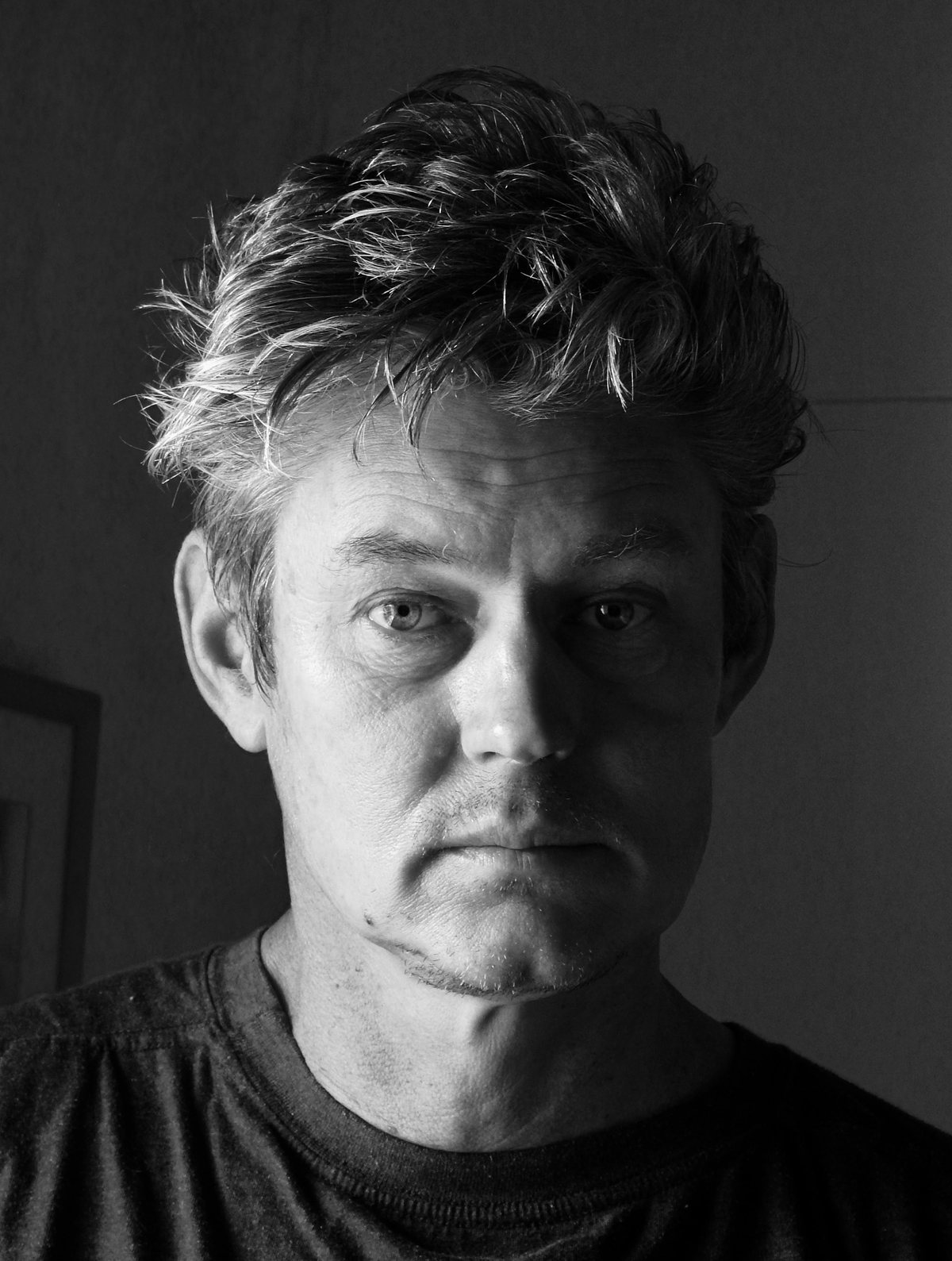
Jaco Booyens
Jaco Booyens grew up in Constantia Park, Pretoria, in a house beside a veld field scattered with termite mounds — his first encounter with a building system perfectly adapted to its climate and built with no imported technology at all. Among them stood a few abandoned clay houses. He was struck by their stubbornness to survive, and tried, as a boy, to repair one.
His stepfather, Professor Niko Sauer, was a mathematician who was, by obsession, a botanist of the stone-mimicking succulents of the Richtersveld — the window-leaved Ophthalmophyllum above all. He collected them and corresponded with botanists worldwide. The young Booyens absorbed something from this — not botany exactly, but the habit of looking very carefully at how living things solve environmental problems. These plants survive by being almost invisible, their form an exact response to solar radiation, water scarcity, and predation. No part of them is decorative.
Booyens first worked in Namibia during a year out from his studies, with Erhard Roxin Architects in Swakopmund — his first immersion in the desert landscapes that would shape much of the practice to come. After graduating in architecture from the University of Pretoria in 1996 he returned to Namibia, to Bob Mould Architects in Walvis Bay. It was in these late-1990s years that the ideas later realised as the Damaraland Clay Project and Fort Gaia first took root, though both were built long afterwards: Fort Gaia — a dwelling of 600 millimetre rammed-earth walls, 100 millimetre in-situ ferro-cement barrel vaults, and crescent openings between the vaults and the wall-tops that scatter desert light — was built for Johannes Haasbroek near Swakopmund, by his own team, self-taught, from 2019. The earth came from within five kilometres of the site: compactable soil of the kind used as road sub-base, mixed at first with five per cent cement until the natural clay content proved the cement unnecessary. The columns are salvaged Spanish Oak piles, washed ashore after a storm destroyed an oyster platform.
Then Knysna, and in 2003 Antarctica, reached after several approaches to the South African National Antarctic Expedition. He designed a logistics centre there for the Antarctic Logistics Company International; it was never built. The value was in the conditions themselves — a way of thinking about shelter at its most absolute. That same preoccupation with building for hostile conditions had already shaped his 1996 thesis, an Earthquake Emergency Centre for San Francisco; the Antarctic ice was simply another version of the same problem.
Rome
In 2001, Booyens held the South African Rome Scholarship. The year in Rome deepened something that had already begun in the Antarctic and the Namibian desert: an understanding of buildings as material objects that outlast every intention imposed on them. The Pantheon and the Colosseum are not great because of their architectural programme — they endure because their material and structural logic is sound enough to absorb two thousand years of changed use without collapse.
In Rome, Booyens also began to observe what happens when a city becomes so burdened with its own mythological status that it stops being a place for living. The African Trade Mission — the competition he won while at CMAI in Knysna, which carried the Rome Scholarship as its prize — and then the Vertical Village on the River Tiber, the work of his nine months in Rome at the British School at Rome (BSR), both pursued the idea of the city as a purely natural place: subject to the same constraints of energy, climate, and material as any building on a Karoo hillside.
"…the result of a series of careful considerations regarding a self-sustainable use of energy, the efficient functioning of the natural systems of energy supply, the implications of low impact technology on the environment."
— Alberto Alessi, Strangers at home, British School at Rome, Fine Arts 2001–2002, p. 1
Earth & Field
Back in South Africa, Booyens established his own practice and began what would become a seven-year project: the Rysmierberg farm in the Klein Karoo. He built it himself, with his hands, using clay from the site, solar and wind power designed from first principles, borehole and ram pump water systems, poured earth walls, and a roof that tilts to catch both light and weather. Rysmierberg — termite mountain — is simultaneously a home, a laboratory, and a demonstration that vernacular Karoo building solved its climate by engineering, not by sentiment.
In 2005, he took on the Damaraland Clay Project in the Ugab River valley in Namibia — working simultaneously as architect and contractor, building with the clay of the riverbed in a landscape that demands economy of every resource. The project remains one of the clearest statements of his method: find what the land offers, understand its structural properties, build with it in a way that the climate can sustain indefinitely.
Between 2017 and 2020, Booyens led the restoration of the Buffelsdrift farmstead in Ladismith — a nineteenth-century cluster of outbuildings, stables, and a principal dwelling that had fallen into serious disrepair. The restoration sought not to produce a sanitised facsimile of the original, but to recover the structural and material logic that had made these buildings last as long as they did: adobe, poured earth, lime plaster, reclaimed timber — the mass and orientation that let these buildings hold their own climate without machinery.
The work earned the Gold Medal at the Domus International Restoration Awards (2020) and a SAIA Award of Merit (2022) — recognition of a restoration that recovered the old logic rather than imitating the old look.
Concrete & Computation
His most recent completed work, House Yzerfontein (2022–2024), demonstrates that the principles underlying earth architecture translate directly into contemporary concrete construction. It is two flat concrete plates at different gradients, joined by a freeform vaulted shell — designed in Rhino and Grasshopper — and carried on tapered columns. The entrance door is laser-cut and folded from 5mm mild steel. The Sheep Herders Cottage at Buffelsdrift — the skaapwagtershuisie (2025) — is another instance of the same freeform concrete work: a poured shell in the spirit of the brakdak, the traditional flat earthen roof, shaped to its own geometry rather than to available formwork.
The work took years to arrive at its final form. Early versions explored honeycomb plywood structures generated for 5-axis CNC cutting — the fabrication costs were prohibitive, but the understanding of freeform geometry and structural optimisation that came from those iterations shaped every decision that followed. The form is determined by structural logic and climate response, not aesthetic preference. Beauty, as with the earth buildings, is the unavoidable result.
Recognition
Curriculum Vitae
| 1969 | Born in Pretoria, South Africa |
| 1996 | B.Arch Cum Laude — University of Pretoria |
| 1997 | Bob Mould Architects, Walvis Bay, Namibia |
| 1999 | CMAI Architects, Thesen Islands, Knysna |
| 2000 | Winner, Project Phoenix Competition |
| 2001 | South African Rome Scholarship |
| 2001 | Registered Professional Architect — SACAP No. 7357 |
| 2002 | DHK Architects, Cape Town |
| 2003 | Antarctic expedition — ALCI logistics team |
| 2005 | Contractor & Architect — Damaraland Clay Project, Ugab River, Namibia |
| 2006–13 | Rysmierberg off-grid project, Klein Karoo — design and self-build |
| 2017–24 | Independent practice — see projects |
| 2017–20 | Buffelsdrift restoration project, Ladismith, Klein Karoo |
| 2019 | Zero-Energy Design — TU Delft (DelftX) |
| 2020 | Gold Medal — Domus International Restoration Awards |
| 2020 | Award of Merit — Cape Institute for Architecture (CIfA) |
| 2022 | Award of Merit — South African Institute of Architects |
| 2022–24 | House Yzerfontein — concrete shell, freeform vault |
| 2025 | Skaapwagtershuisie (Sheep Herders Cottage), Buffelsdrift — freeform concrete shell roof |
Software
Construction Skills
Twenty years of hands-on construction including carpentry, welding, machining (lathe, mill), bricklaying, rammed earth, adobe, poured earth, electrical, plumbing, laser cutting, water jet cutting, steel folding and bending, irrigation, and hybrid PV/wind energy systems.
Specific technical knowledge of off-grid living systems: solar and wind hybrid generation, direct solar heating, borehole and solar pump systems, alternative pump technology including ram pumps and air lift pumps.
Two extended essays on this work are available in Publications: Michael Louw's "Architectural Alchemy" — a critical portrait of the practice — and a note on Alberto Alessi's "Strangers at home", on the Rome projects.
Read the essaysWorking with me
I work alone, and I work slowly — by conviction, not inefficiency. Earthen construction takes time; precision fabrication takes time. My fees reflect this and are not negotiated. I design to the point where engineers get nervous, so some of my strongest work is unbuilt, and I will tell you why a wall stands or a tube buckles whether or not you asked.
This suits a particular client: one with a demanding site, a real interest in material, patience, and a budget that respects craft over square-metre rate. It does not suit anyone who wants a fashionable box on a deadline.
If the fit is right, you get a building that belongs exactly where it stands, performs in its climate without machinery, and still makes sense long after its neighbours have dated. I build solutions to problems, not statements.
Rysmierberg farm, Klein Karoo
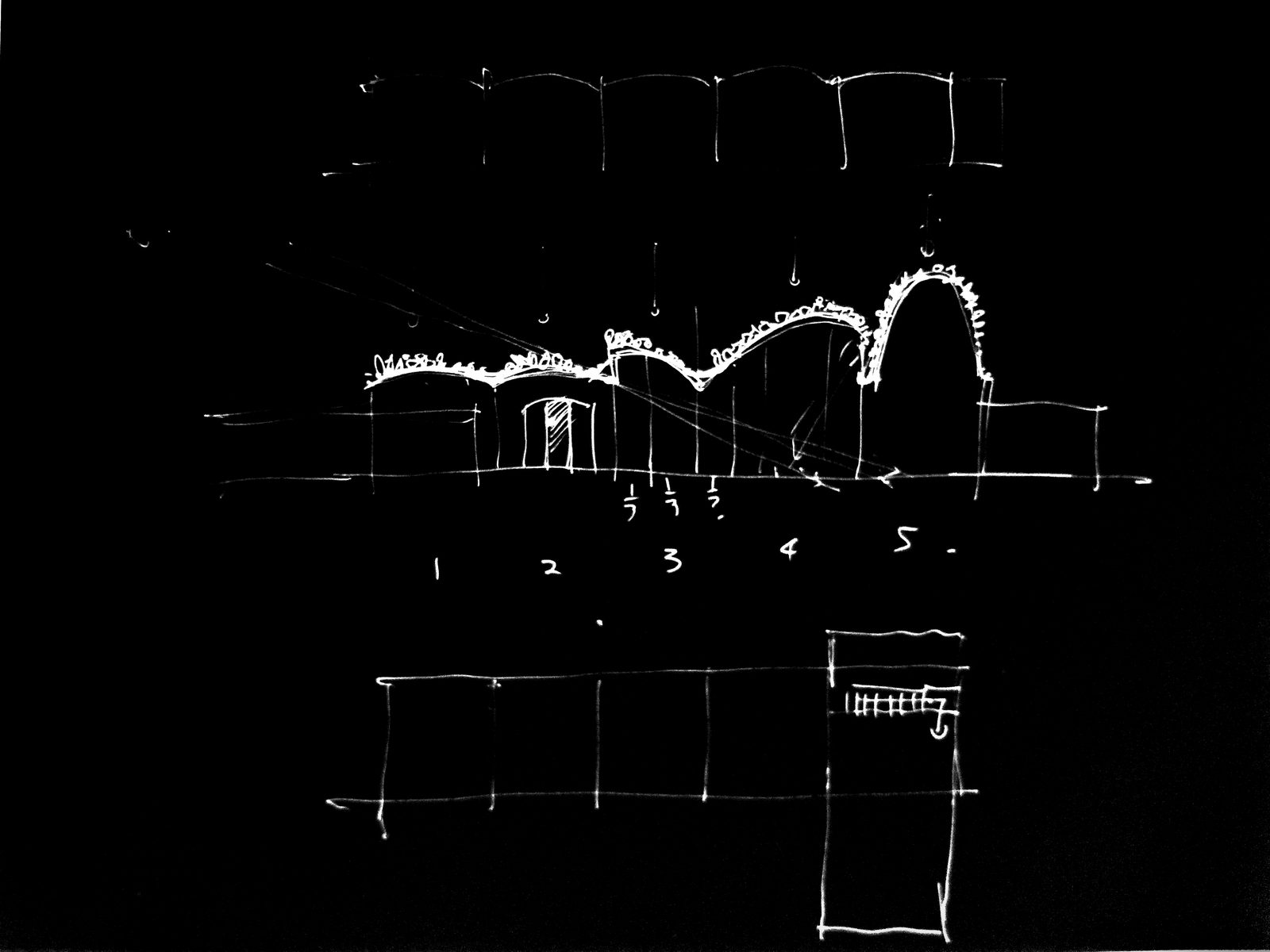
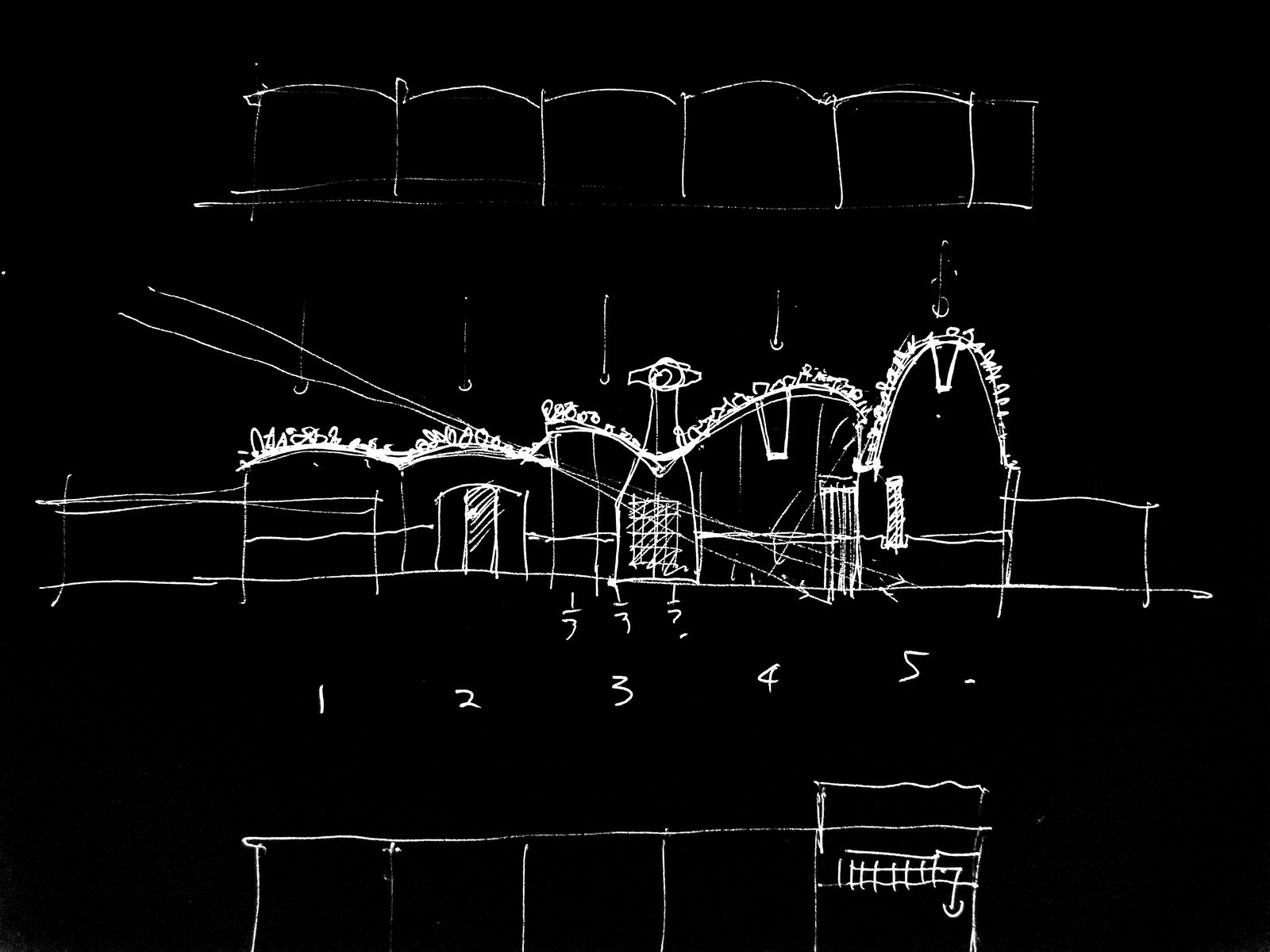
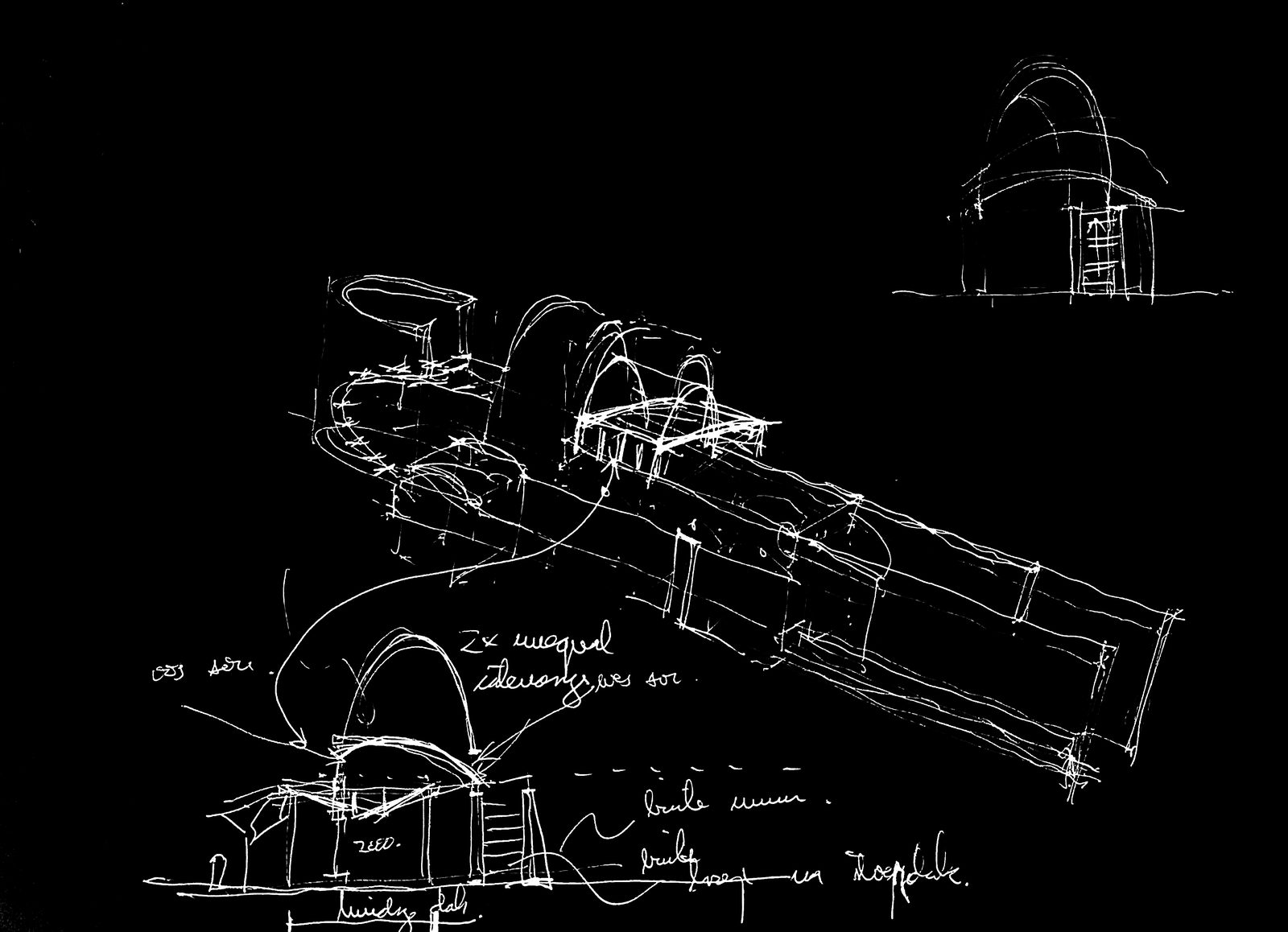
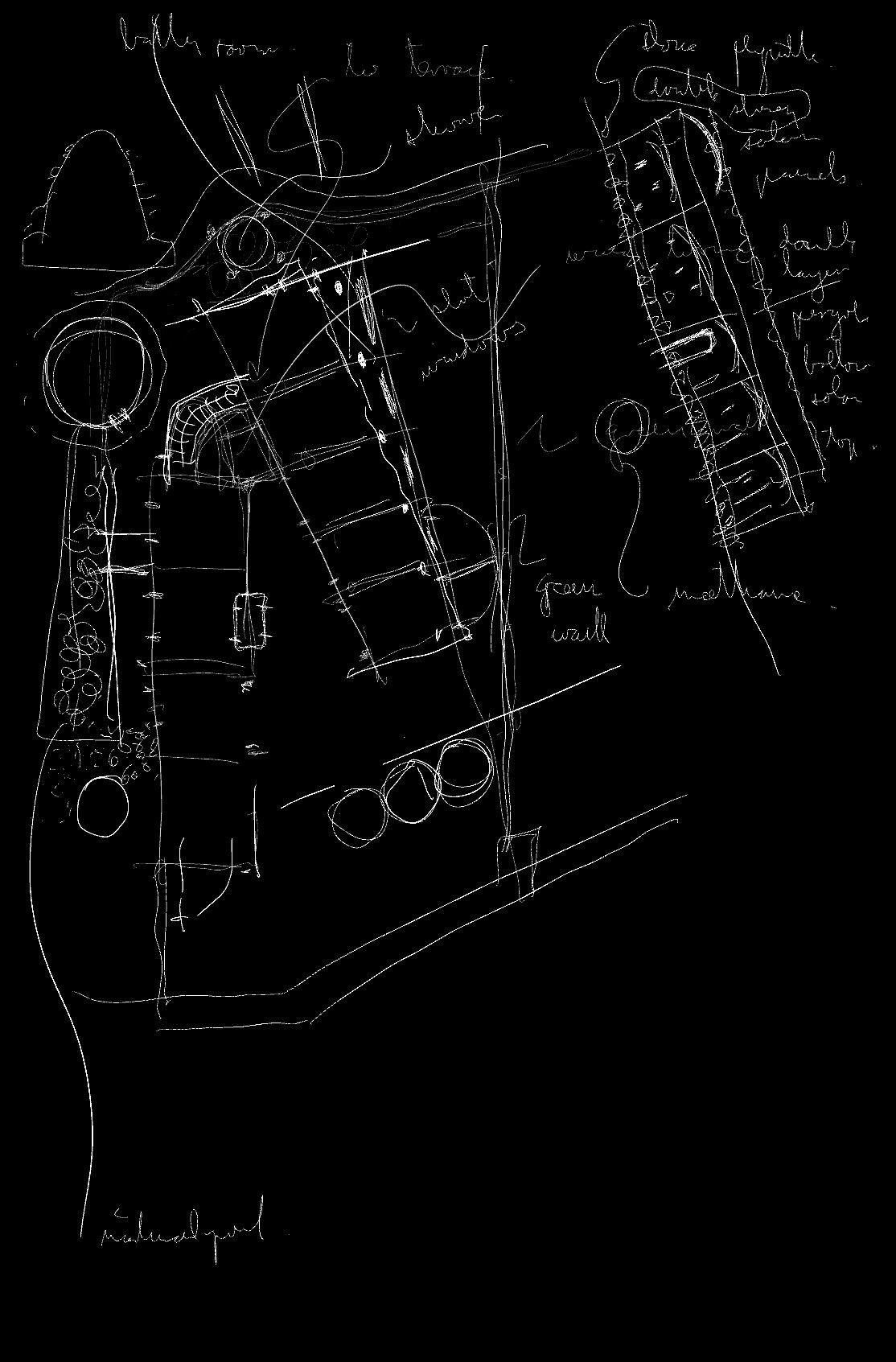
Process / Sketches
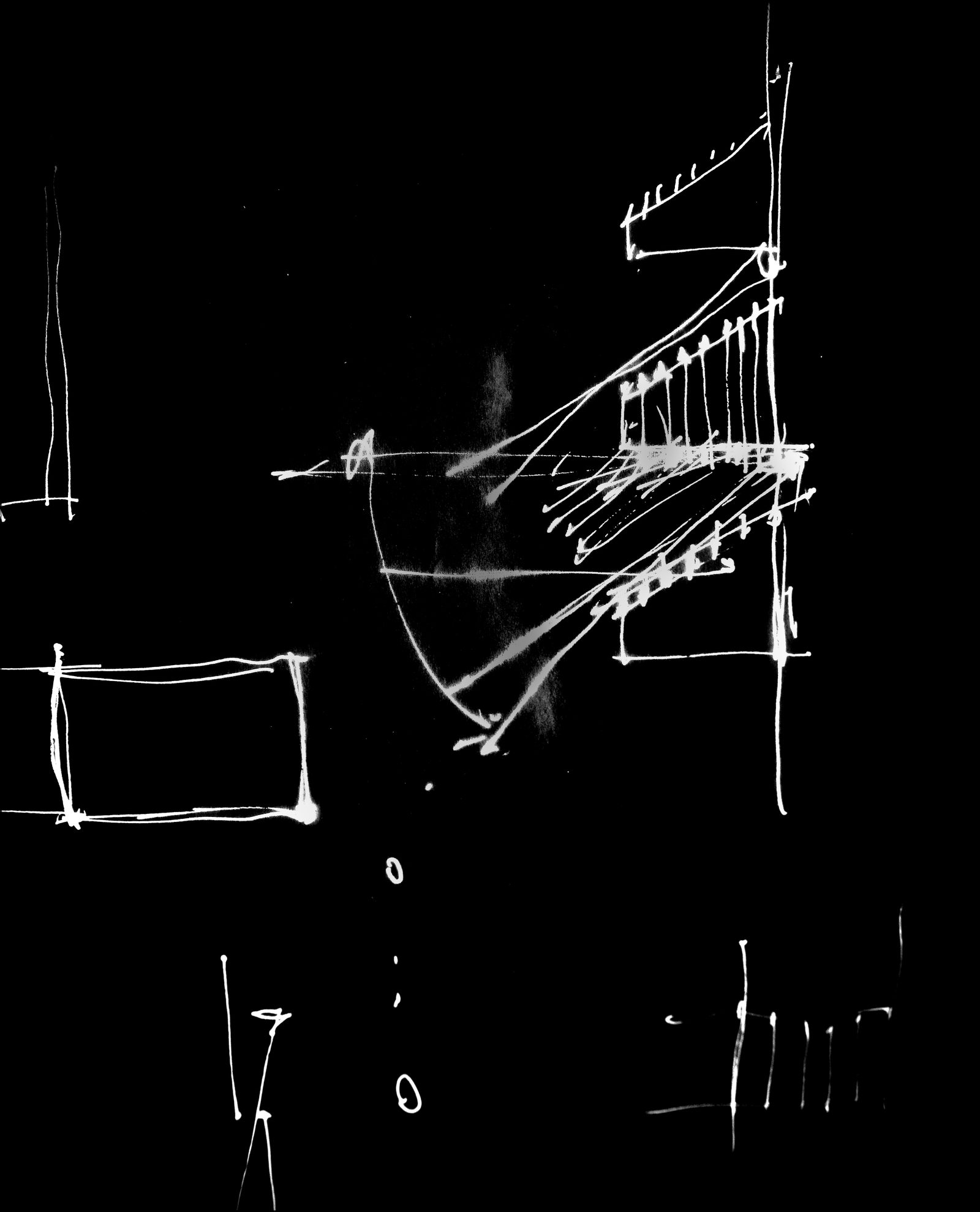
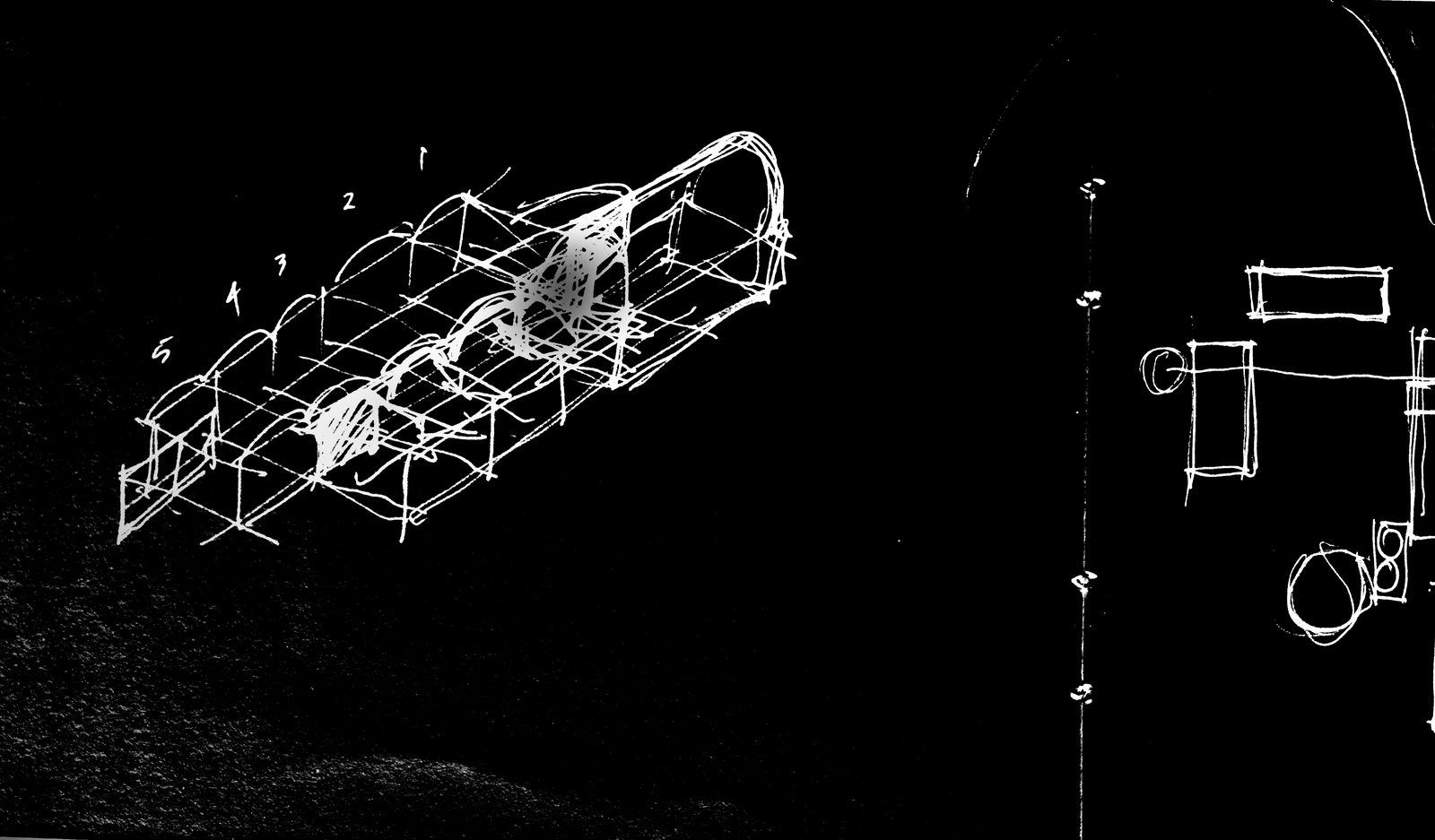
Drawing before drawing
The sketch precedes the model, the section, the specification. It is the first moment at which a spatial idea becomes distinguishable from the surrounding noise — rough enough to remain open, specific enough to eliminate what will not work.
These drawings span three decades and several material registers: barrel vaults in the Namib, earth walls in the Karoo, machined steel connectors for a glass hanging system. The problems differ in every dimension — climate, material, budget, structural logic. The thinking behind them does not. Each sketch is the same act: locating the structural idea that is also the spatial idea, and testing whether the two can be made to coincide.
The sketch does not produce beauty. It produces clarity. Beauty, if it comes, comes later — when the idea is resolved enough that the building can afford to be generous.