Built Work · Namibia
Fort Gaia
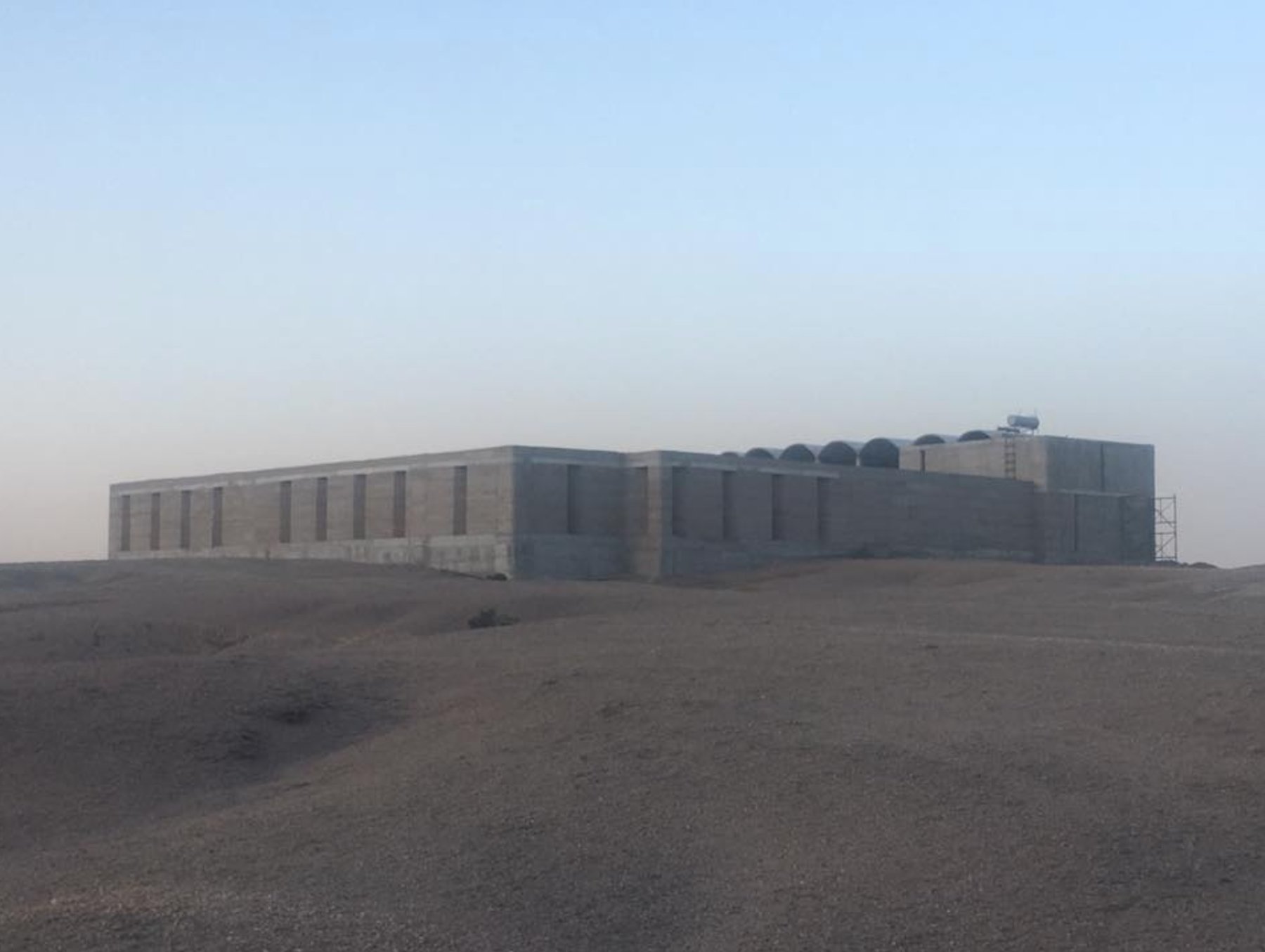
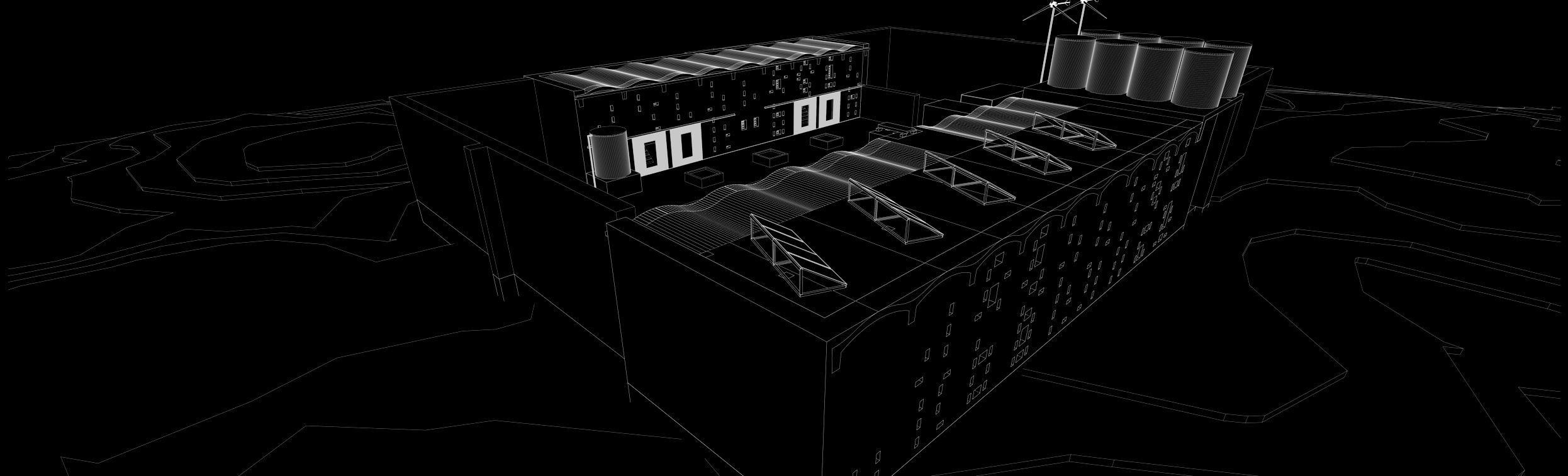
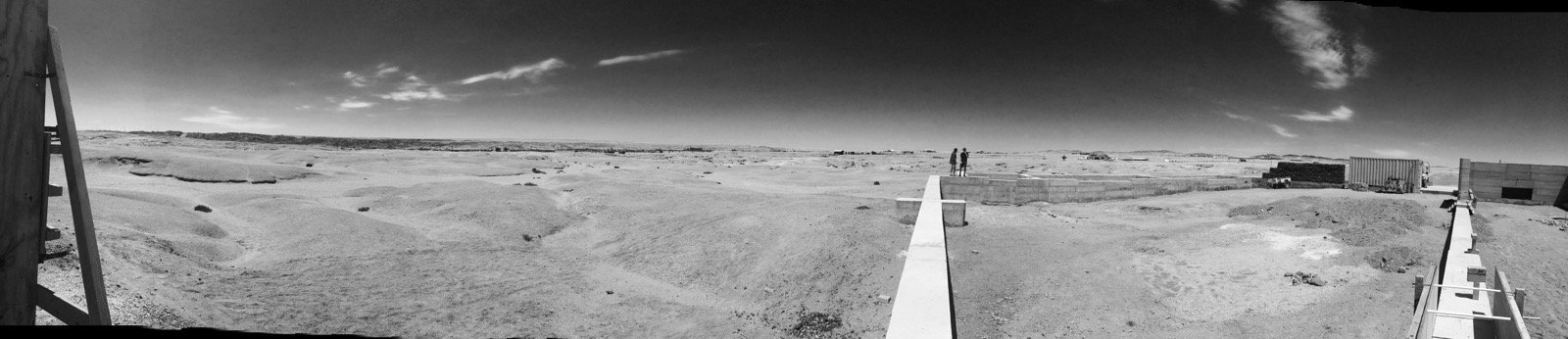
Fort Gaia sits in the Namib coastal desert, approximately 25 kilometres east of Swakopmund — far enough from the Atlantic to lose the full moderating effect of the cold Benguela Current, close enough to remain within its fog belt for much of the year. The climate here is not the extreme hot-cold oscillation of the deep Namib interior: it is raw, cold at night, frequently overcast, and scoured by a persistent south-westerly off the ocean. A few times each winter the wind reverses into the oosweer — the east wind: a hot, dry air mass that pushes west off the interior plateau, burns off the fog, and can lift Swakopmund from cold and damp to over thirty degrees within a couple of hours before the ocean reasserts itself. For much of the rest of the year the cold Benguela Current holds a dense fog over the coast that can roll as much as sixty kilometres inland. The building answers these conditions not with insulation and mechanical services but with mass: thick rammed walls that resist wind, hold warmth through cold nights, and survive the salt-laden coastal air without the maintenance demands of lighter construction.
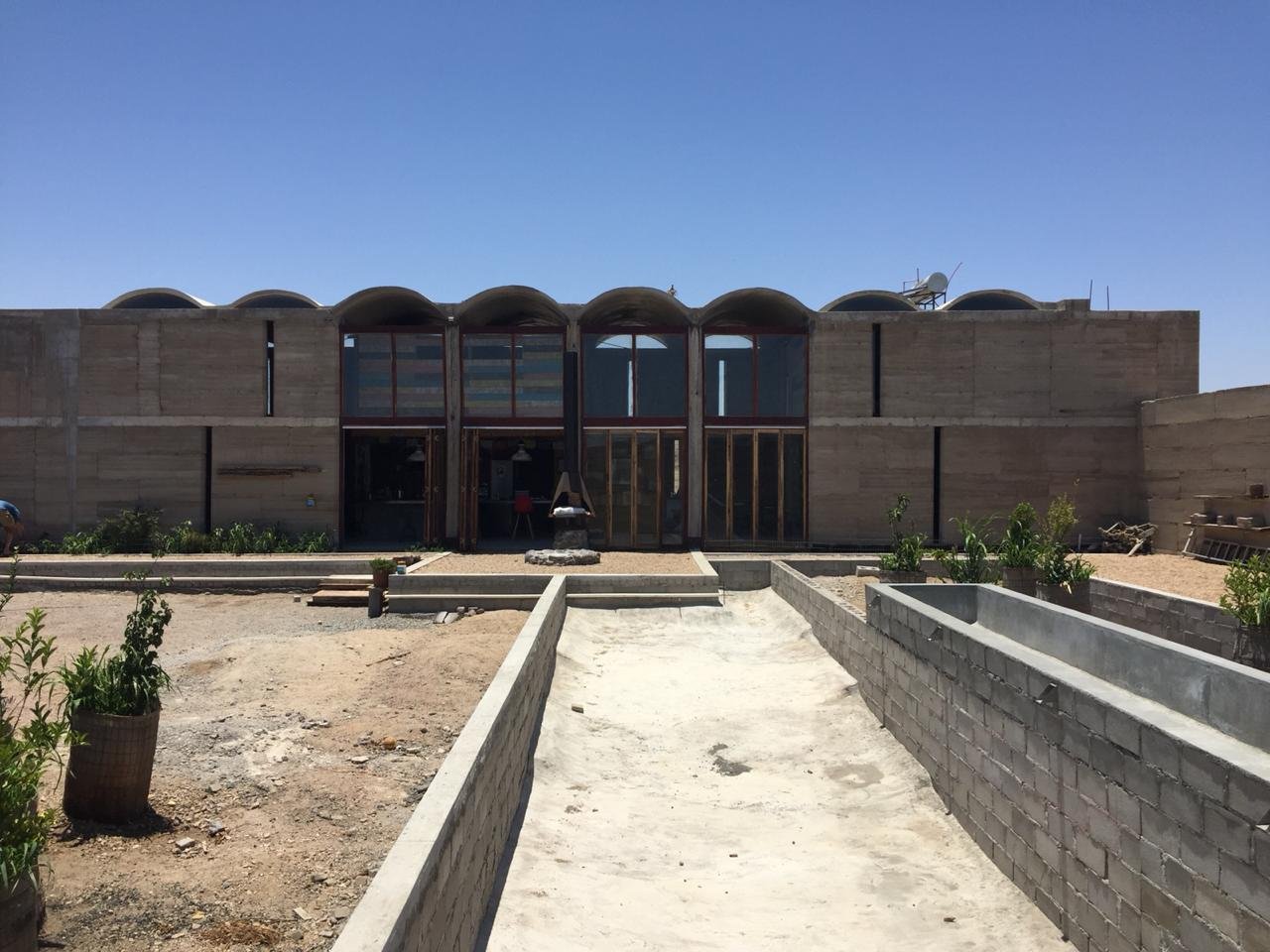
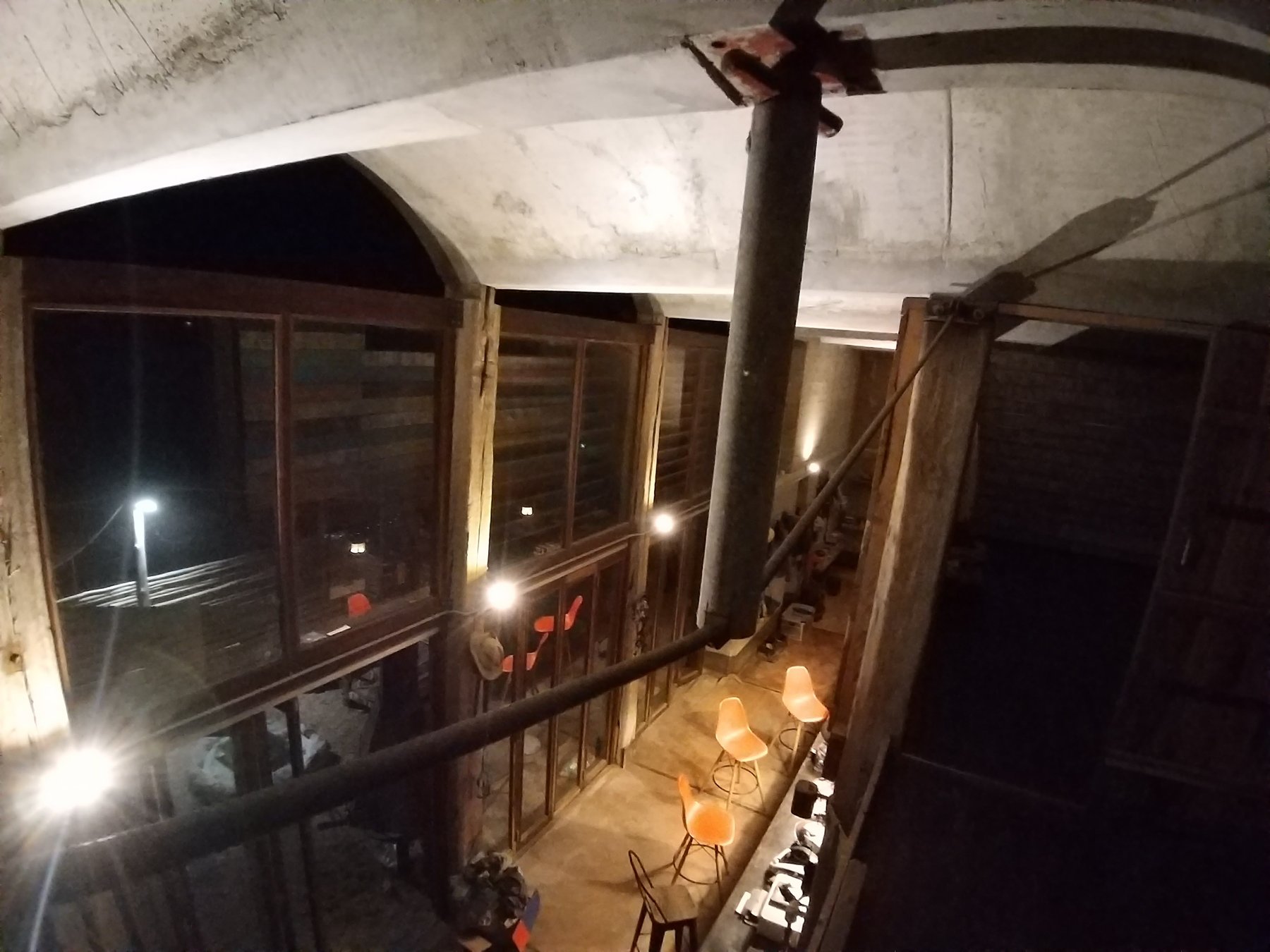
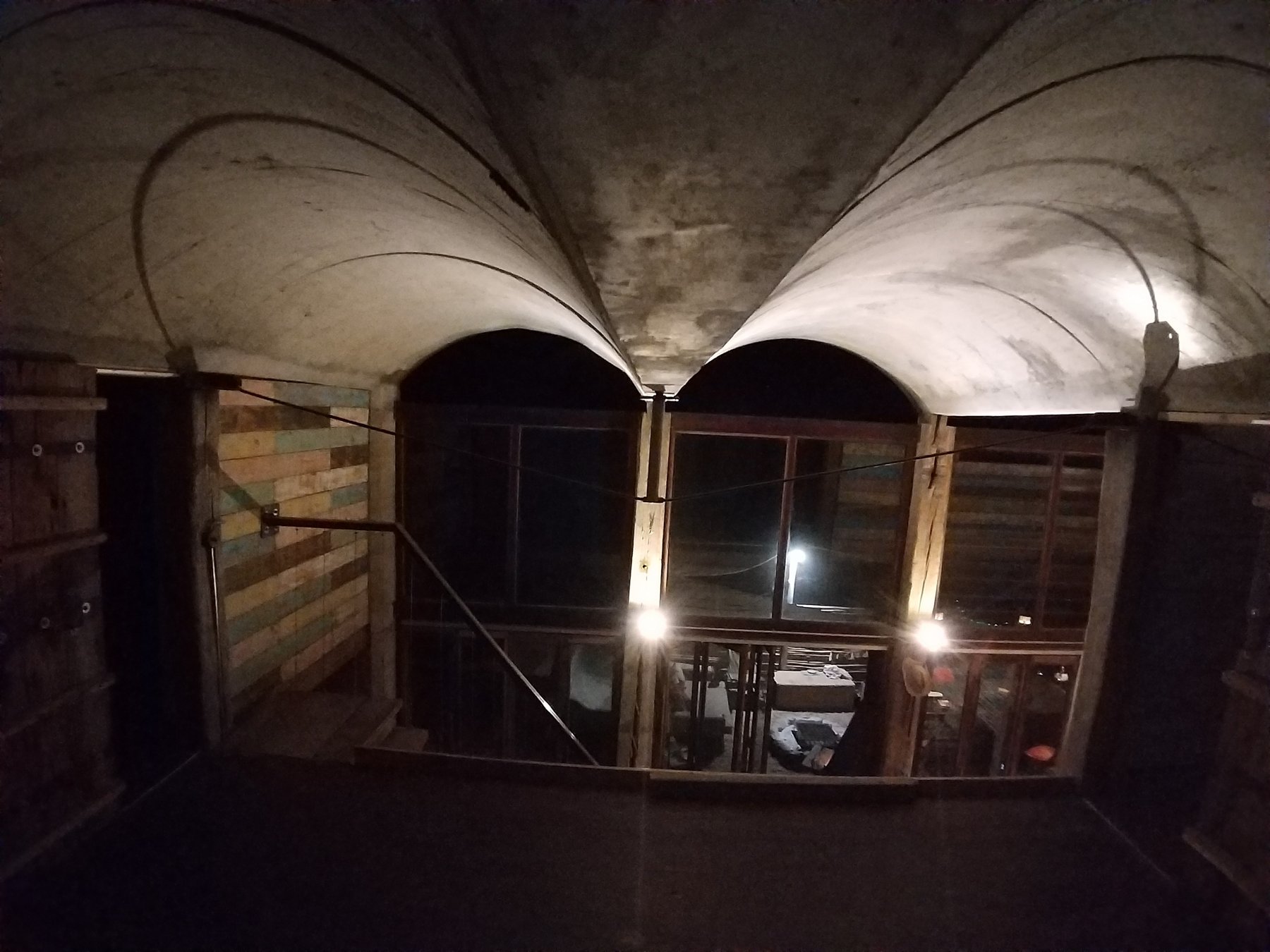
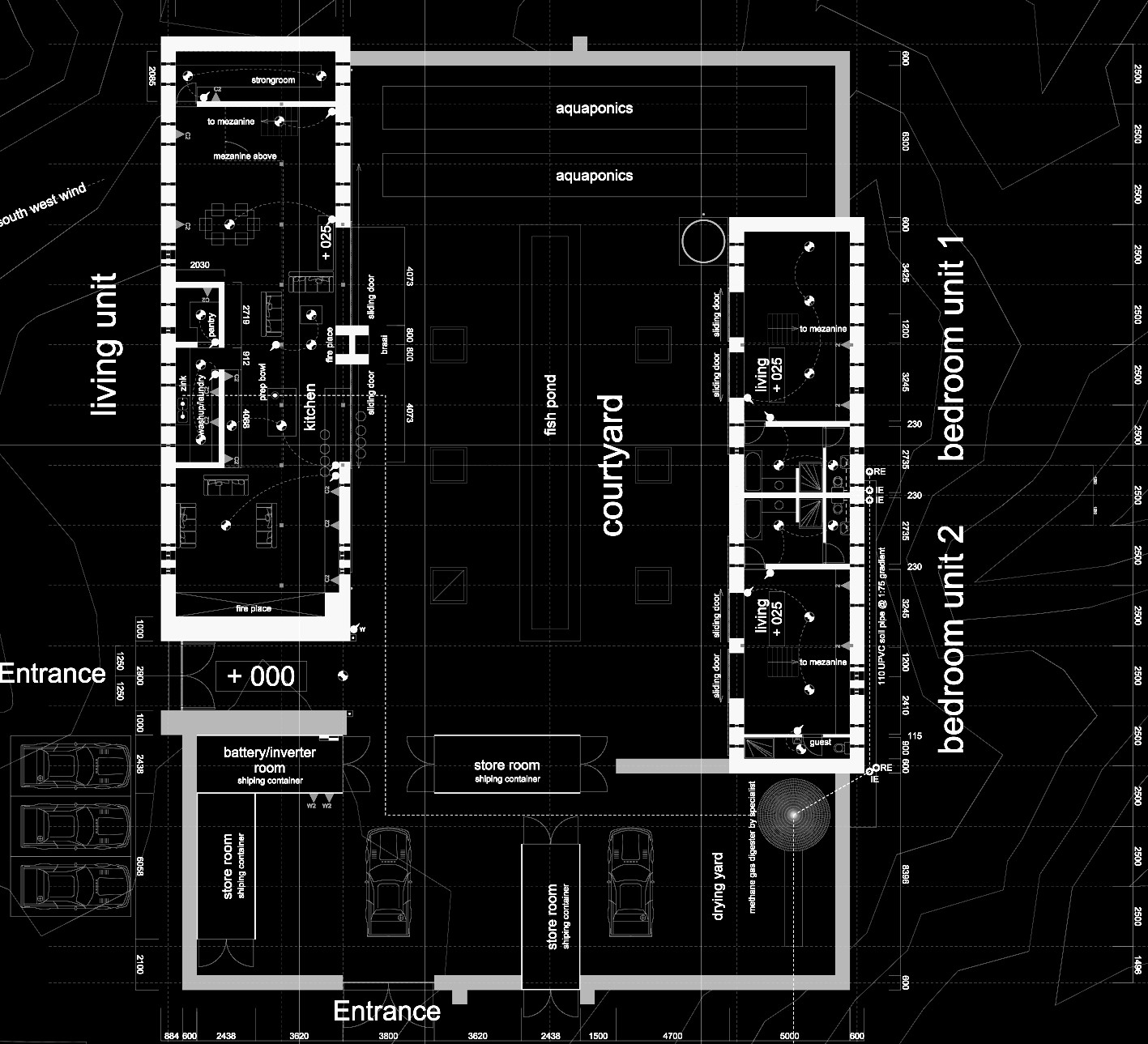



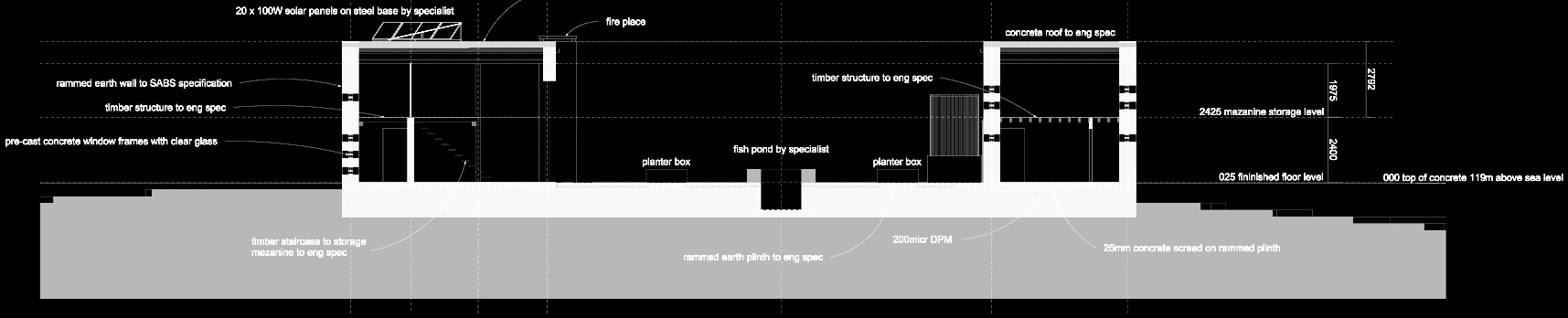

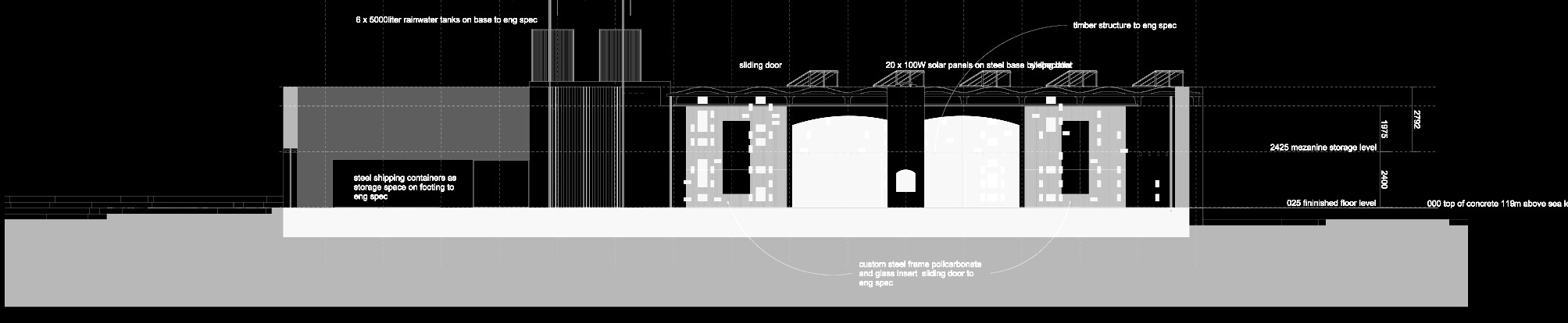
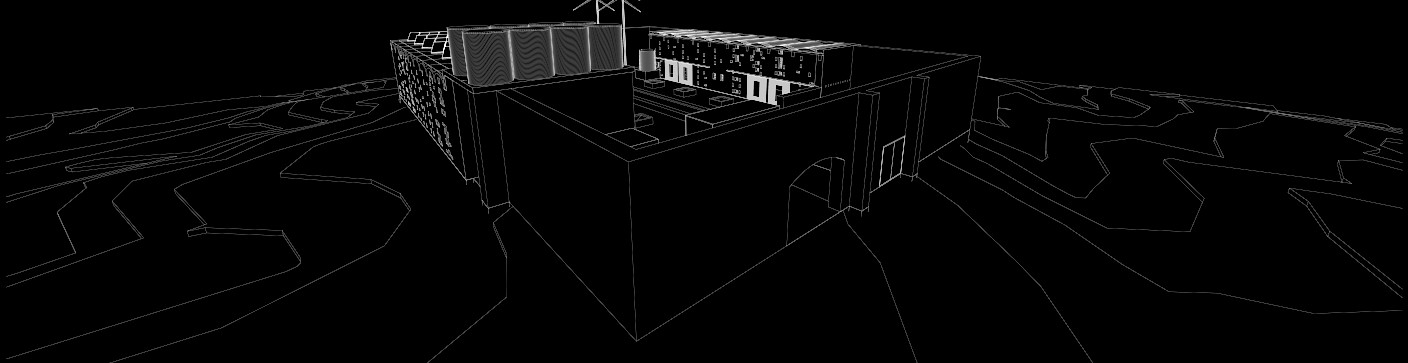
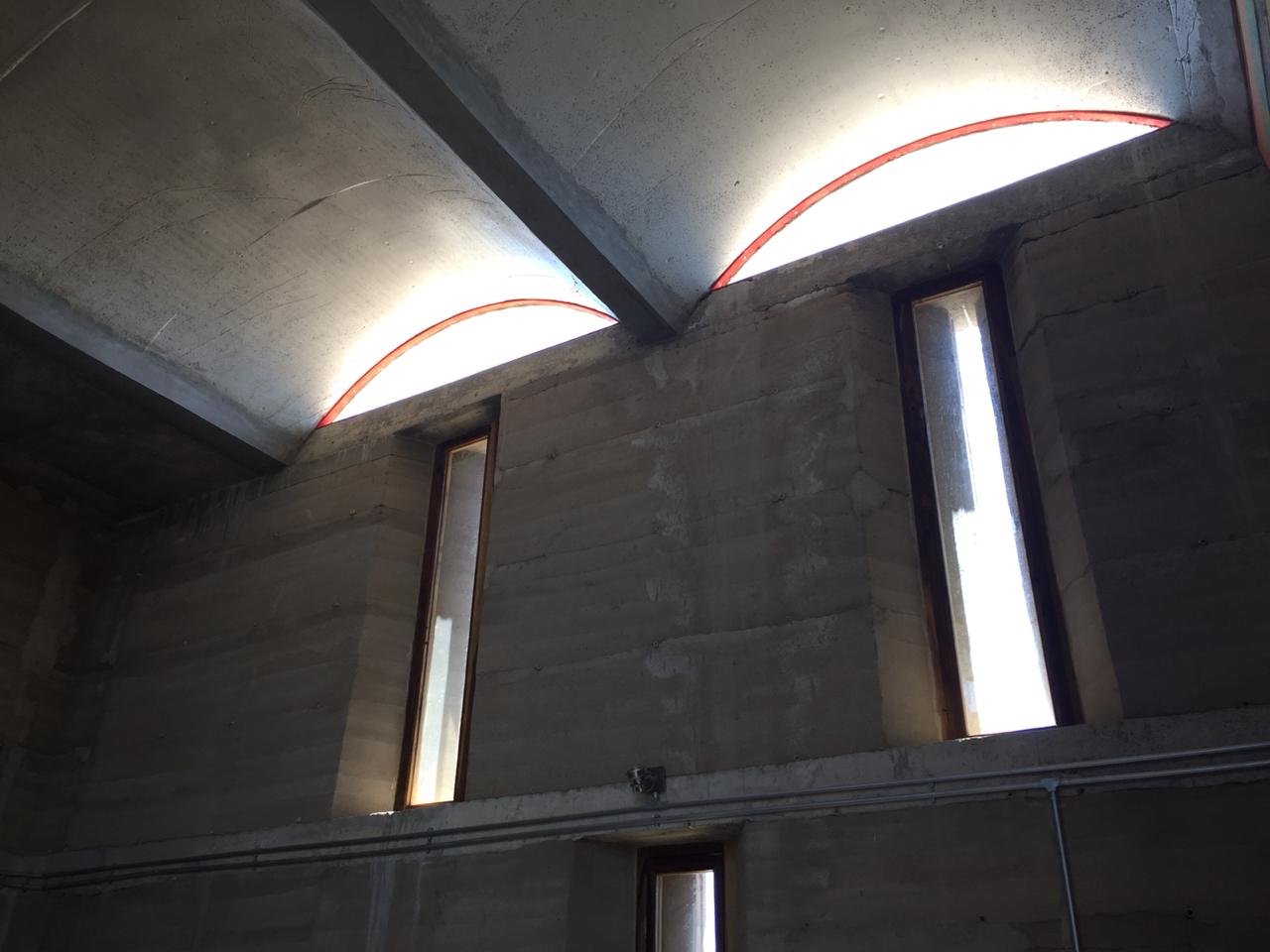
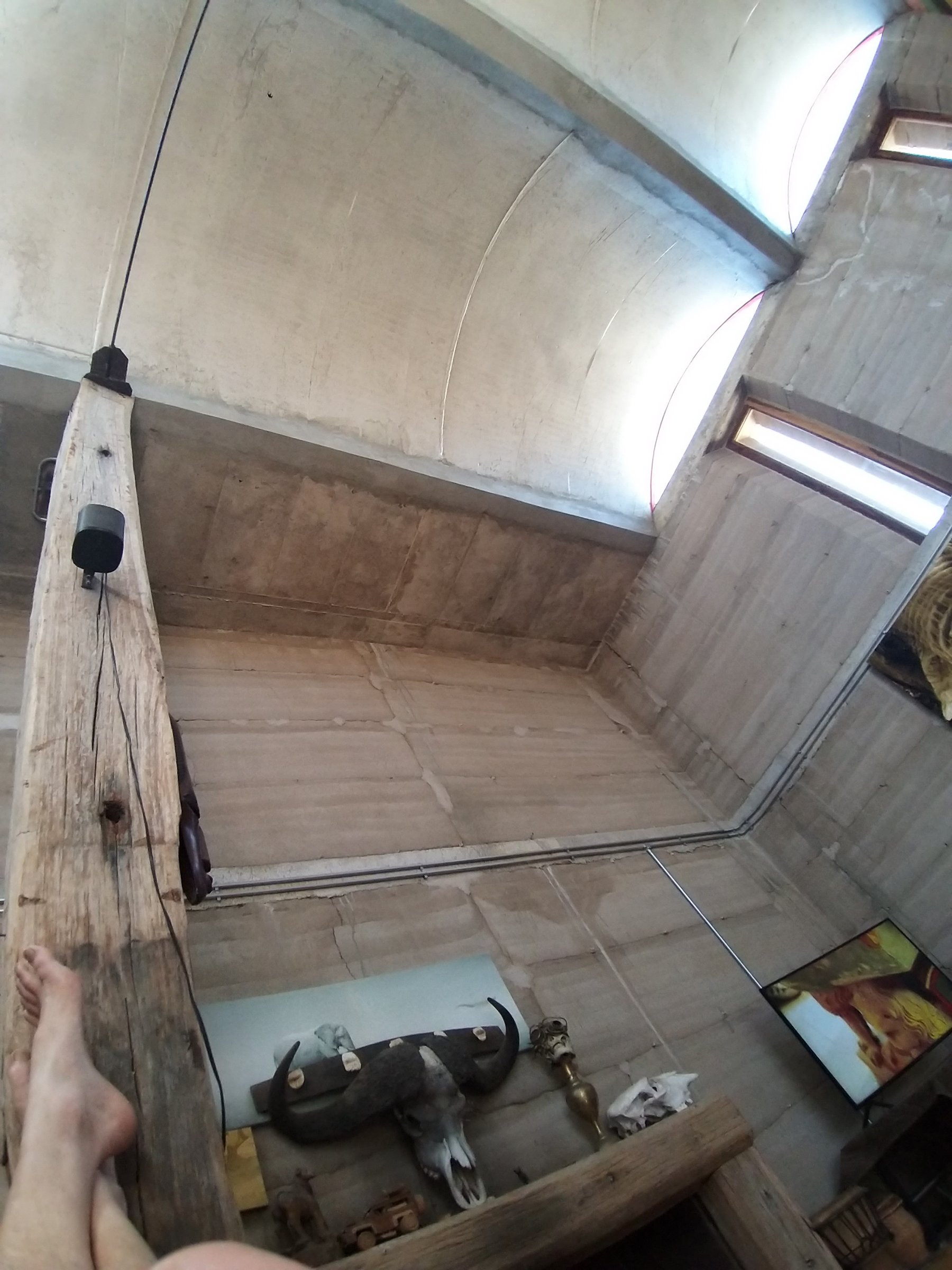
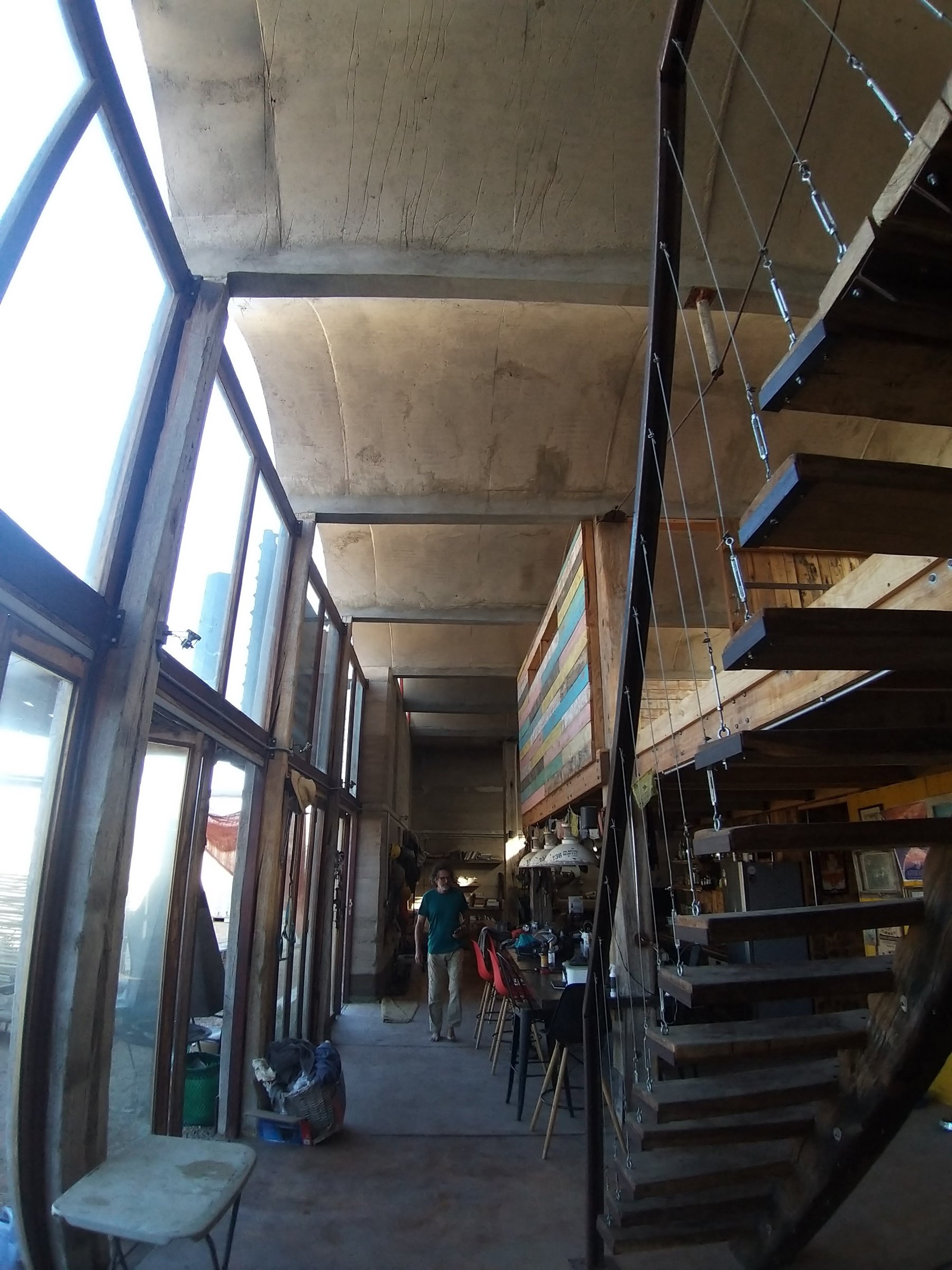
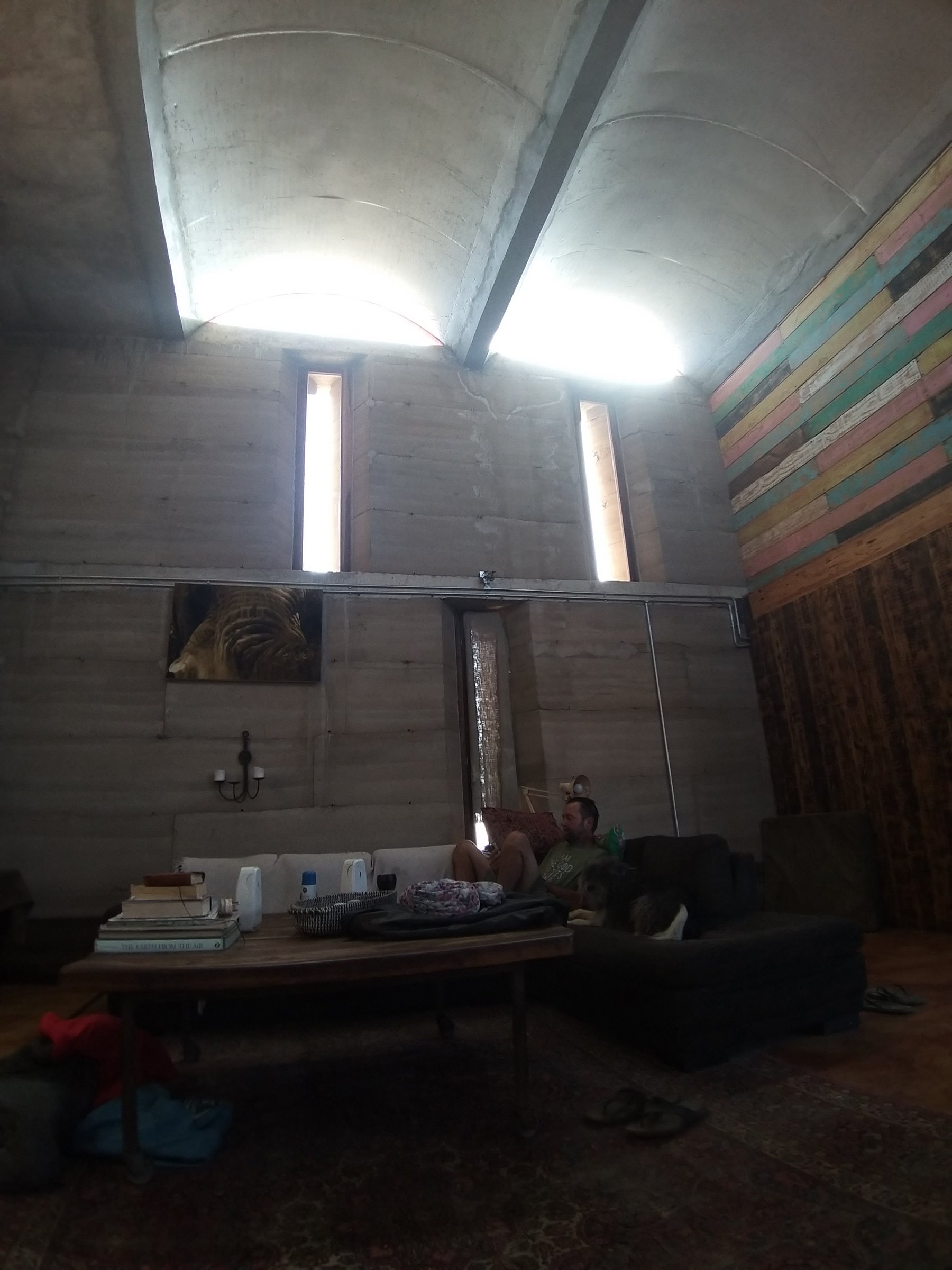
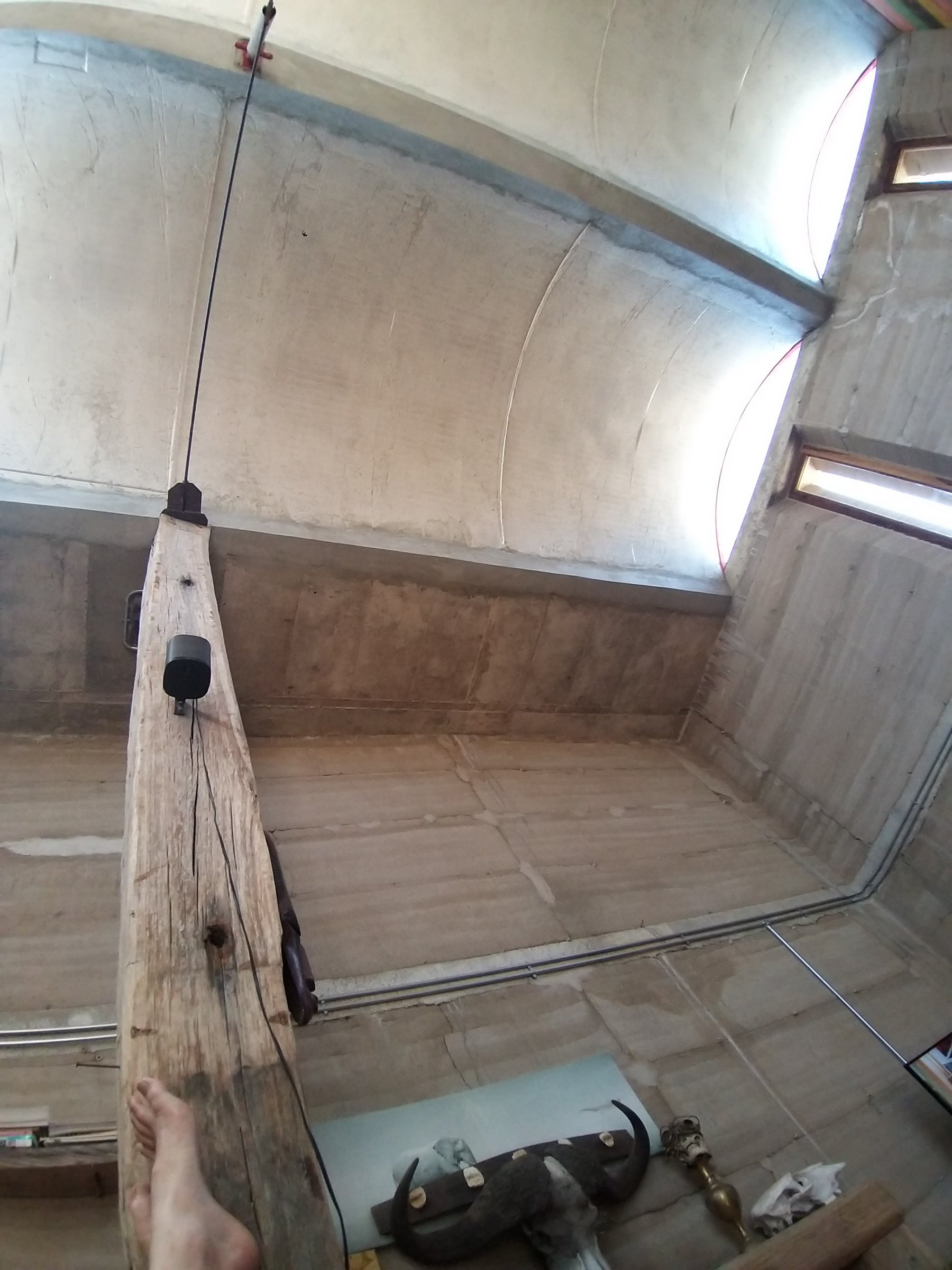
The roof vaults are lit through the crescent-shaped gaps left between the ferro-cement vaults and the tops of the walls — narrow openings edged in red-painted steel that catch the angle of the desert sun and scatter reflected light across the underside of the vault. The result is a space that is simultaneously fortress-like in its mass and luminous in its interior quality: a carved-out rather than assembled architecture.
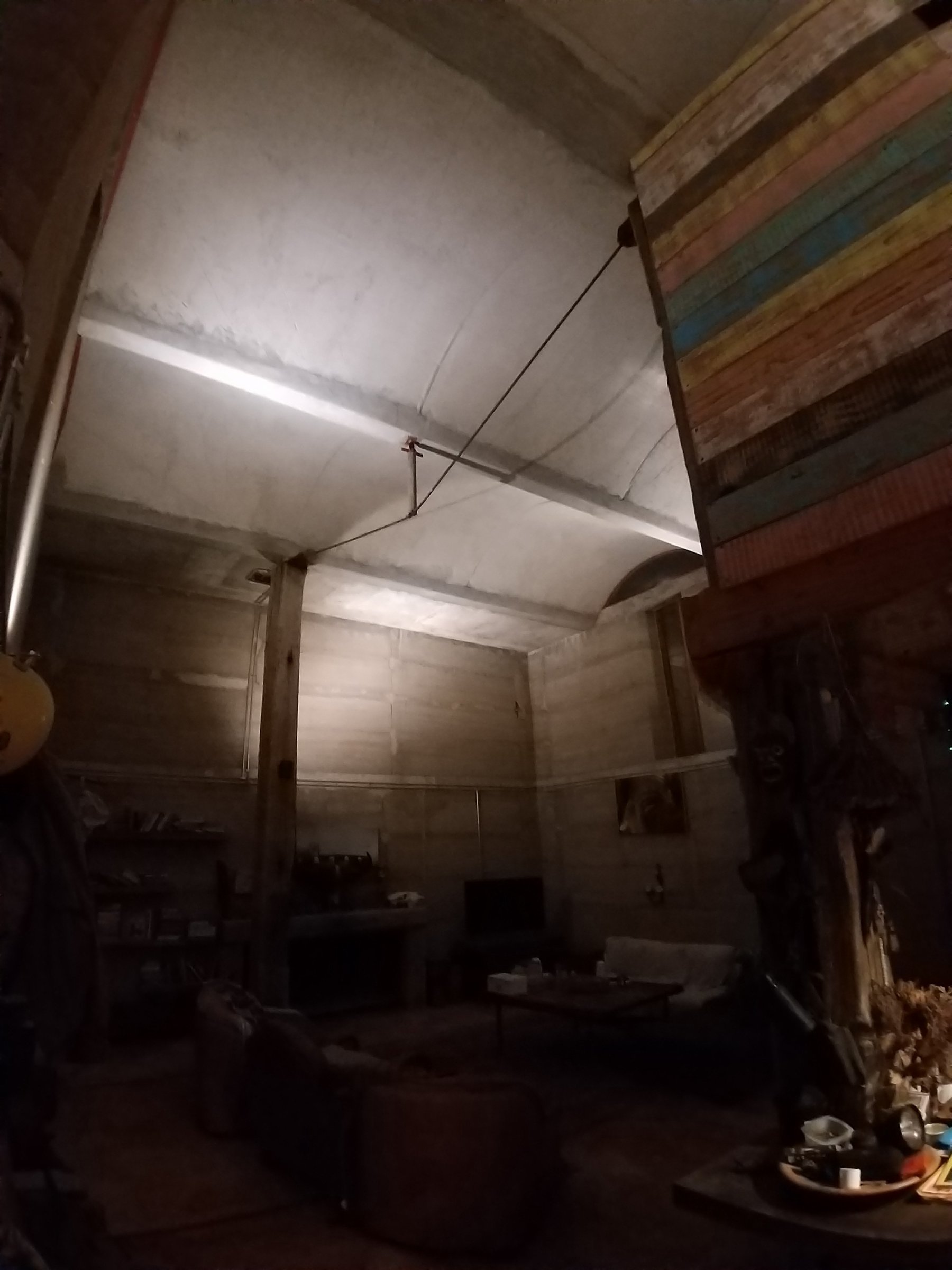
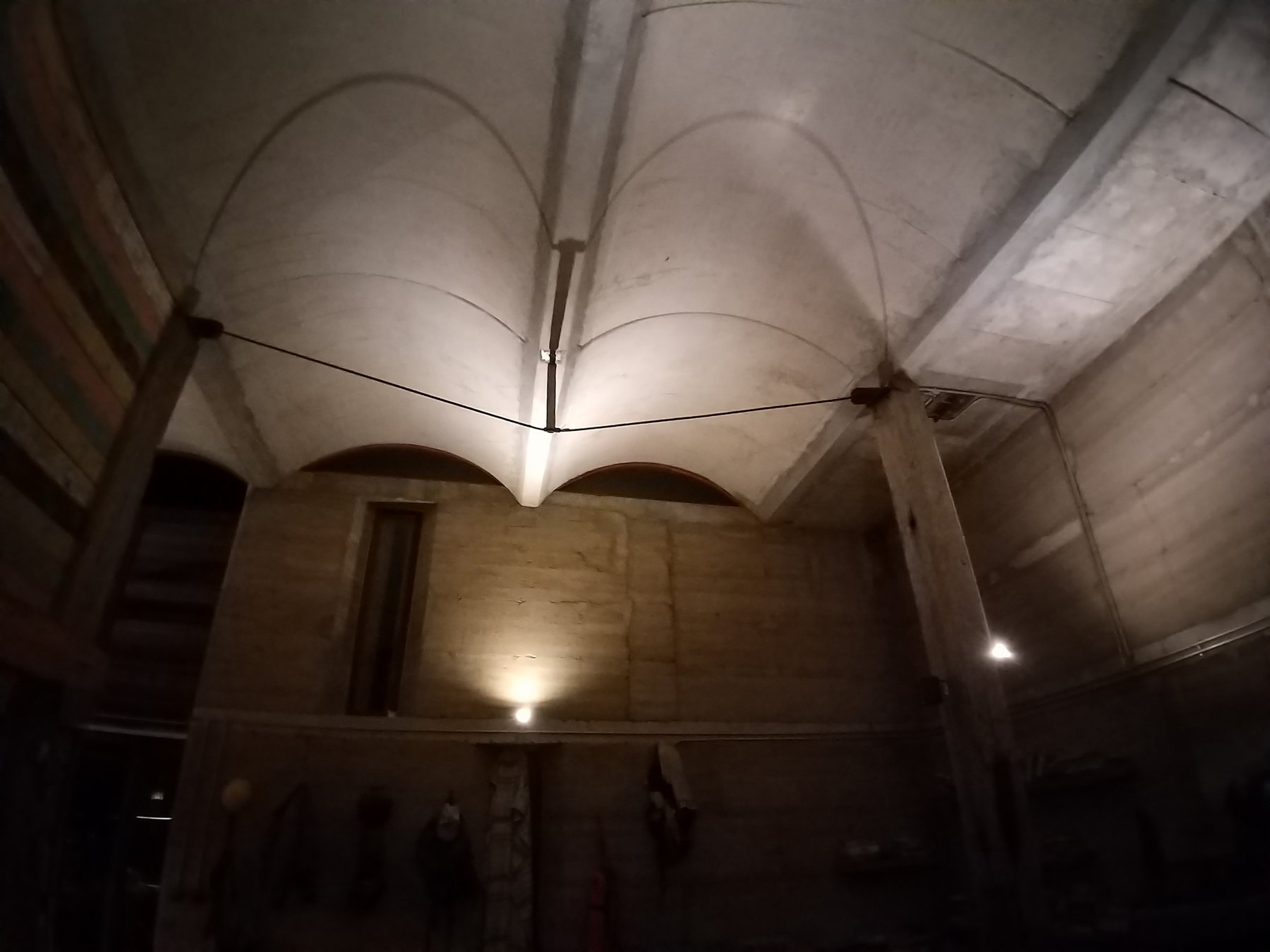
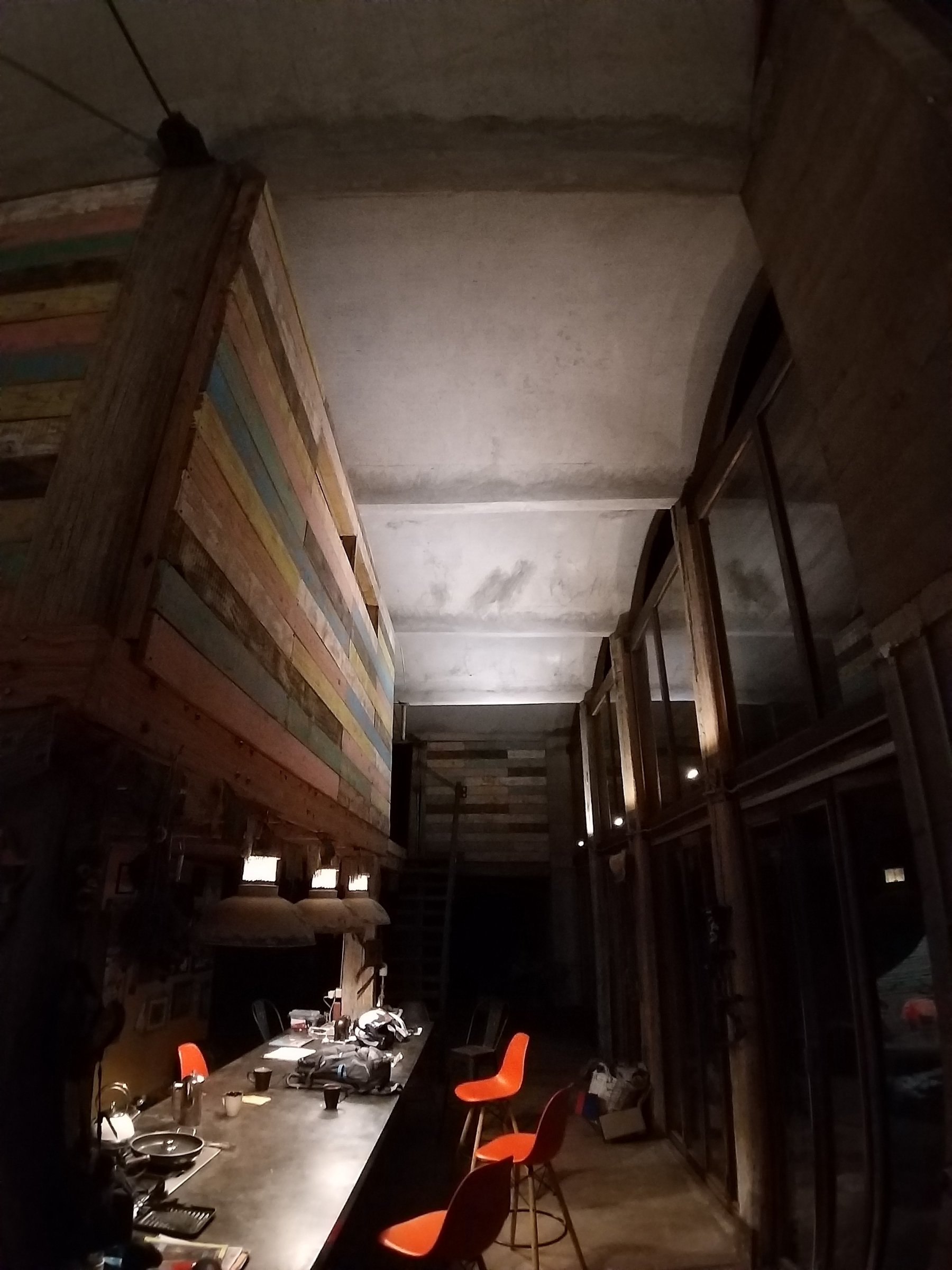
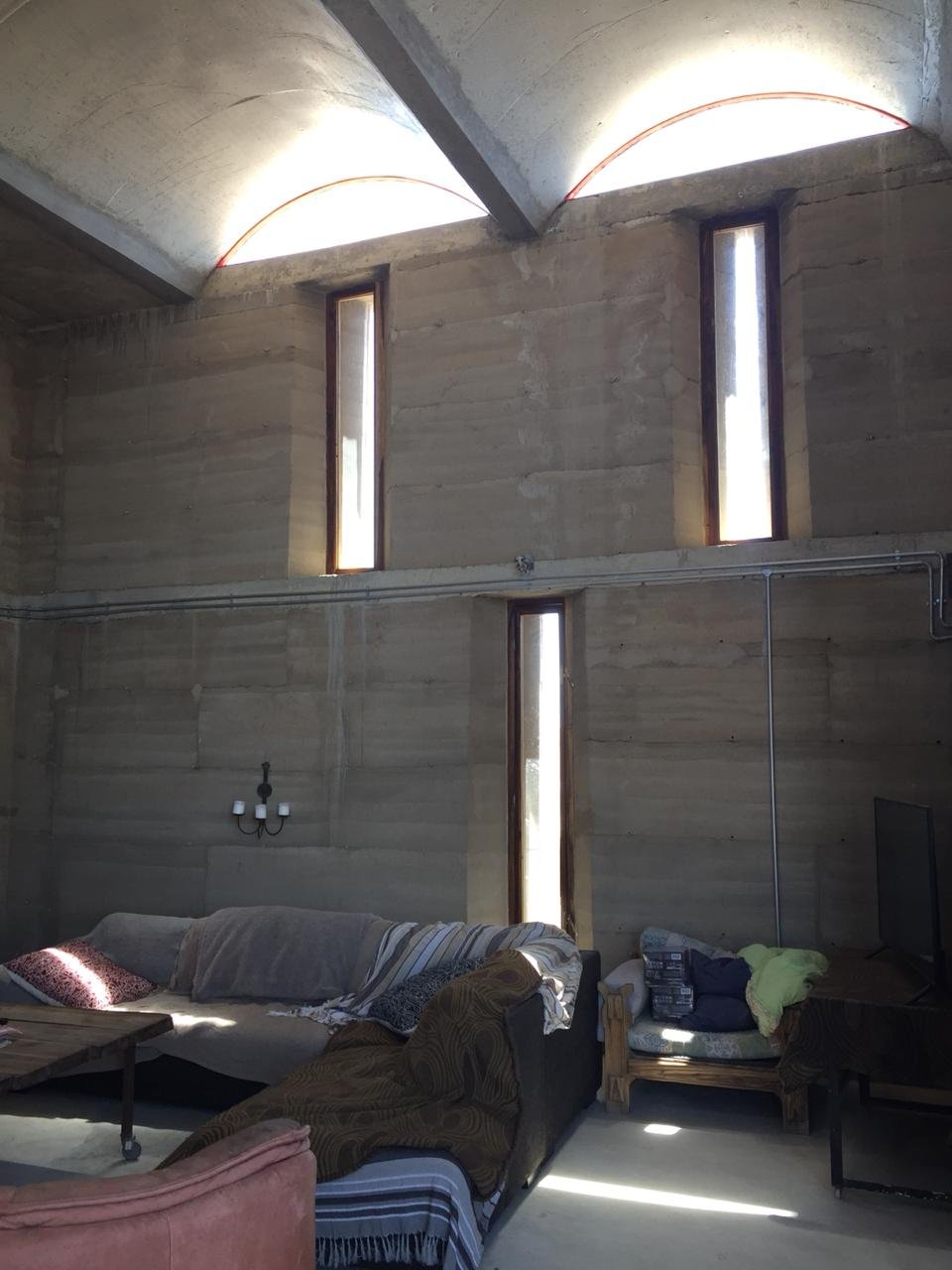
The vaults are constructed in ferro-cement — a technique of thin cement mortar pressed and trowelled over successive layers of wire mesh and light steel rod, built in-situ without conventional timber formwork. The same method is used in yacht hull construction: Joseph-Louis Lambot built the first ferro-cement boat in 1848, and the technique was carried into architectural structures by Pier Luigi Nervi in the 1940s — thin shells of exceptional strength, buildable by hand, on curved geometries that would otherwise demand elaborate shuttering. On the Namibian coast, where imported materials arrive slowly and at considerable expense, it had a further advantage: the vault was plastered up in-situ directly on top of the walls — mesh armature shaped in place over lightweight rudimentary shuttering, mortar applied by hand from above, no casting bed, no crane, no lifting. Two people, working incrementally, with almost no waste.
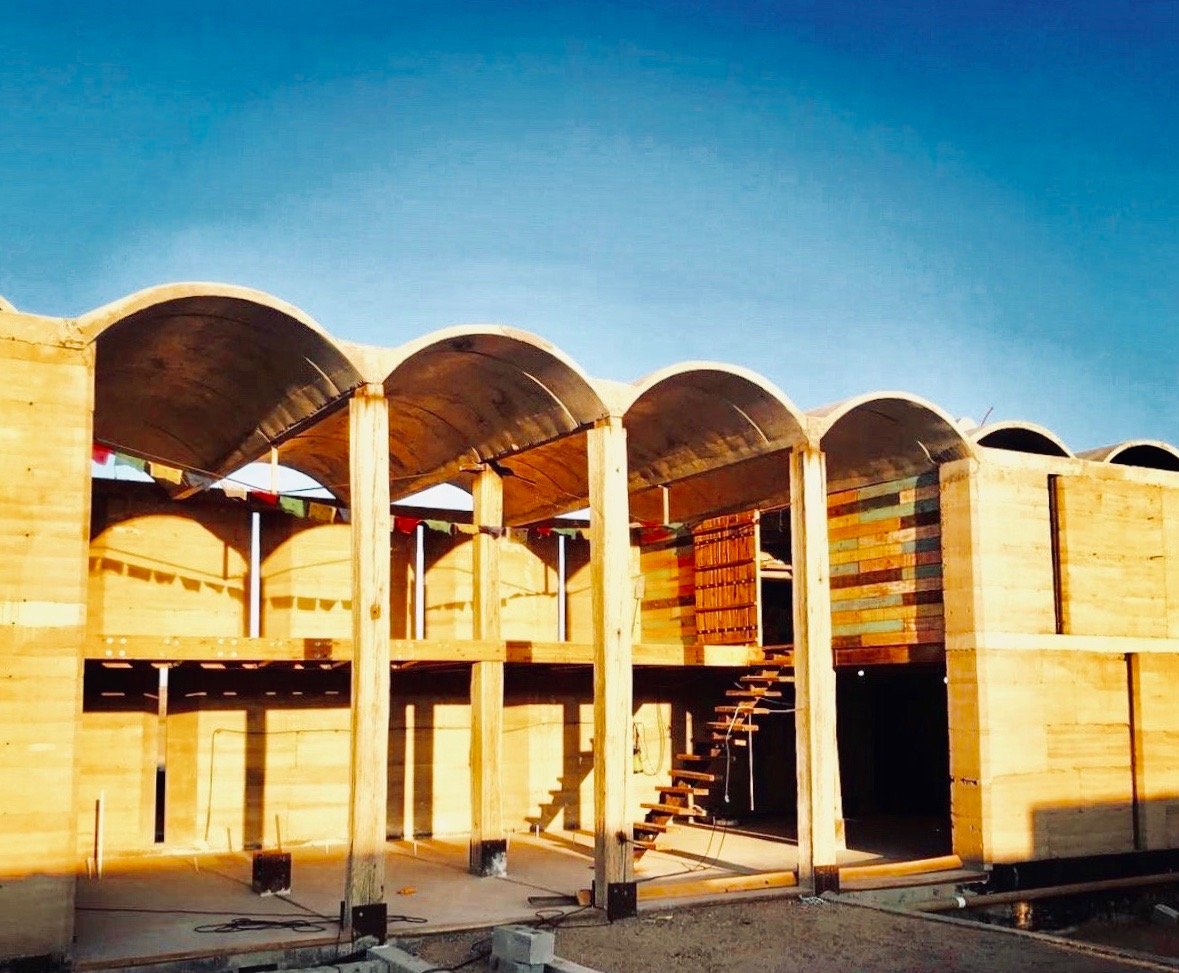
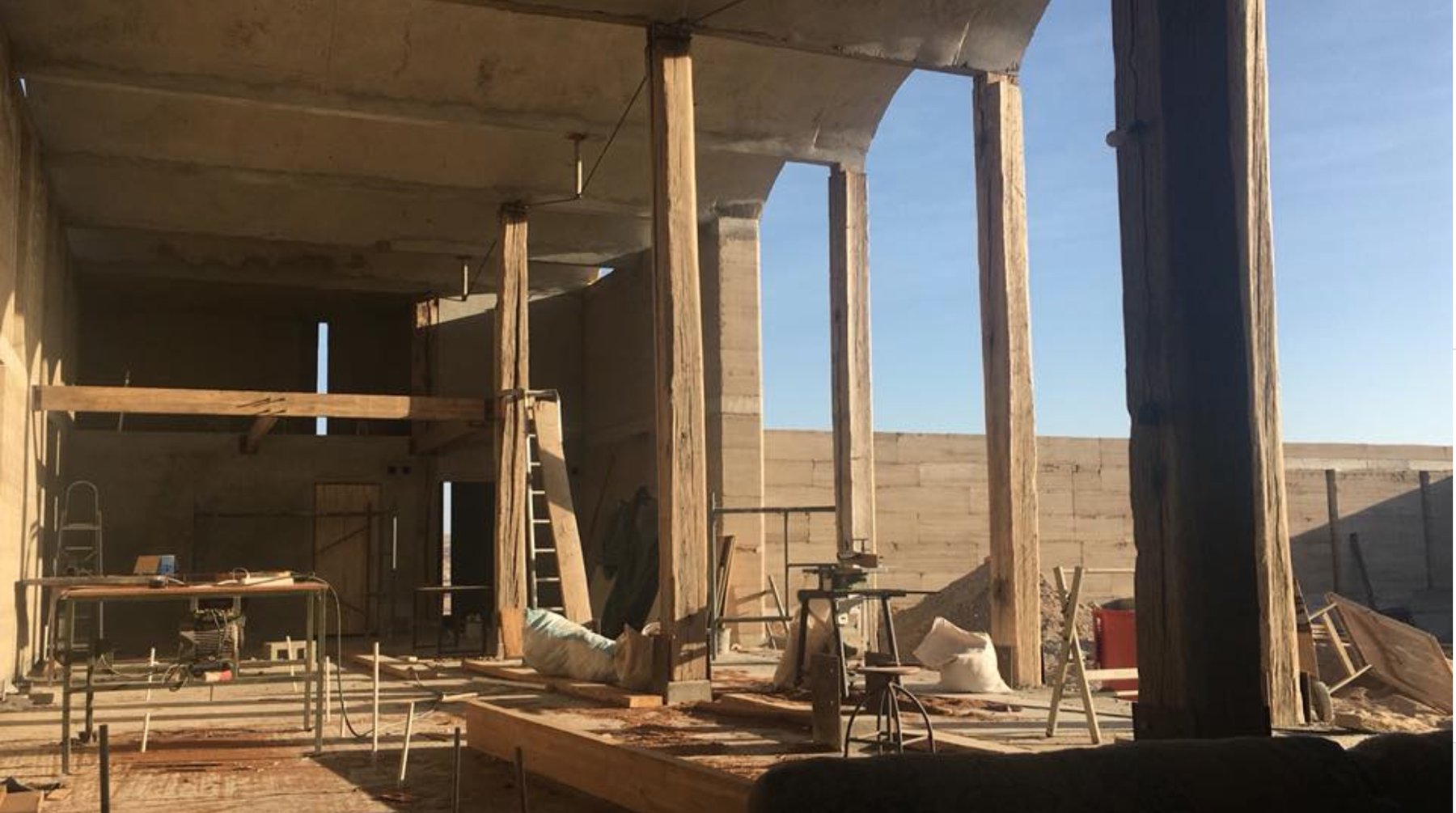
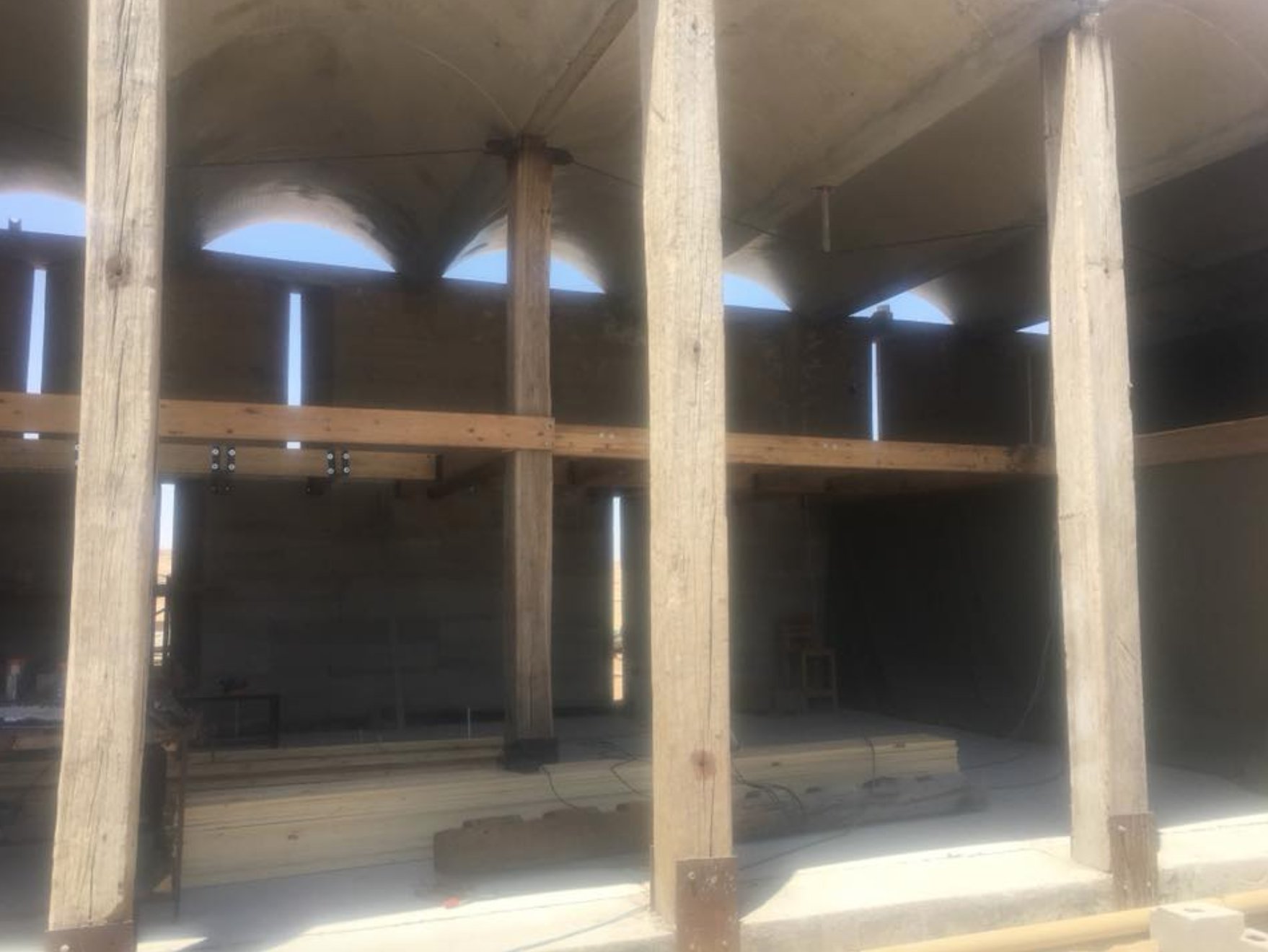
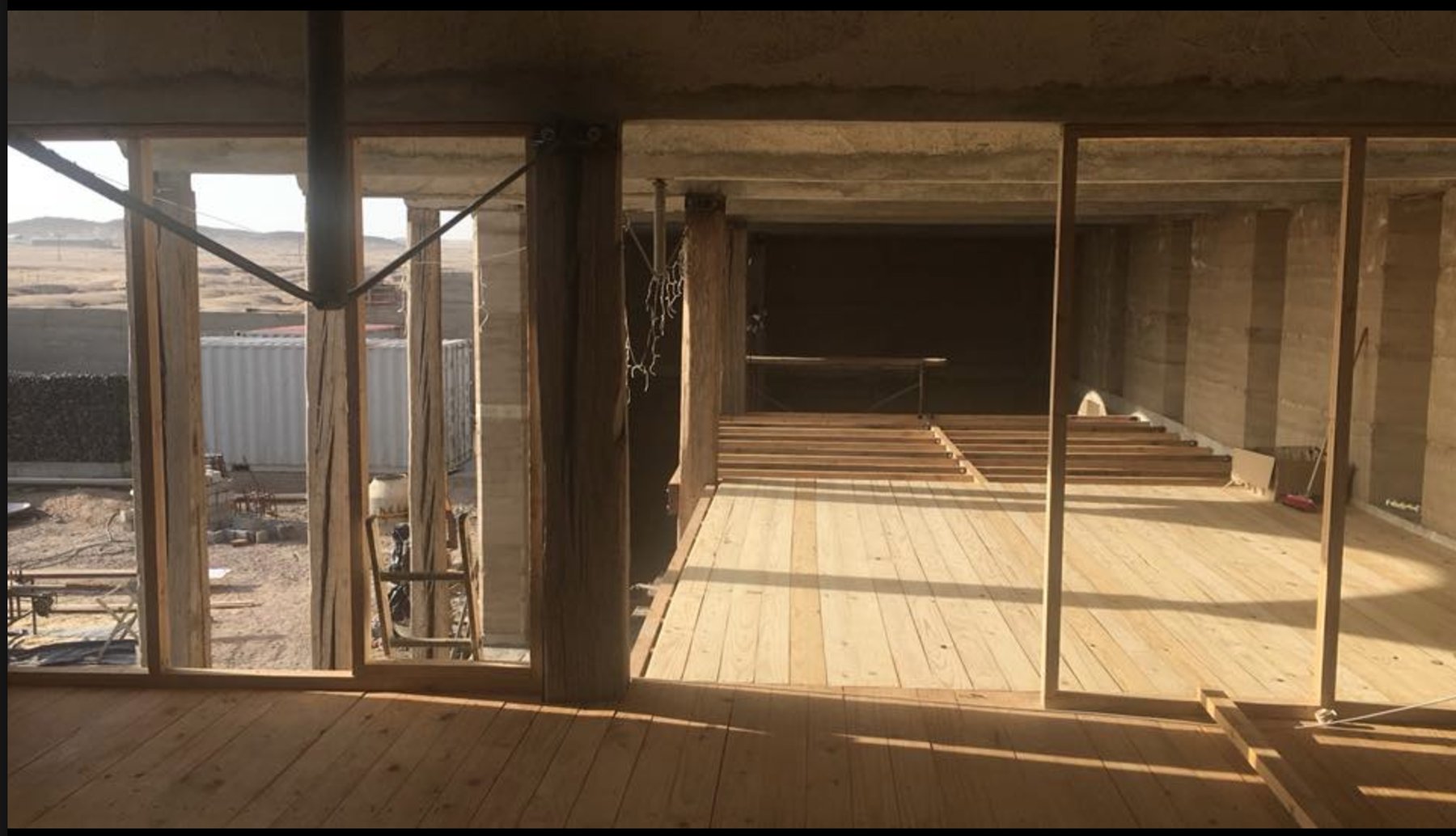
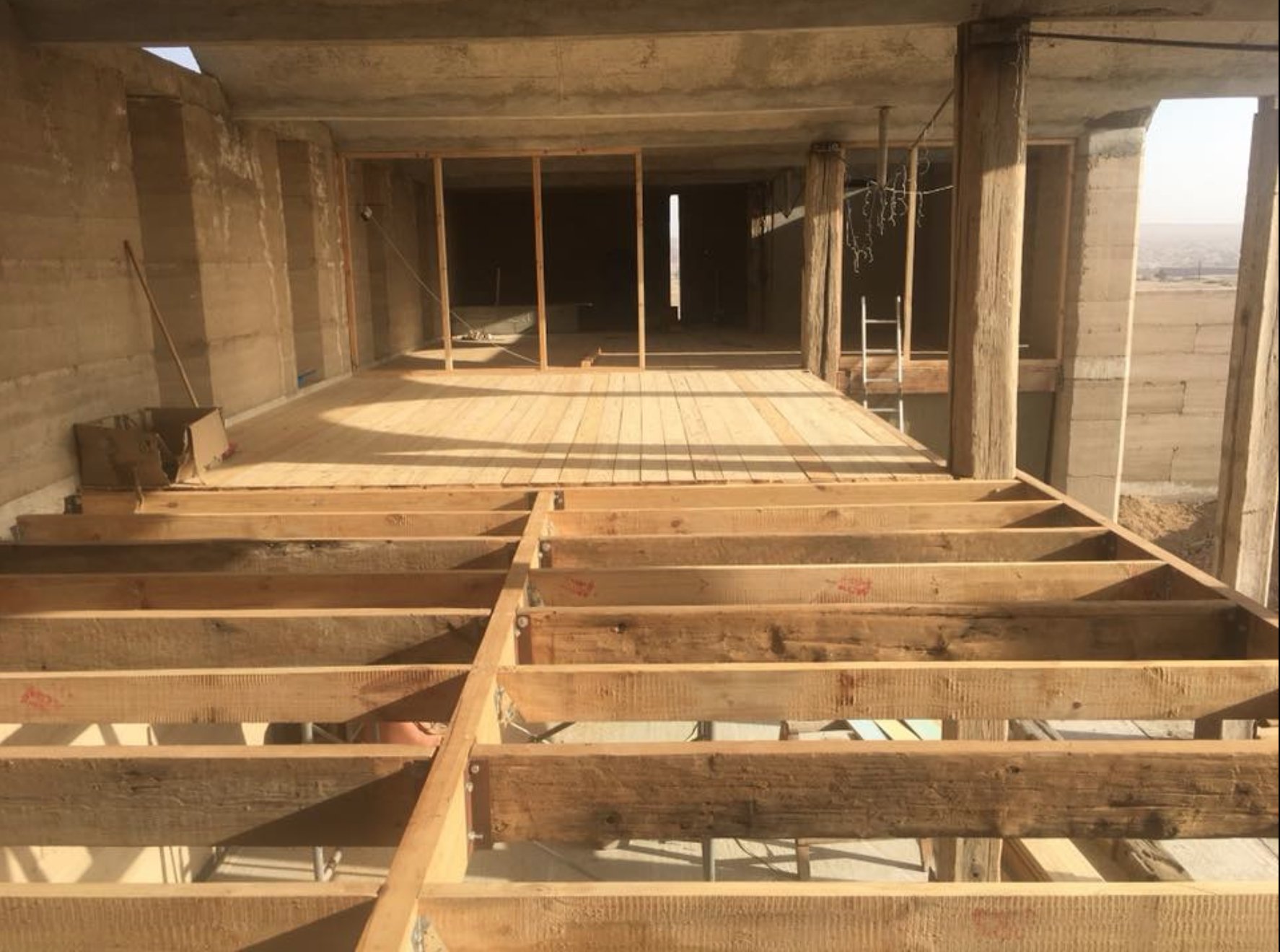
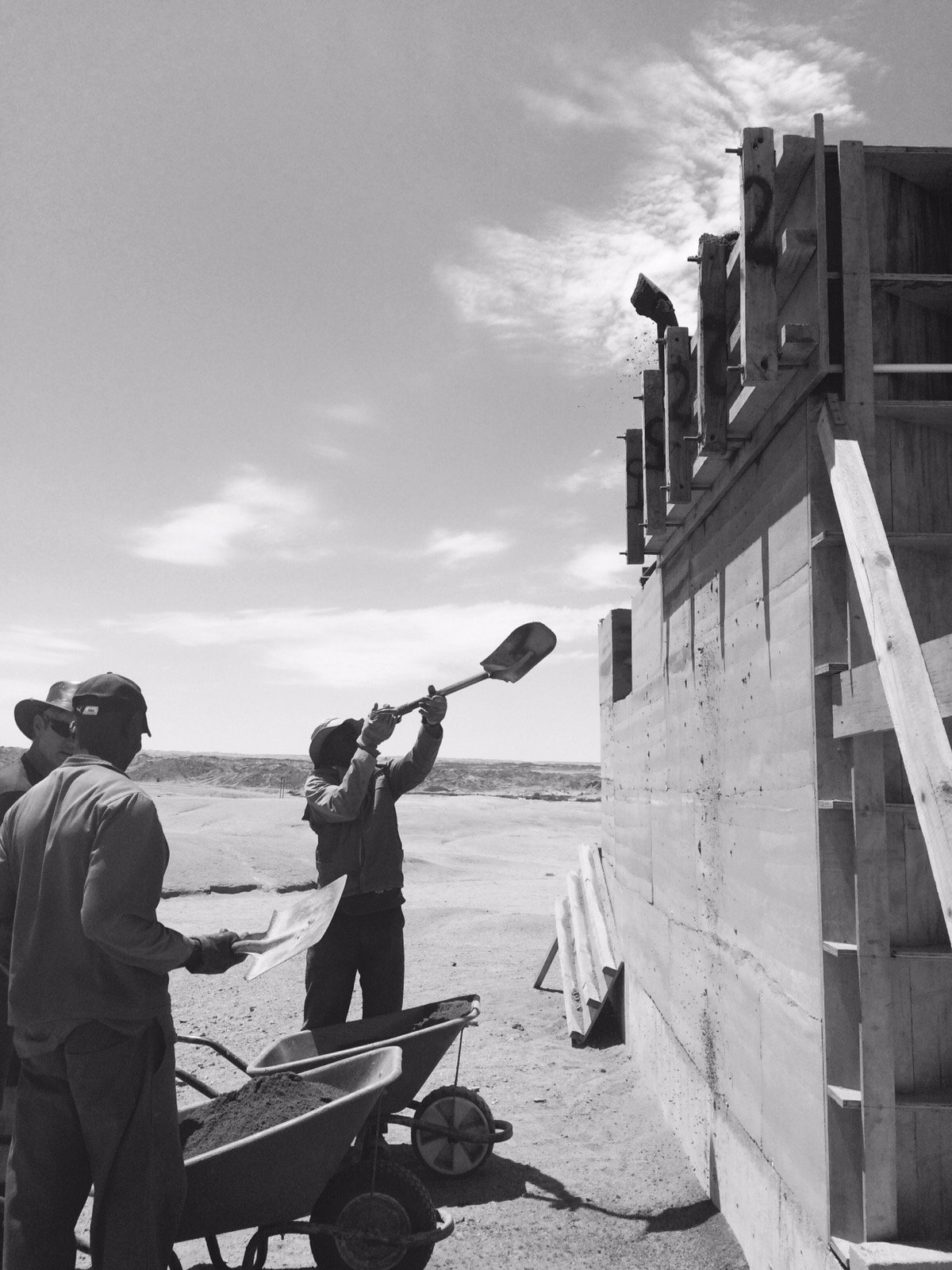
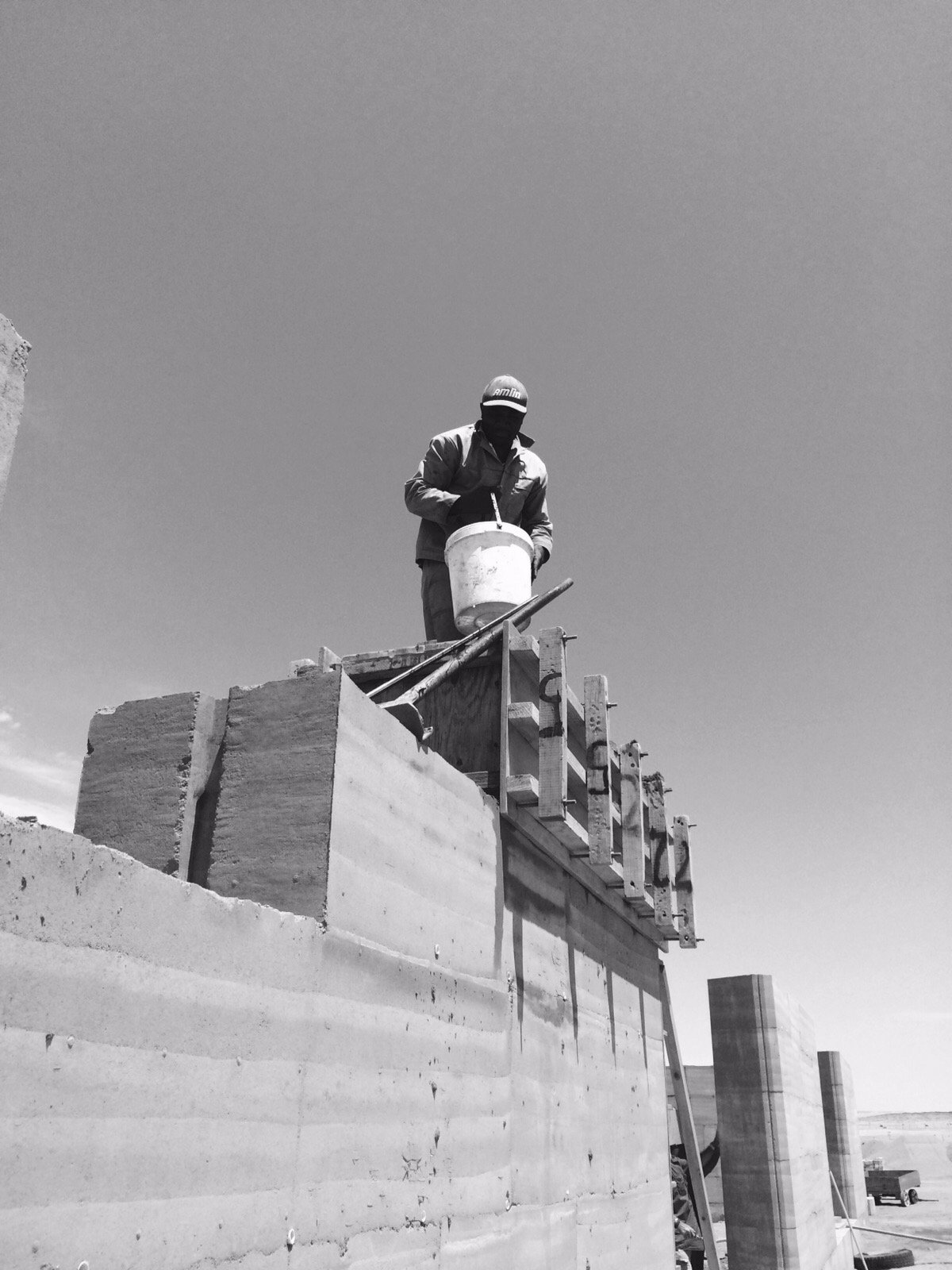
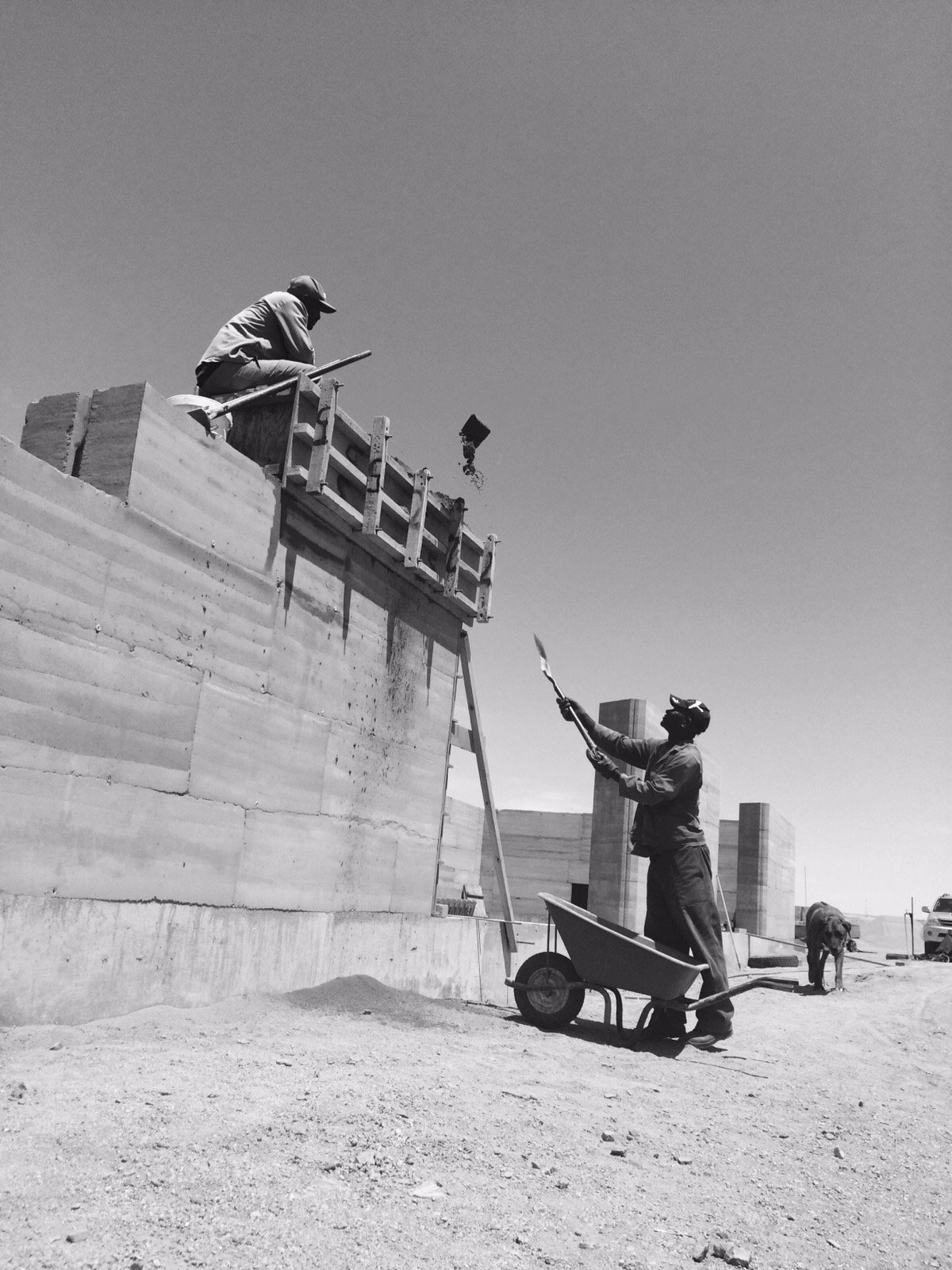
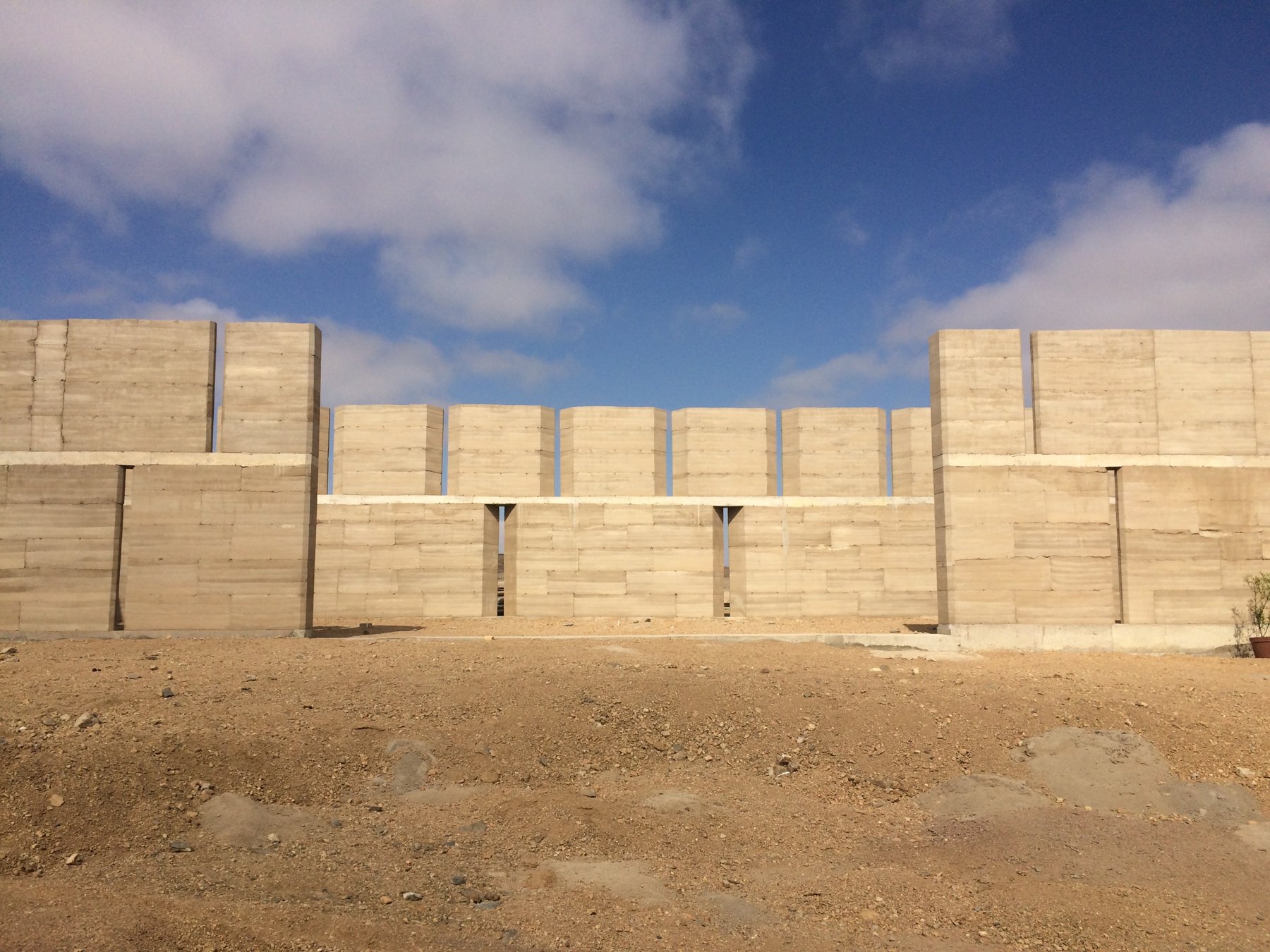
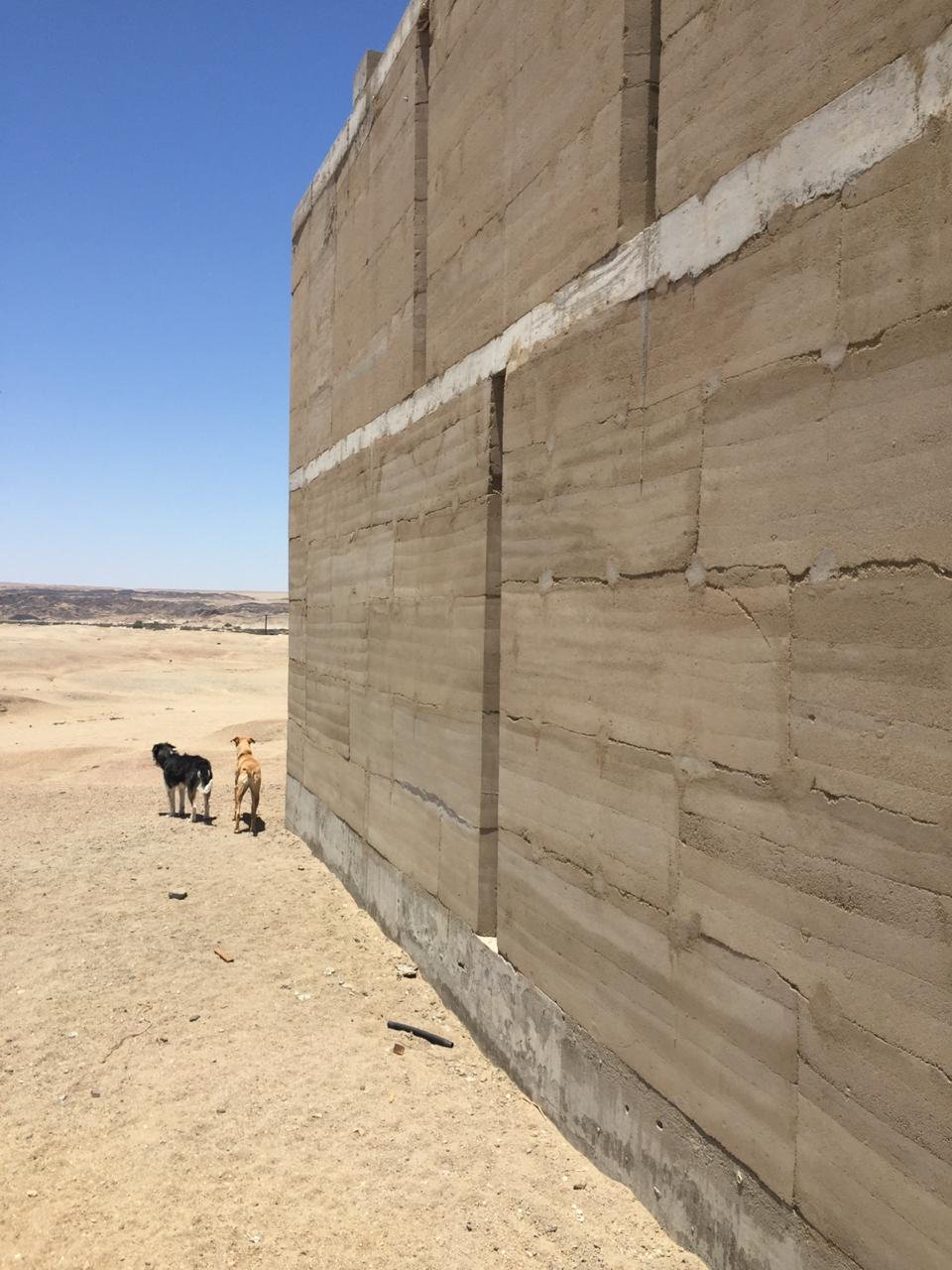
The walls are rammed — compacted in lifts by Johannes Haasbroek and his team, self-taught, learned by trial and error through the process itself: the evidence is in the photographs. Haasbroek ran the site; Booyens designed the building and was not the primary builder. Clay is scarce in this landscape. The Namib coastal desert offers little of the cohesive, plastic soil that rammed earth traditionally demands — the material here is granular, lean, reluctant. The solution was practical: road subbase, the crushed and graded aggregate used to compact the formation layer beneath Namibian roads, available locally, manageable without specialist equipment, and sufficiently stable under compression to build with. It is not the refined laterite of a Malian earthen wall or the fat clay of the Karoo. It is a construction material borrowed from infrastructure, applied to architecture by a team that had not done it before and had no instruction manual.
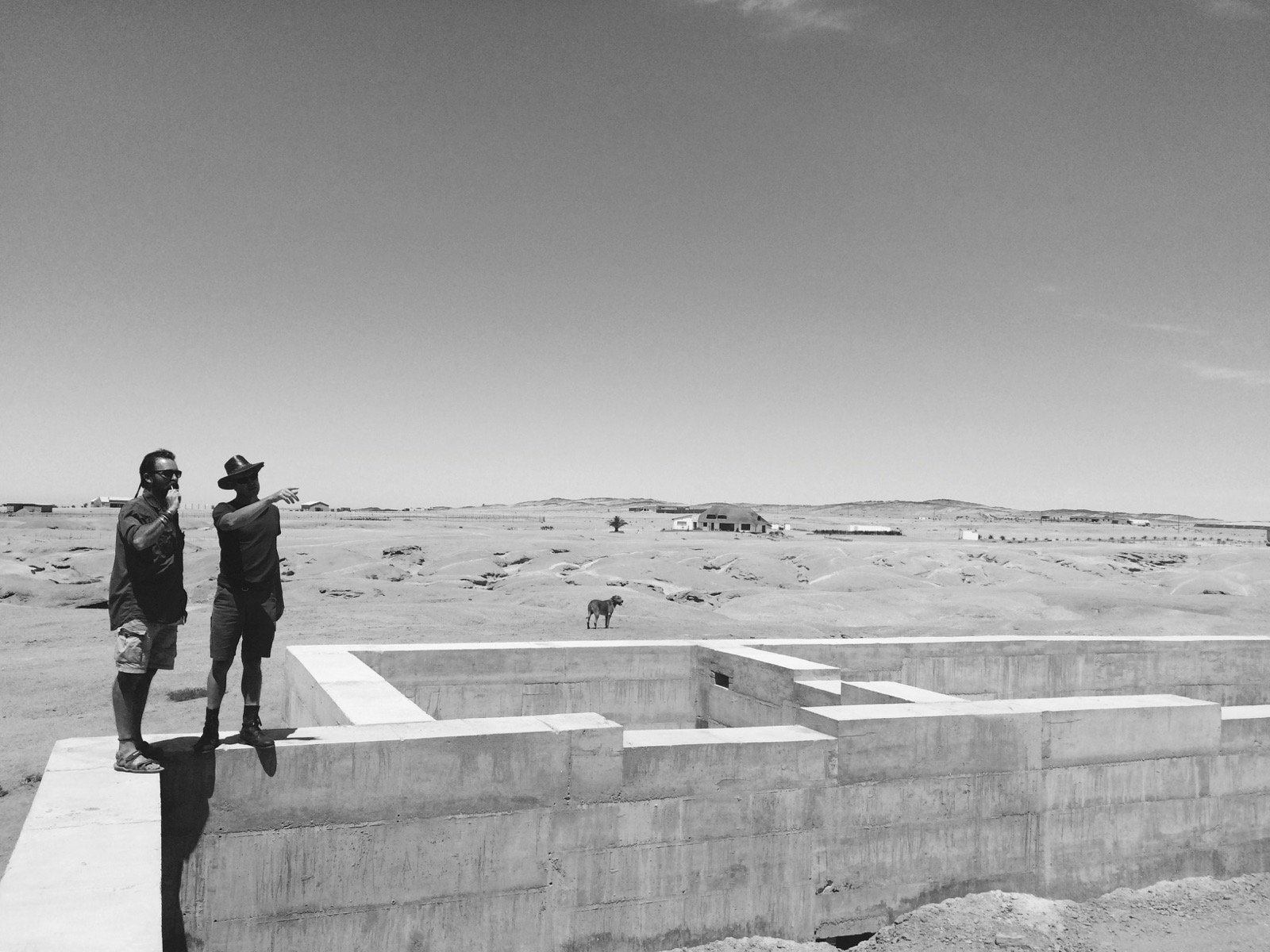
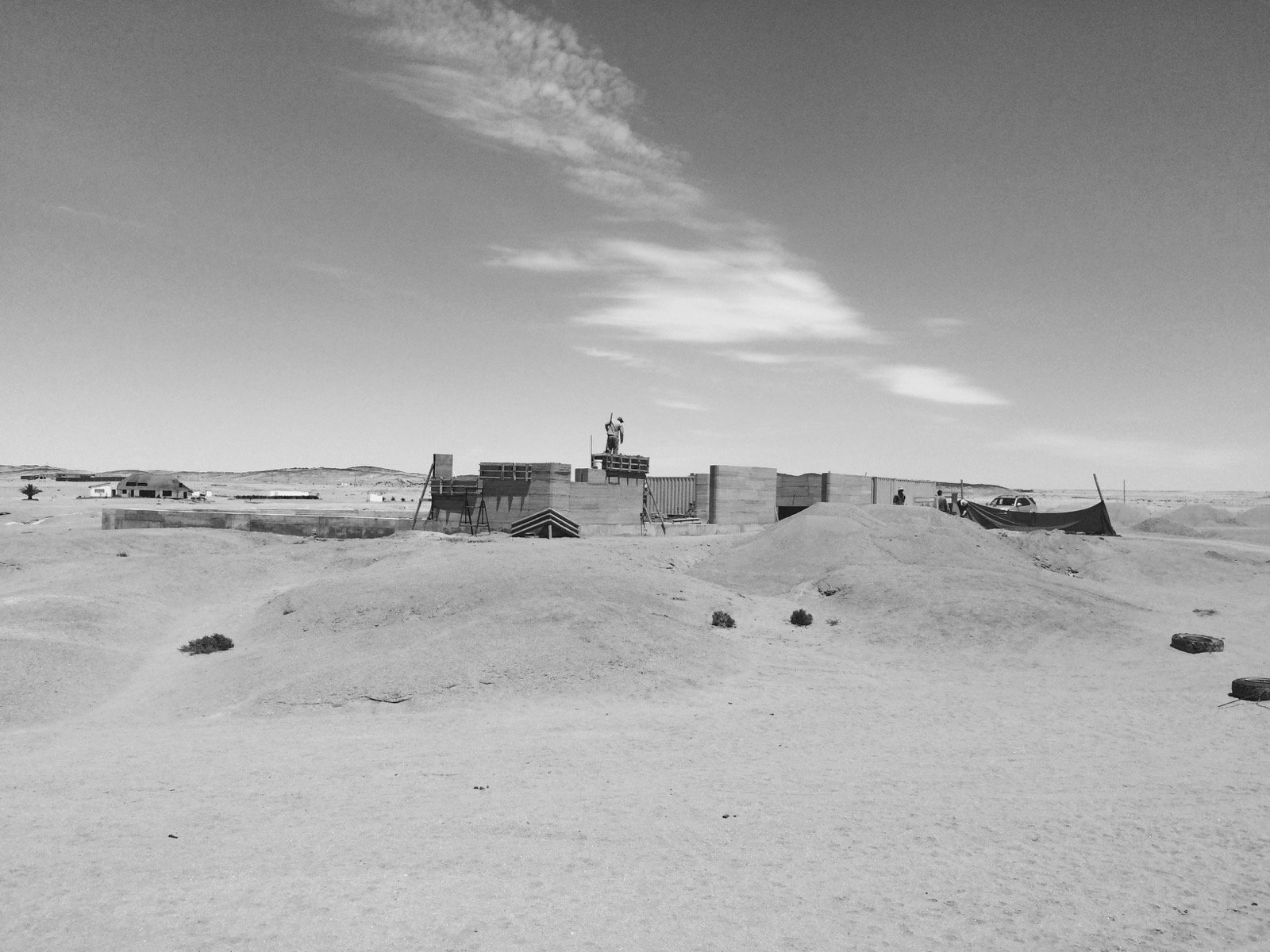
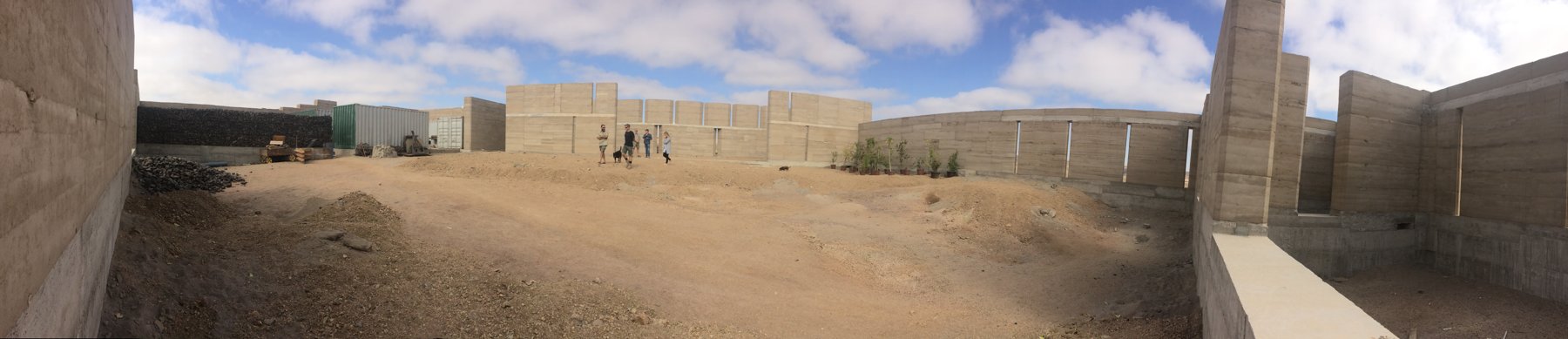
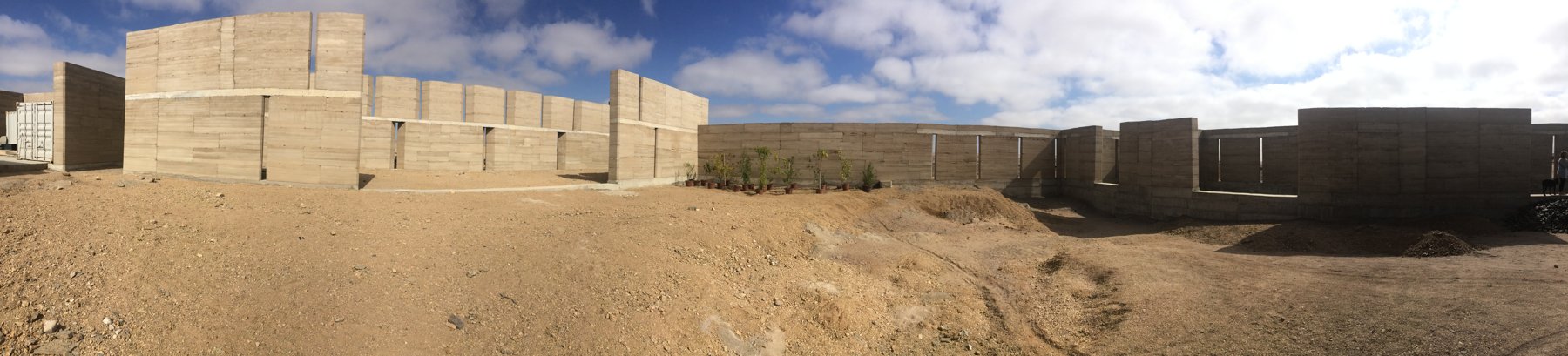
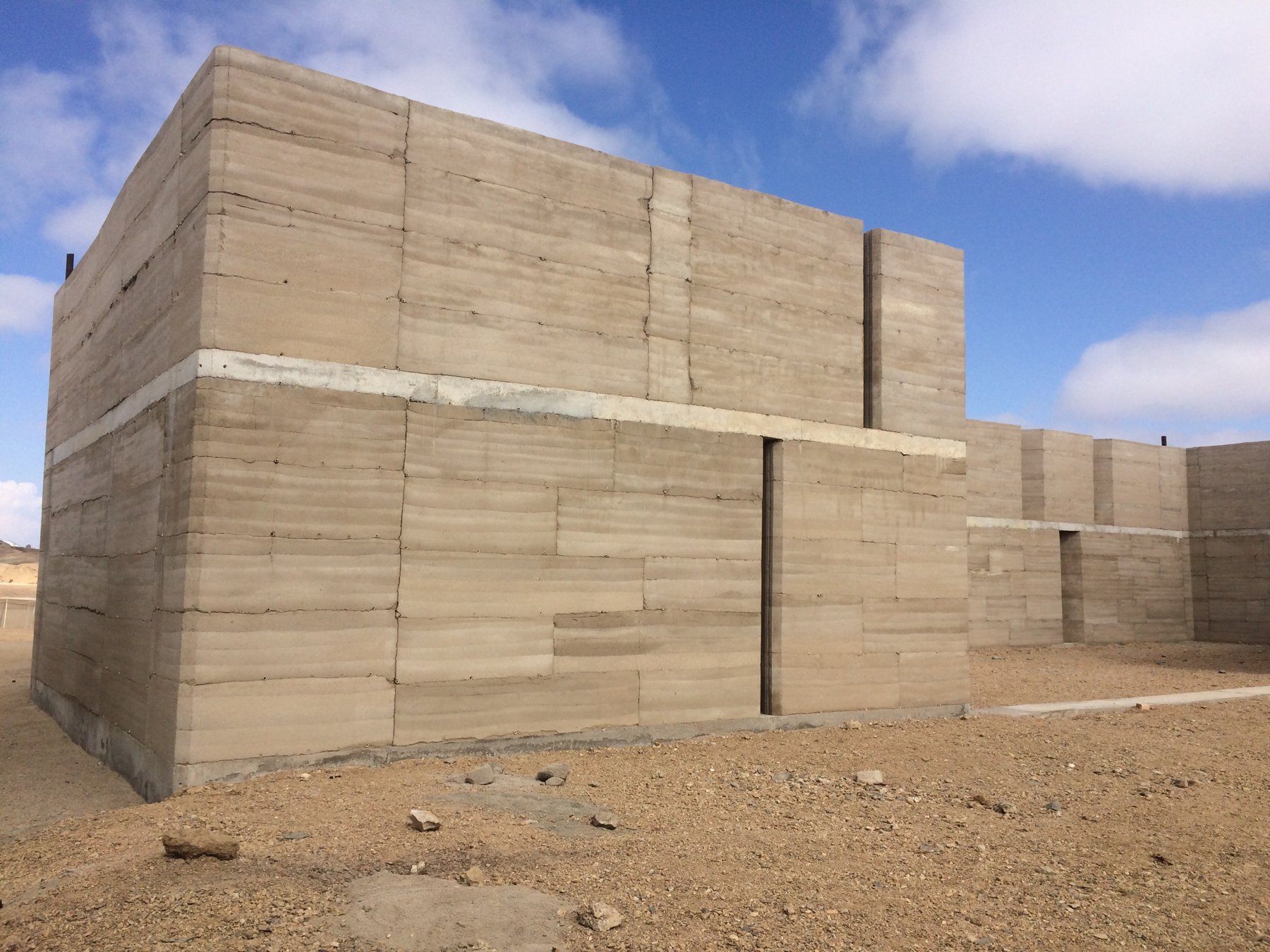
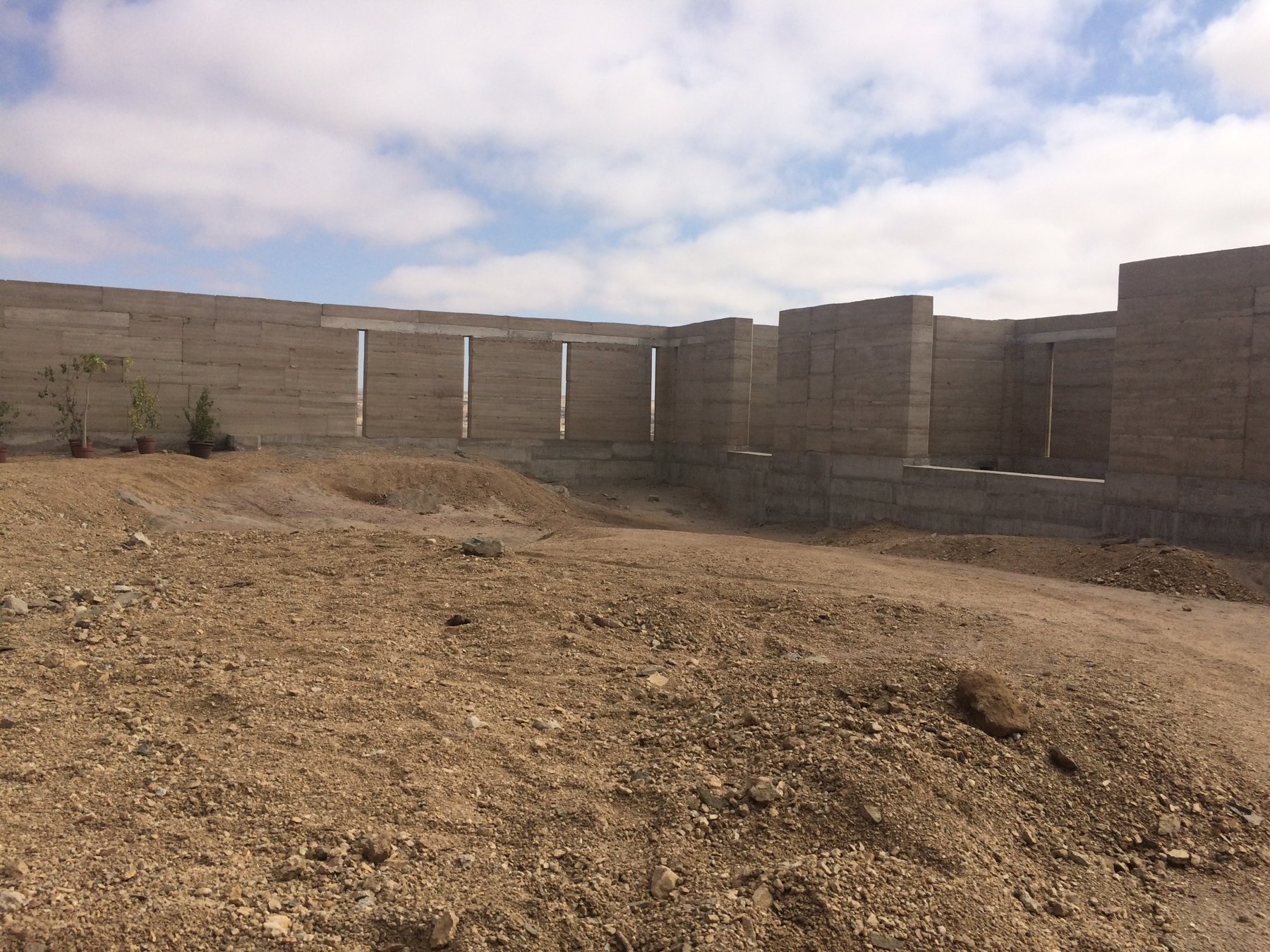
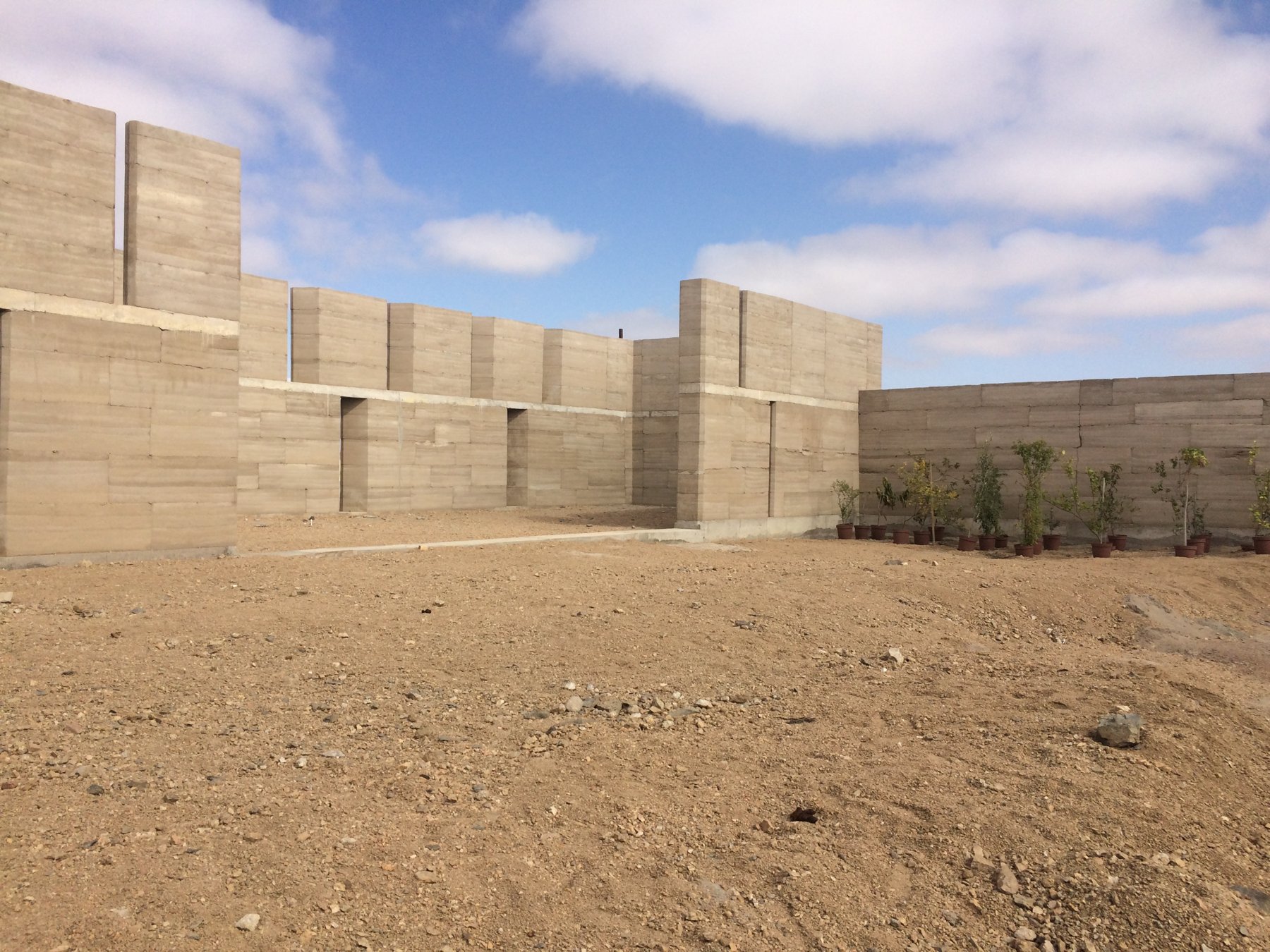
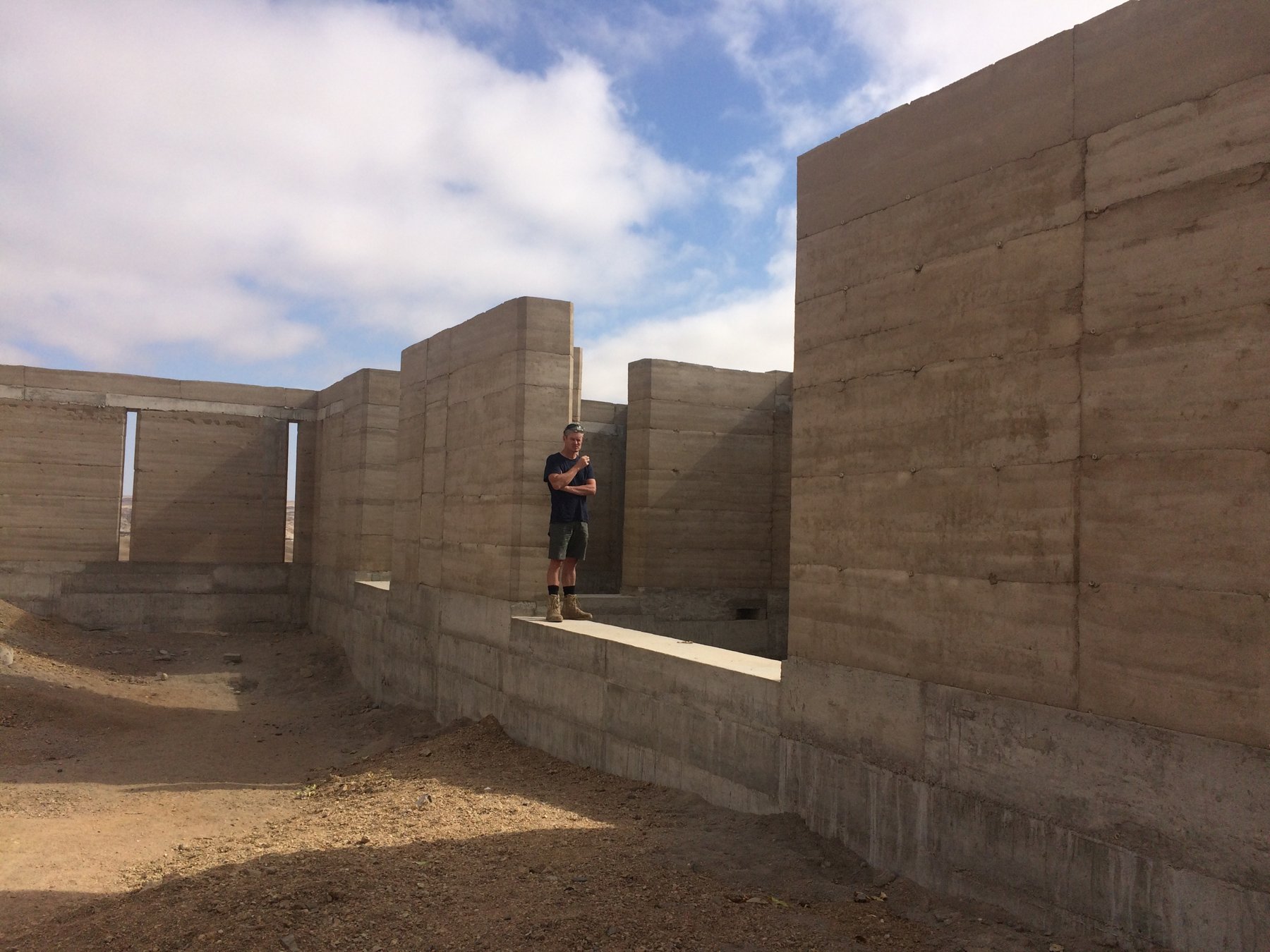
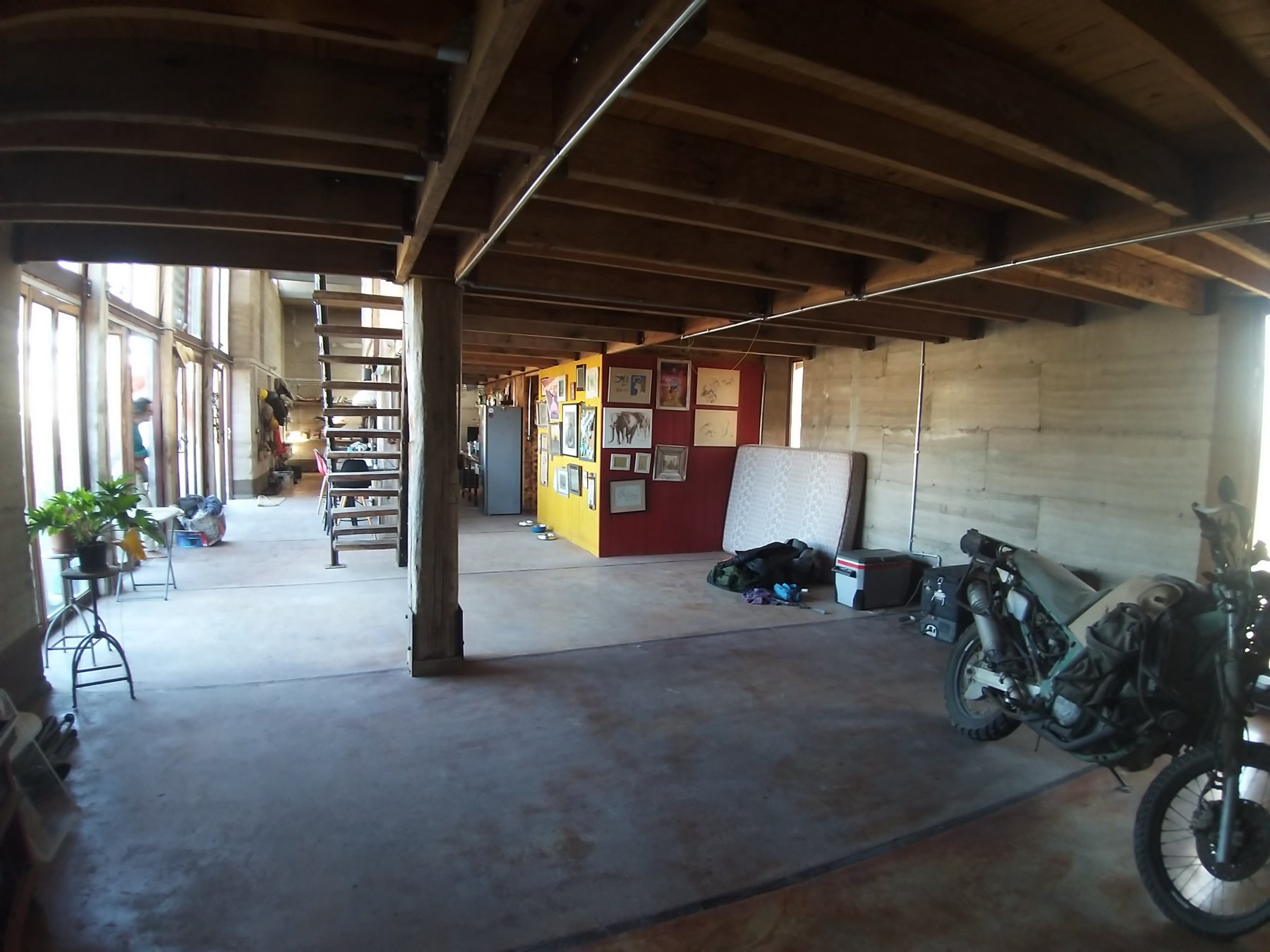
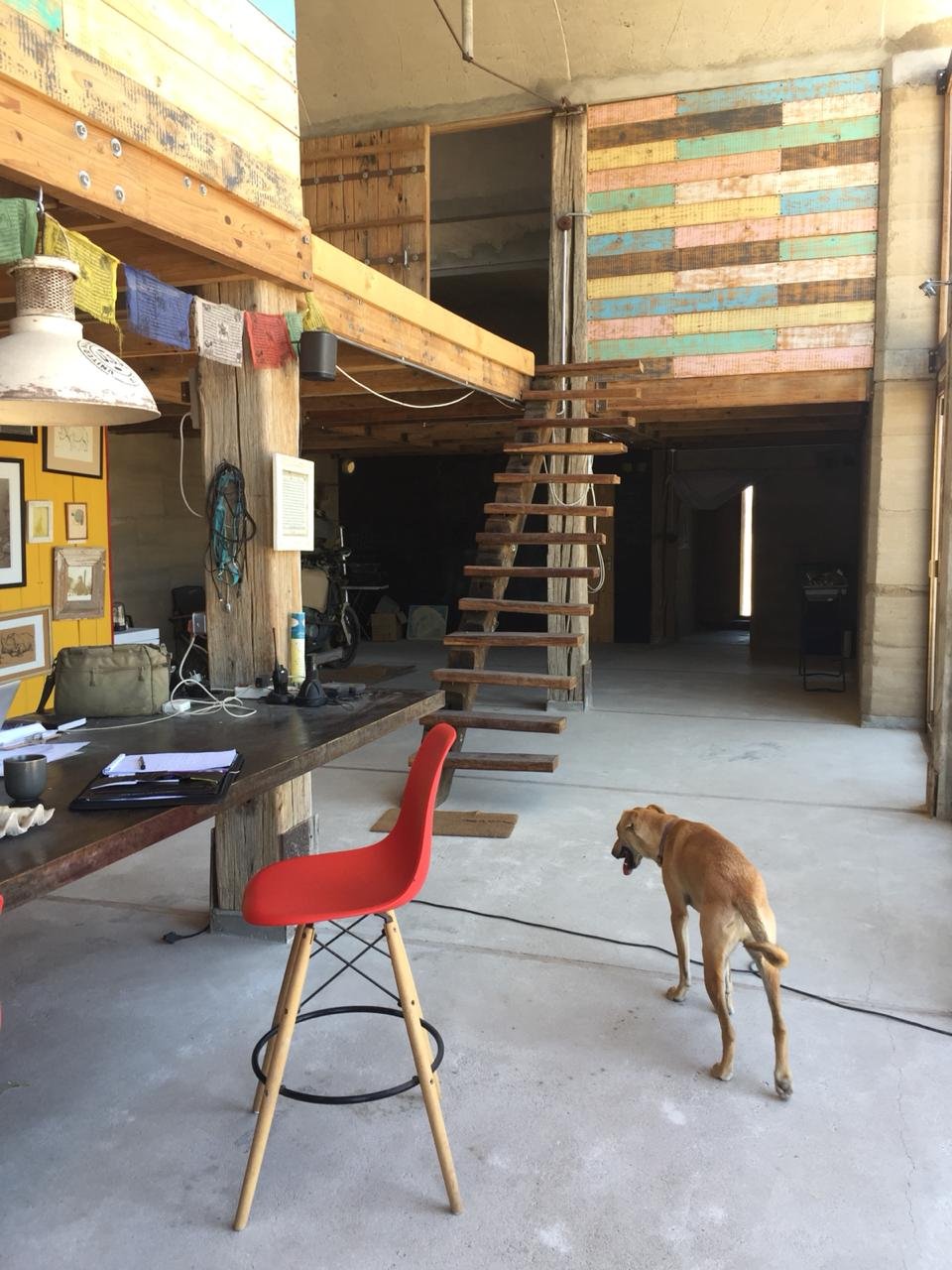
The interior is unfinished in the conventional sense — concrete floors, raw walls, a mezzanine level accessed by a handmade ladder stair. The structural timber is salvaged: heavy-section beams recovered from a jetty that washed out on the beach near Mile 8, north of Swakopmund. Under maritime salvage law, the legal distinction between flotsam — material deposited freely by the sea — and jetsam — cargo deliberately jettisoned — determines salvage rights, but material washed onto the foreshore and unclaimed by its original owner may be legally recovered by the finder under wreck legislation. The jetty timbers, most likely Spanish oak, were already seasoned by decades in salt air. In the building they appear as mezzanine structure and stair — their provenance written in bolt holes and salt-bleached grain.
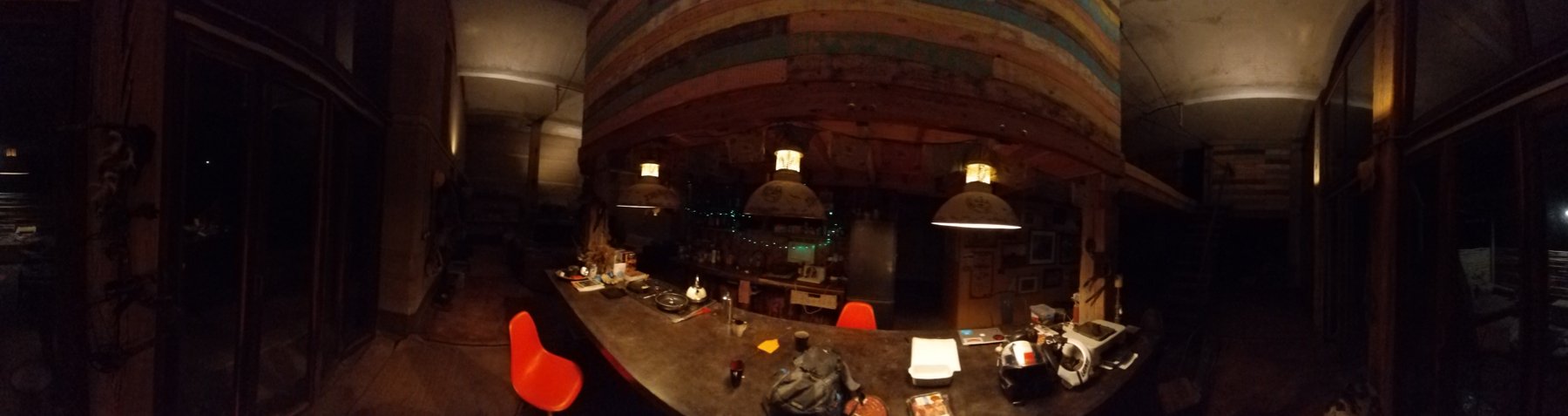
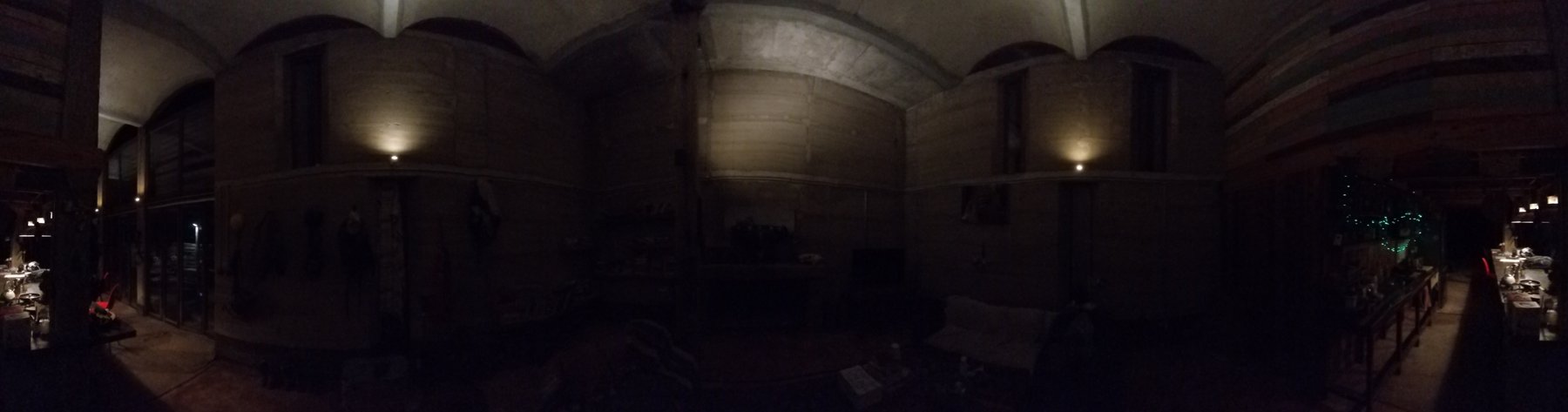
The building does not pretend to be anything other than what it is: a shelter engineered for the climate of the Namib, assembled from what the coast provided.