Restoration · Part of Buffelsdrift
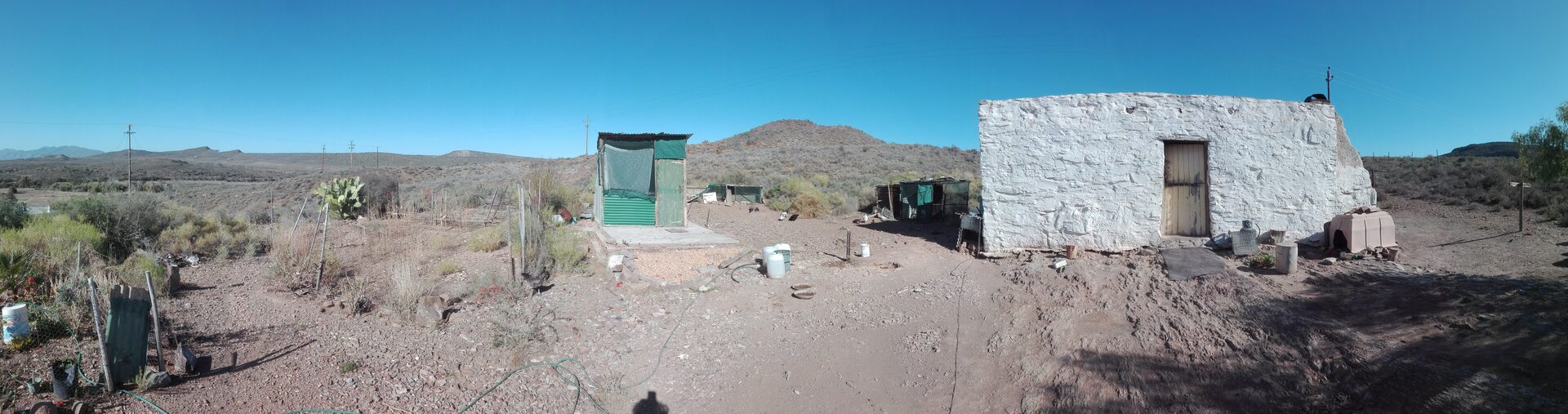
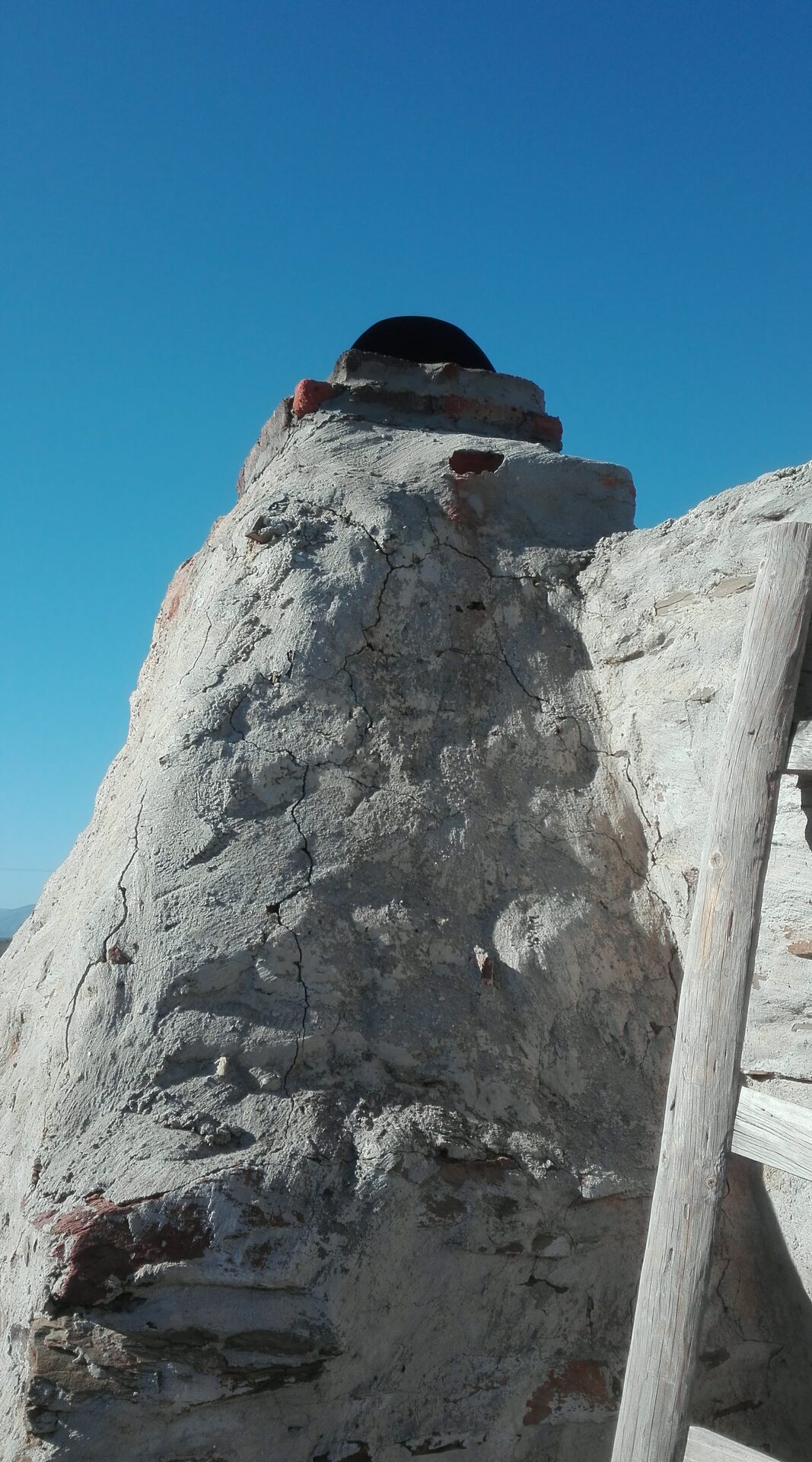
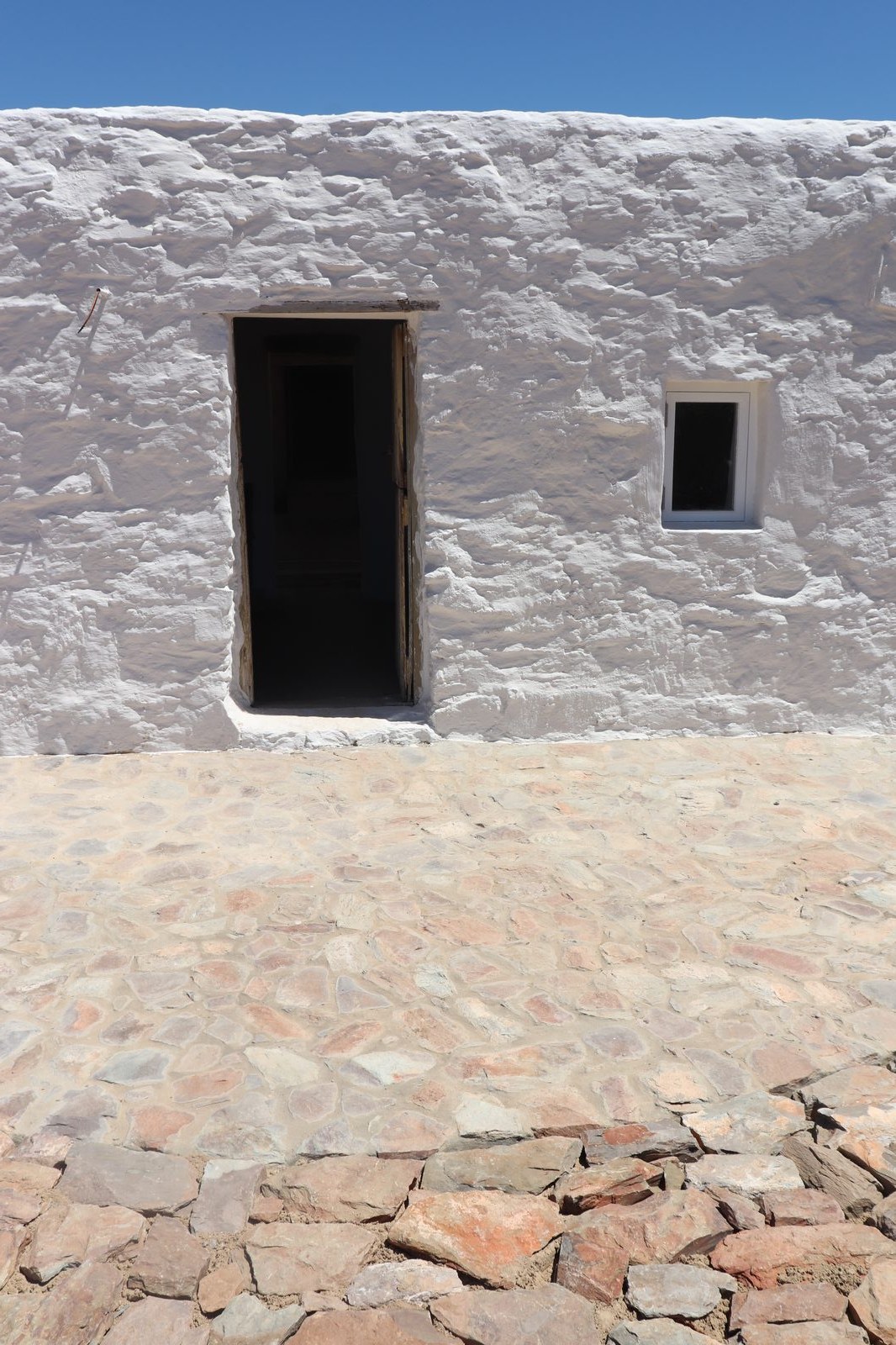
Die Skaapwagtershuisie had been the home of Cornelius Appel, a farm labourer who lived there most of his life, across several changes of ownership, until his death at Buffelsdrift. Though recorded as a nineteenth-century structure, the building may be considerably older. The Buffelsdrift farm originated as a VOC-era loan farm — a leningsplaats — one of the circular 3,000-morgen grants that the Dutch East India Company formalised after 1714 to push trekboer settlement deeper into the Karoo interior. This was the colonial system set in motion by Simon van der Stel, Governor of the Cape Colony from 1691, whose expansion policies opened the interior to grazing farmers moving steadily east and north from the Cape. The circular boundary of the original grant is still legible in today's cadastral record: the arc of the farm's outer boundary, visible on the FarmMapper GIS system, preserves the geometry of the original VOC circle measured out from the homestead — a three-century-old land claim still written into the landscape. The Skaapwagtershuisie sits at roughly the geometric centre of that circle — visible on FarmMapper. If the cottage is among the oldest structures on Buffelsdrift, it may have been the first building raised on the leningsplaats: the original homestead from which the VOC boundary was measured out in every direction.
If the farm was established in the early 1700s, this cottage may have stood through the full arc of the Bushman Wars — the decades-long series of violent conflicts between San communities and settler farmers that marked the Klein Karoo frontier throughout the eighteenth century, peaking in intensity between roughly 1770 and 1800. A stone structure this remote, this simply built, would have been both shelter and marker: the edge of what the colony considered tamed ground.
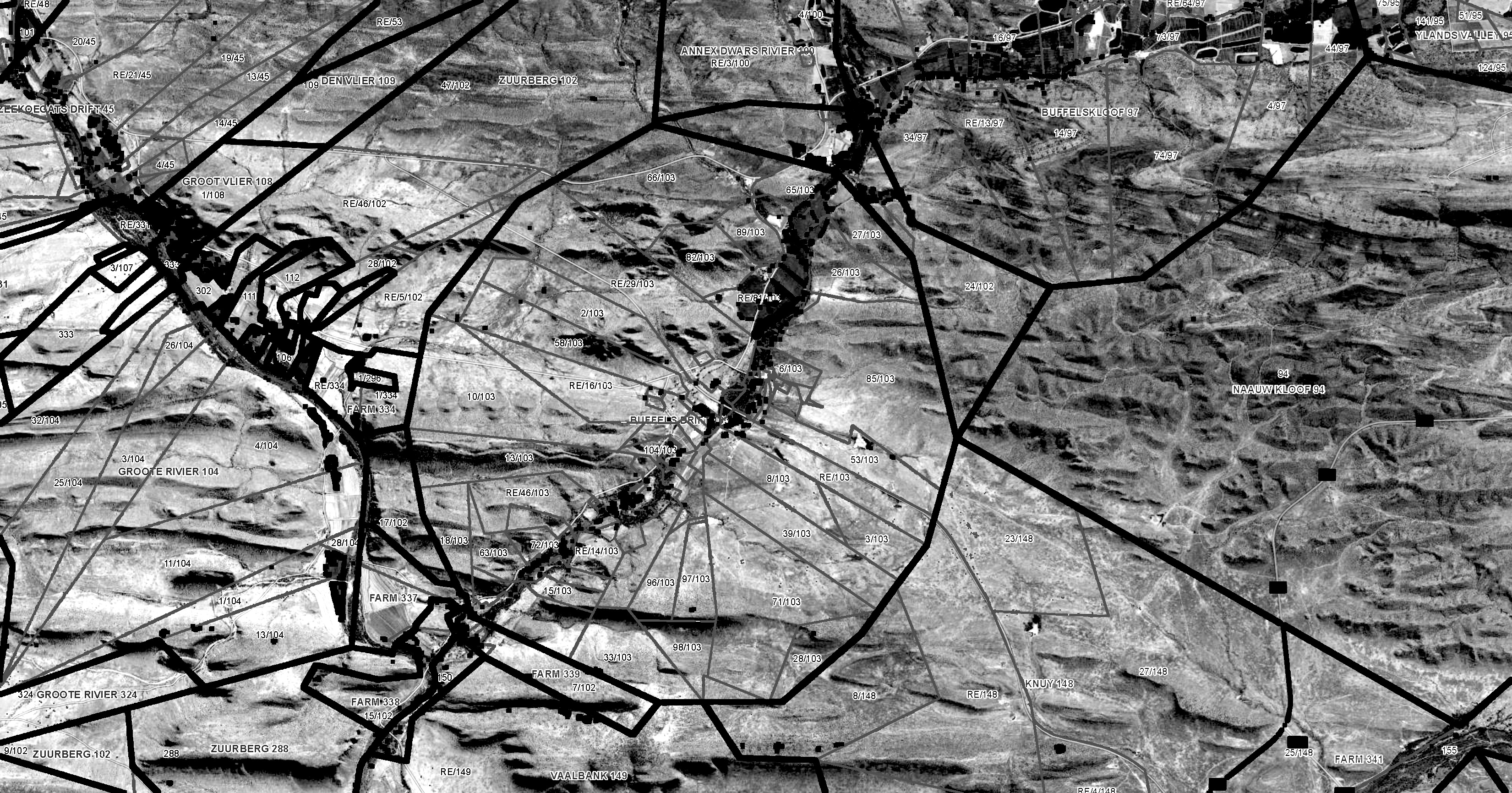

FarmMapper cadastral record — Buffelsdrift, Klein Karoo. The thick outer arc traces the original VOC leningsplaats boundary — a circular 3,000-morgen grant measured out from the homestead, formalised after 1714. The geometry of a three-century-old land claim, still written into the cadastral record. The circle measures approximately 5.7 km in diameter — ≈ 2 552 ha / ≈ 3 000 morgen — with the Skaapwagtershuisie sitting at roughly its centre, as visible on the FarmMapper GIS system (farmmapper.co.za).
Built by hand, its walls follow no geometric logic that conventional CAD software can engage with directly. Every surface is irregular. Every corner is unique. The stone had been laid over generations without drawings, without tolerances, without reference to any coordinate system.
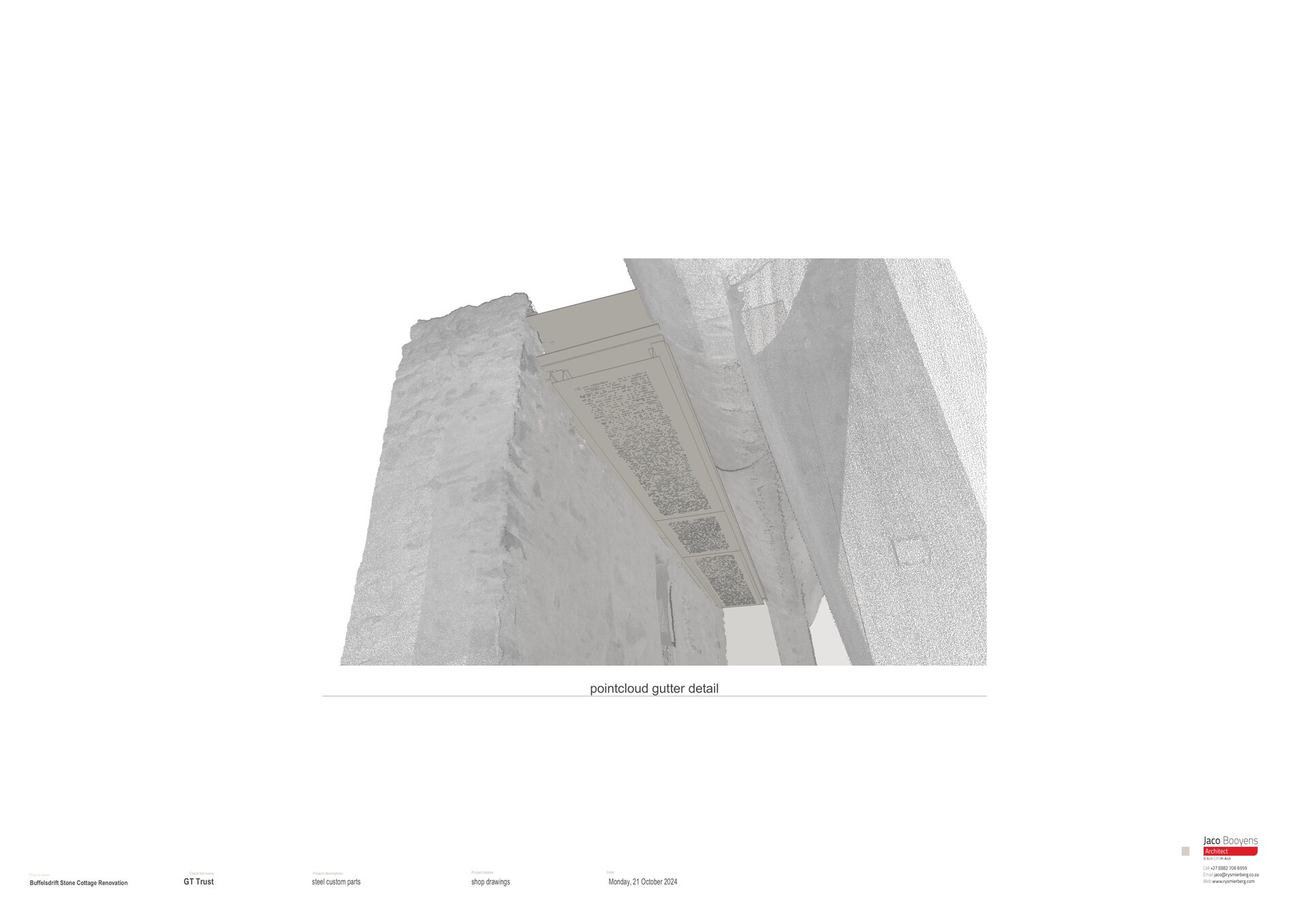
Booyens's approach was borrowed from dental prosthetics: scan the patient first, then fabricate the fitting. Using photogrammetric point cloud capture in ArchiCAD, every surface of the existing stone structure was recorded in three dimensions. The point cloud became the template — the exact, irregular geometry of the walls, the openings, the roof line — against which every new element was designed to mate.
The point cloud was opened in ArchiCAD, where thin sections were cut through the data at specific material interfaces — wall heads, sill lines, jamb faces — to extract template outlines of the actual geometry. These section outlines, drawn directly from the stone, became the input geometry for Onshape, where every bespoke fabricated component was modelled to fit: machined steel connectors, folded plate elements, glass hangers, sliding systems, and the timber and steel parts that tie the new concrete shell to the ancient stone. Nothing was designed to a standard dimension. Everything was designed to fit this specific building.
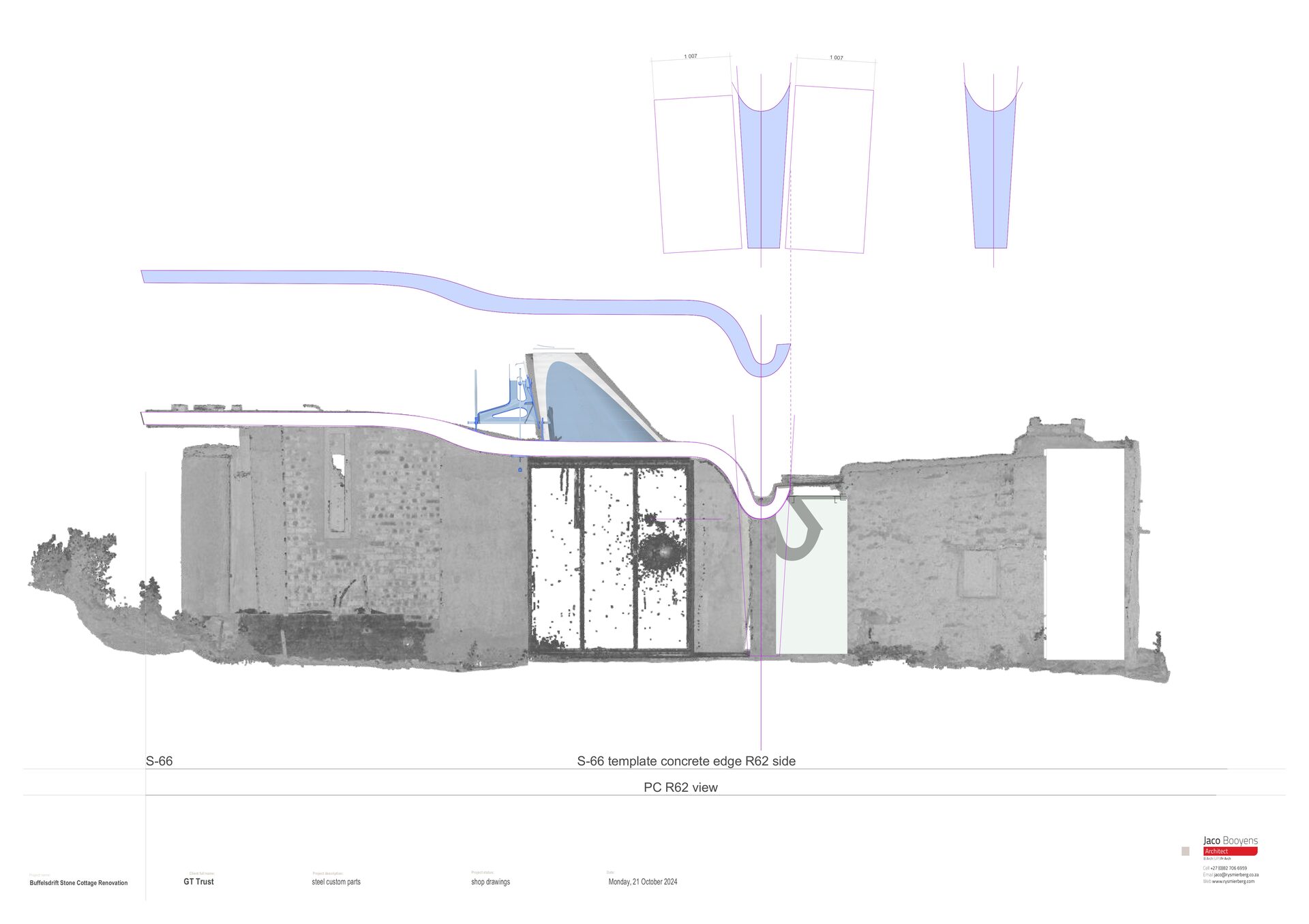
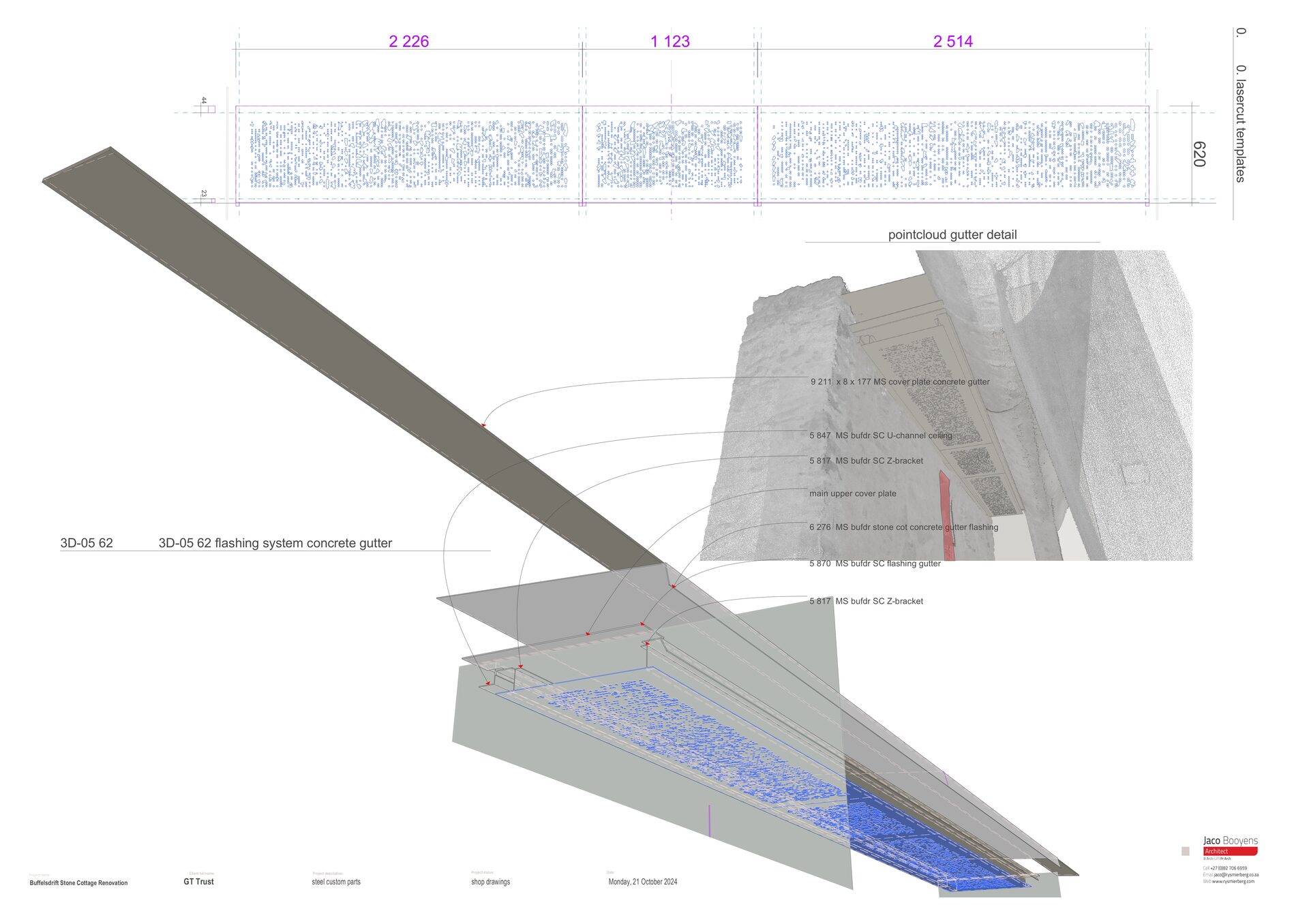
The freeform geometry of the concrete roof was modelled in Rhino3D — surfaces that cannot be described by simple extrusions or standard CAD primitives, but require the kind of free-surface modelling that Rhino handles natively. In its formal logic, the concrete roof draws directly on the brakdak tradition of the Karoo: the flat, heavy, thermally massive roof that Karoo builders devised over centuries in a landscape where timber was scarce and diurnal temperature swings are extreme. Gabriel Fagan documented this tradition in his book Brakdak: Flatroofs in the Karoo (2008) — a record of farm buildings photographed between 1959 and 1964, many since demolished. The brakdak was constructed from poplar beams, Spanish reed, and a compacted layer of brak clay — the high-salt, alkaline soil of the Karoo — which hardened into a watertight thermal lid. It is earthen construction in its most direct form: the landscape becoming the roof.
This is not a tradition unique to the Cape. Flat earthen roofs built for thermal mass are the dominant building response to arid climates across Africa and the wider world — from the Sudano-Sahelian mud architecture of West Africa to the adobe buildings of the American Southwest. In the Karoo, settler and indigenous builder arrived at the same solution by the same logic: mass absorbs heat by day, releases it at night, and the extreme swing of the desert climate is absorbed into the building fabric rather than fought with energy. The concrete roof of the Skaapwagtershuisie belongs to this lineage — a contemporary casting of an ancient idea.
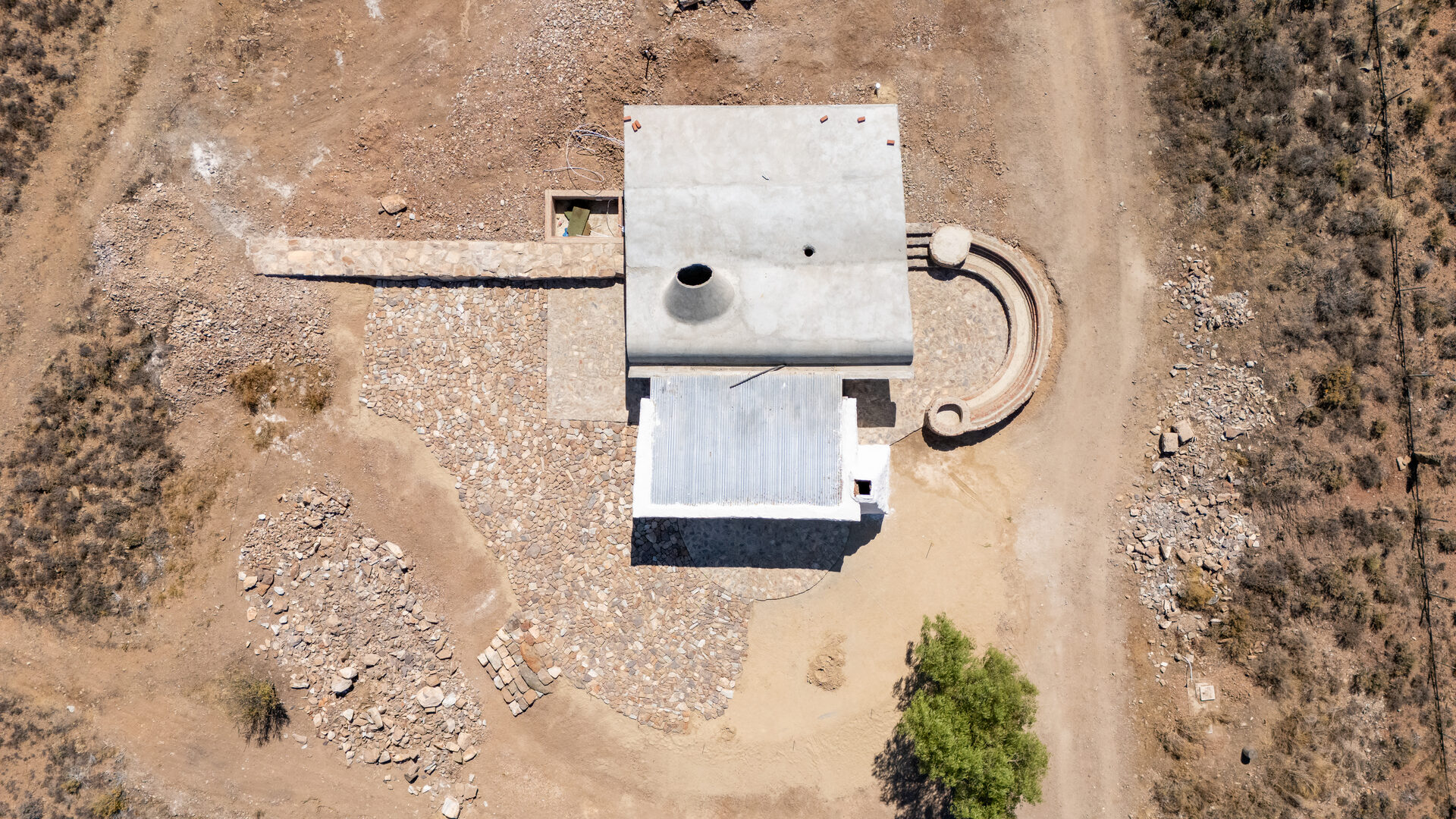
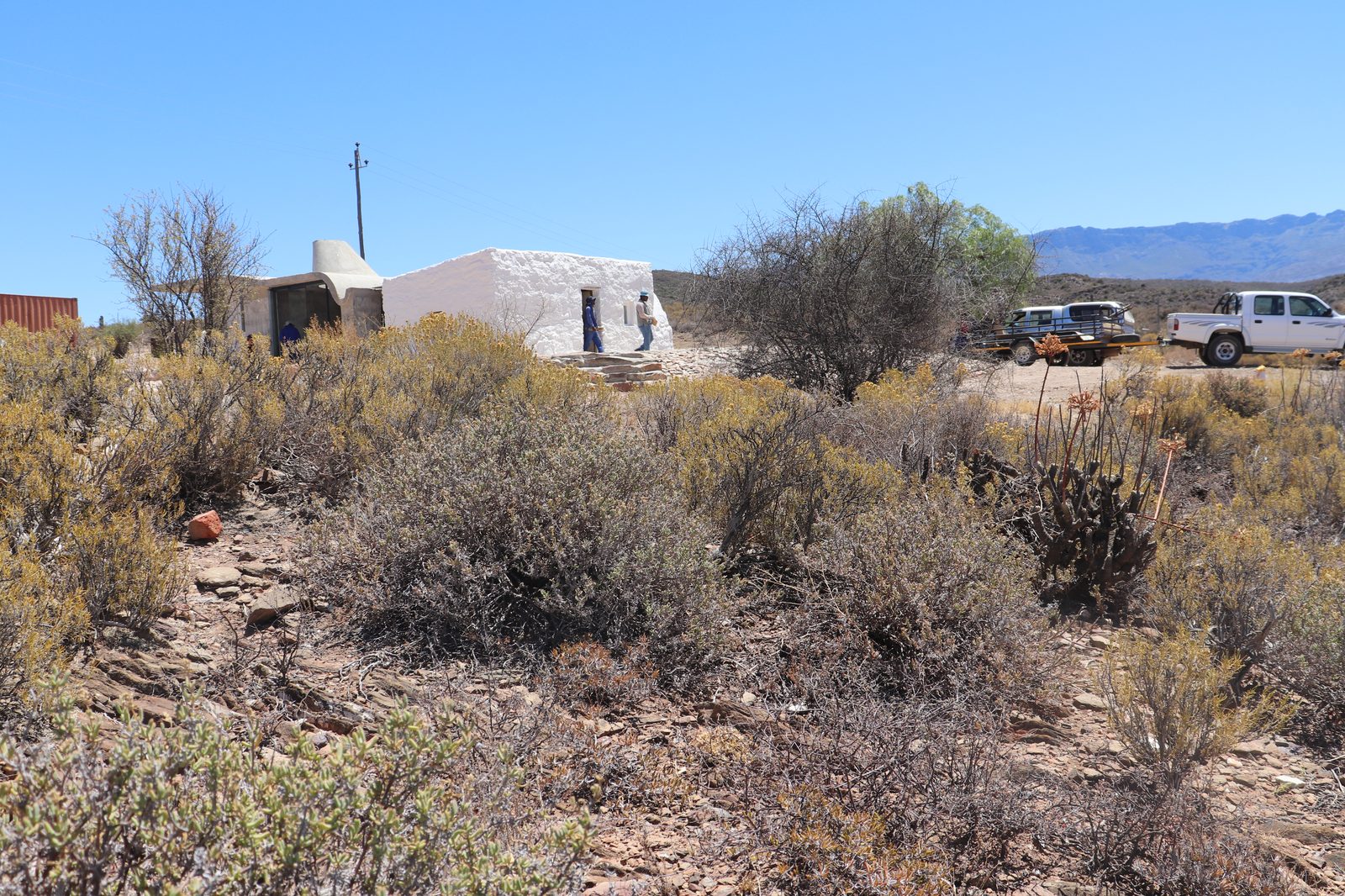
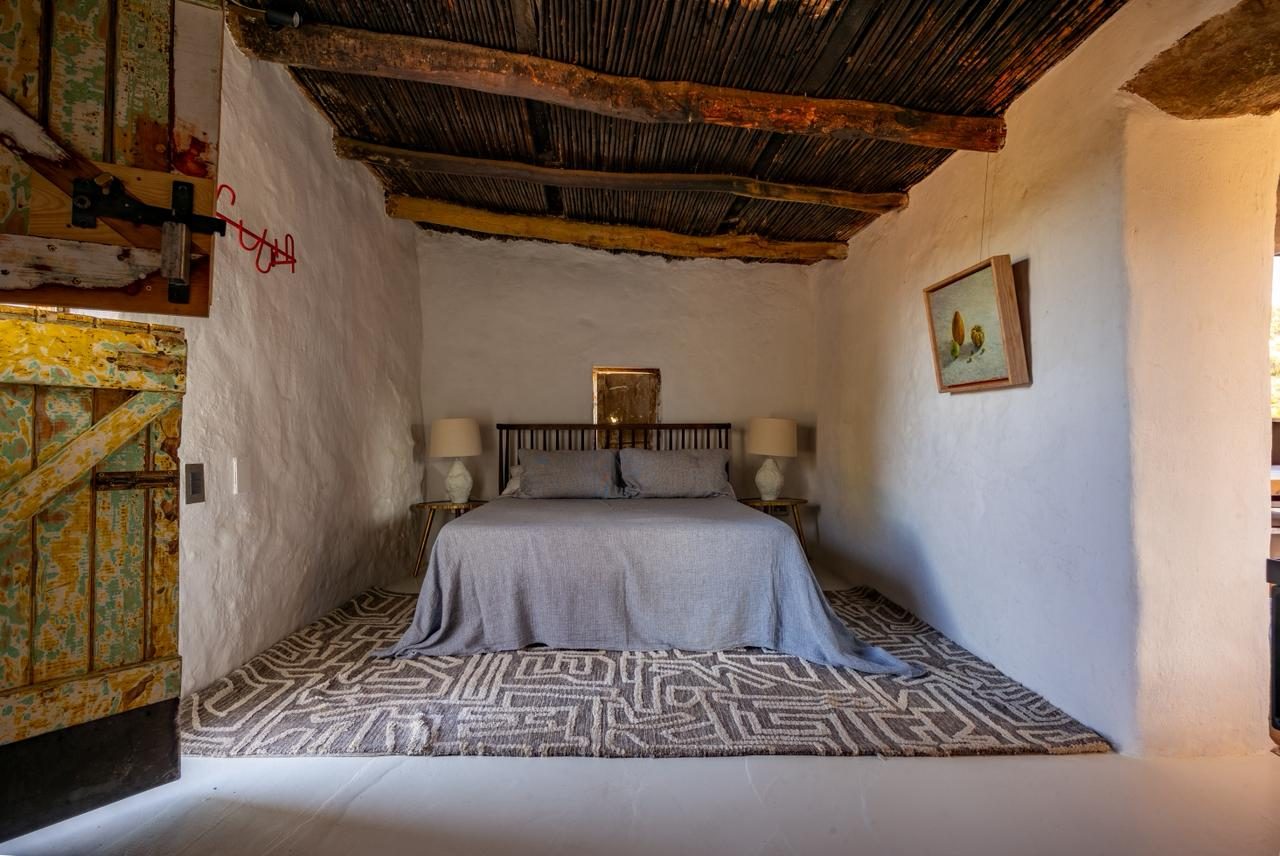
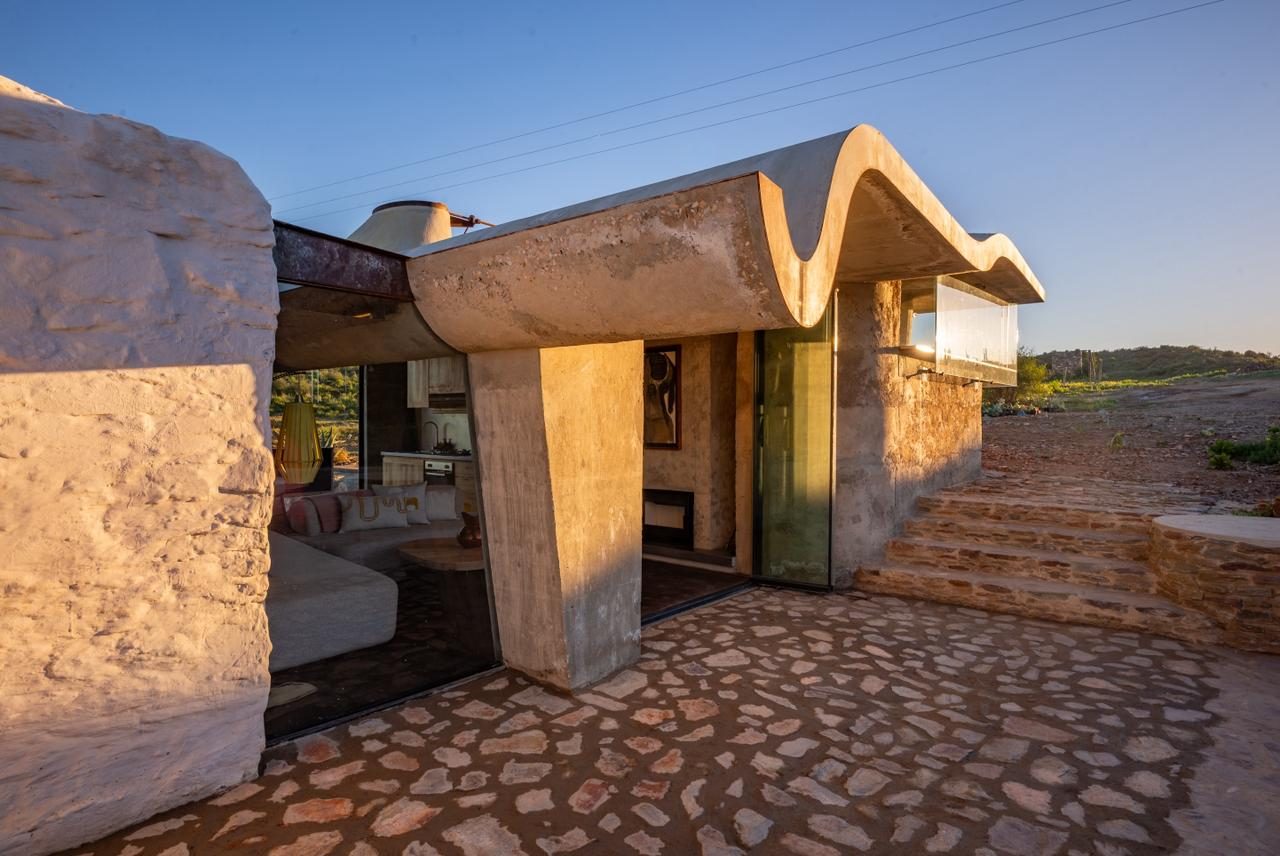
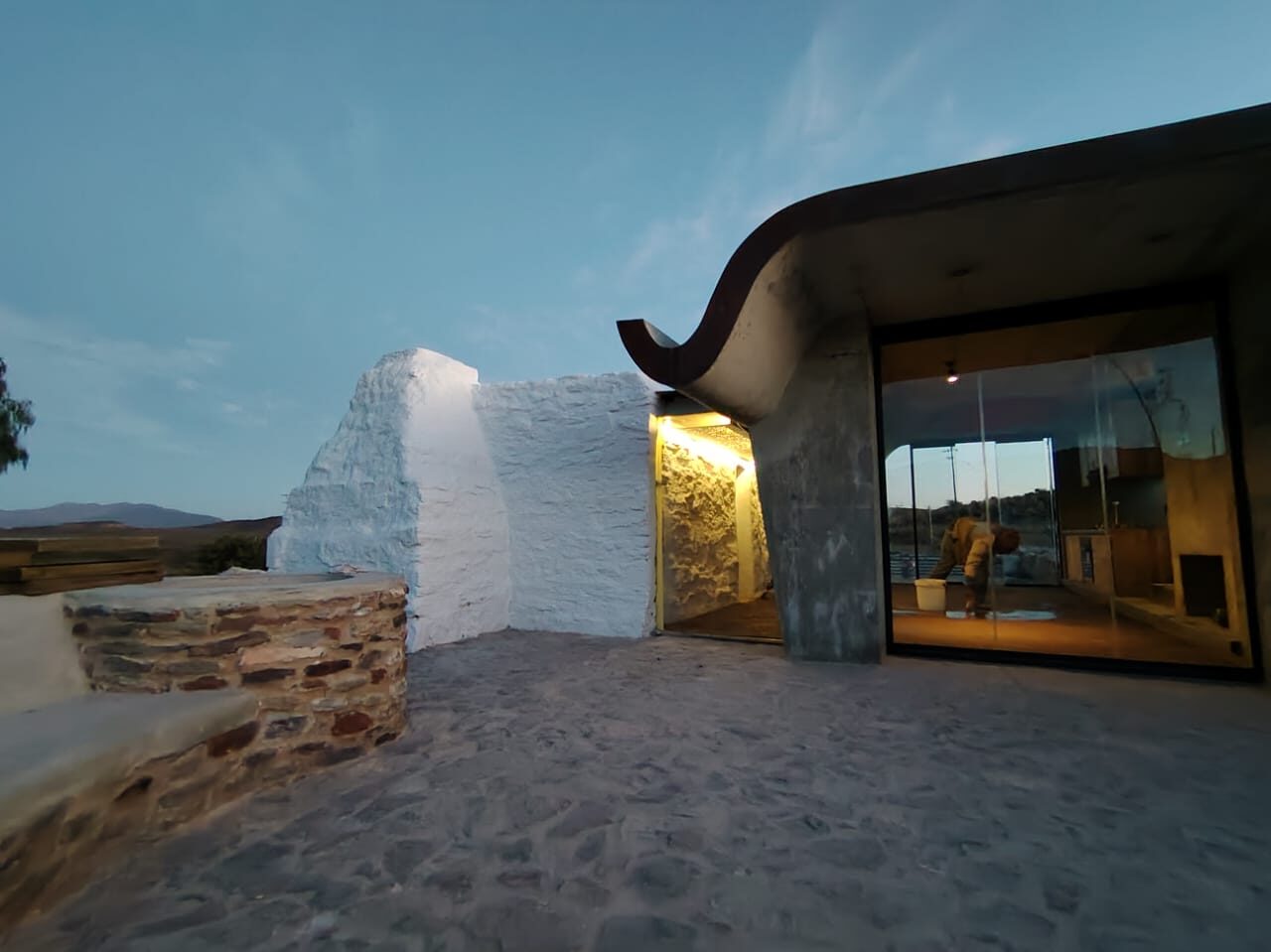
The result is two buildings standing apart — the old stone cottage exactly as it was found, and a new concrete structure placed alongside it. Neither touches the other. The stone remains stone. The concrete is unmistakably concrete. The joint between them is the work.
The view from the living room is onto Towerkop — the dominant peak above Ladismith, 2 198 metres, its summit split by a crevice 30 metres wide at the top and narrowing to three metres at the base. Local legend holds that a witch, crossing the mountain on a stormy night, found the peak obstructing her path and struck it with her wand, cleaving it in two. It was considered unclimbable until 1885, when a 23-year-old from Ladismith named Gustav Nefdt reached the top alone. His friends refused to believe him, so two weeks later he climbed it again — this time with witnesses. Towerkop sits at the back of the living room view like a statement about this landscape: extreme, split, and permanent.
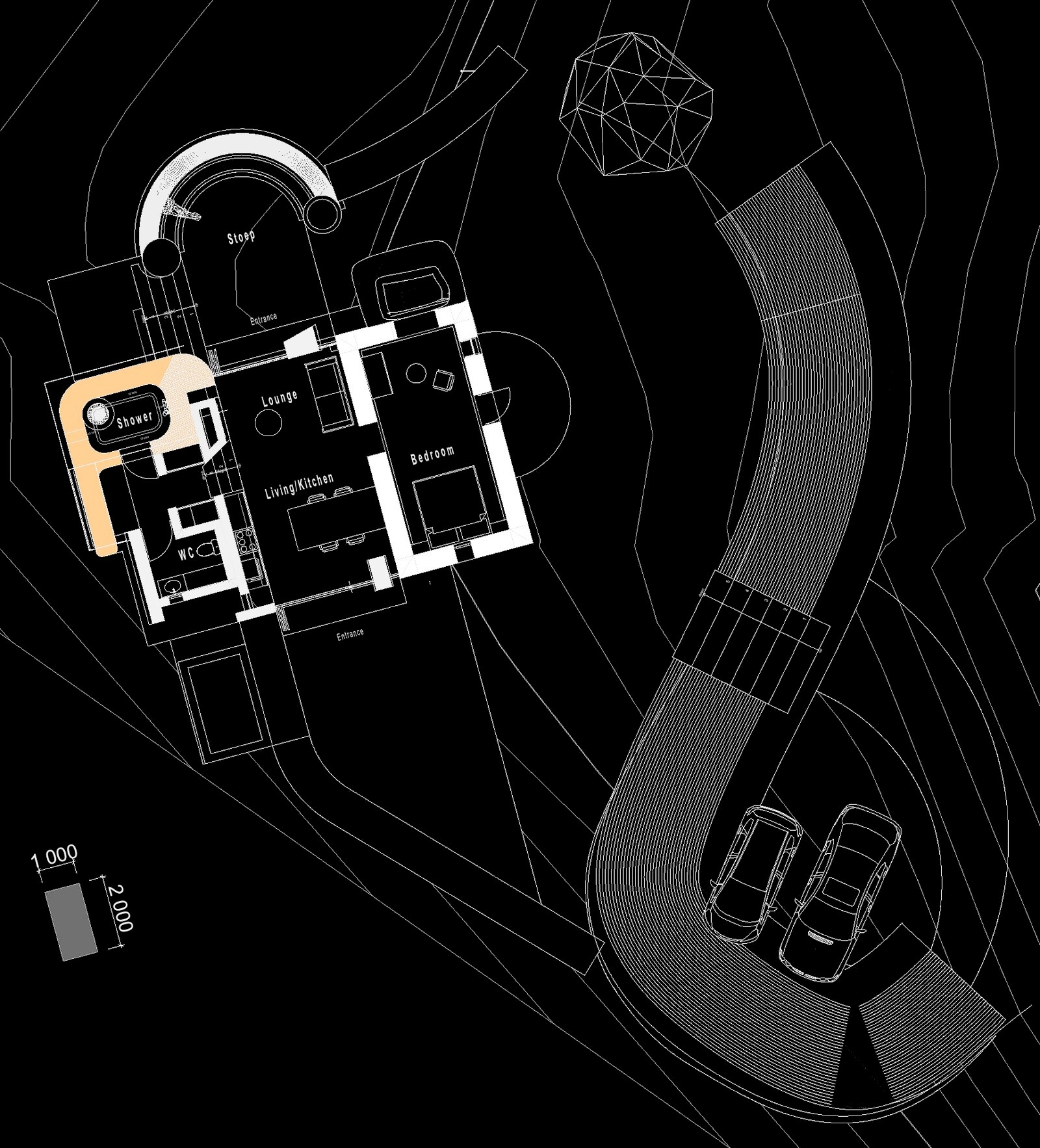
The building is slightly sunken into the earth, cut into the rising slope of the koppie — the Afrikaans word for a small, stony hill of the kind that punctuates the Karoo landscape. The concrete roof follows this rising ground surface, stepping up along the koppie's profile so that the new structure remains invisible when approaching from below, where Buffelsdrift Farm is situated. The building does not announce itself from the valley. It surfaces slowly from the hillside as you climb.
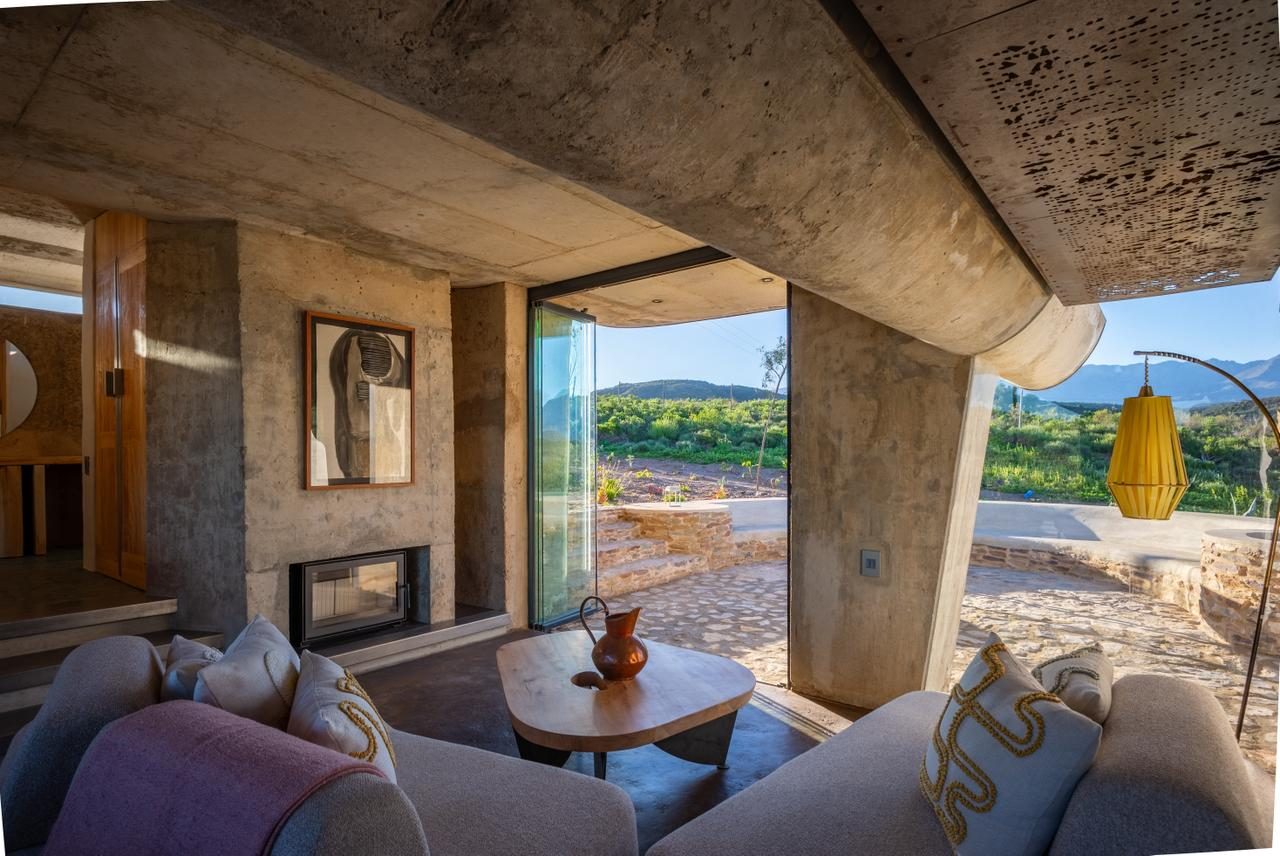
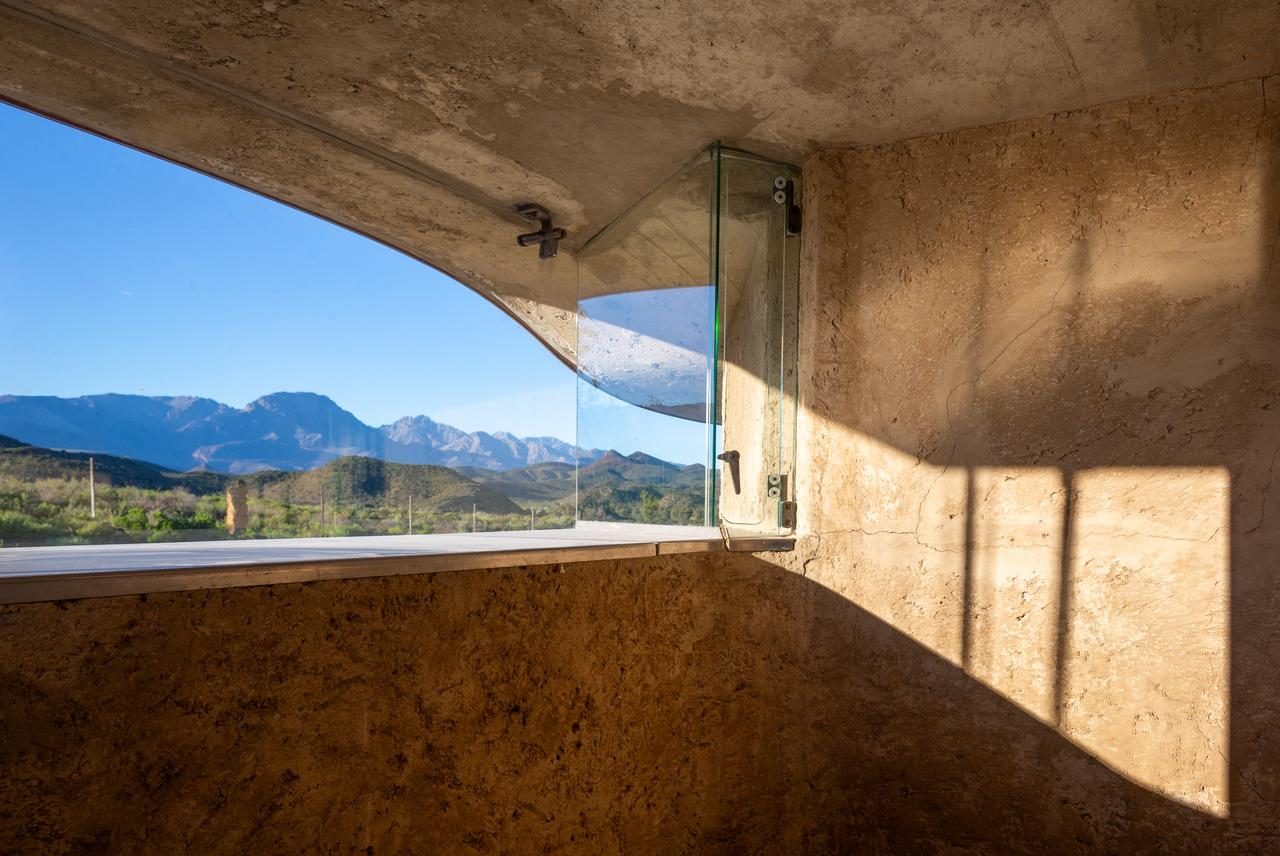
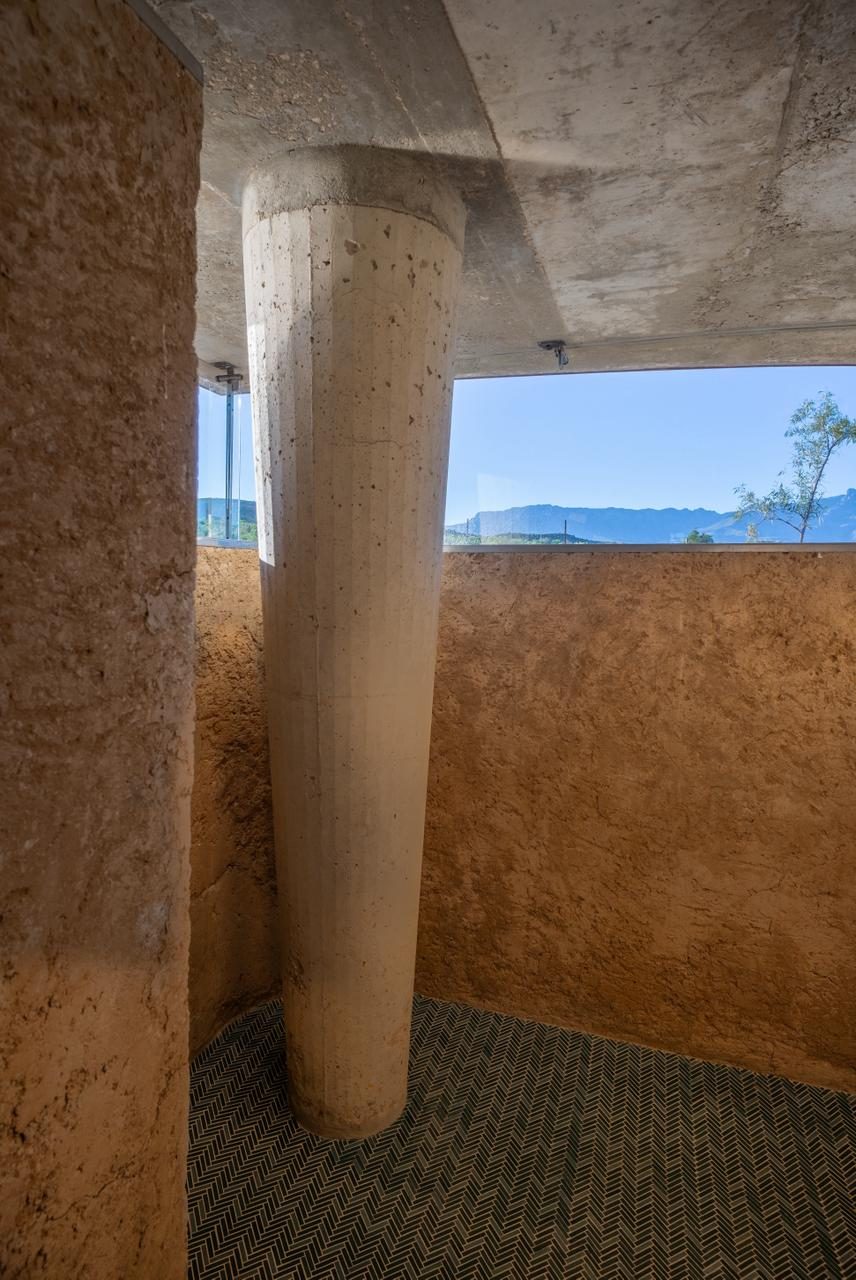
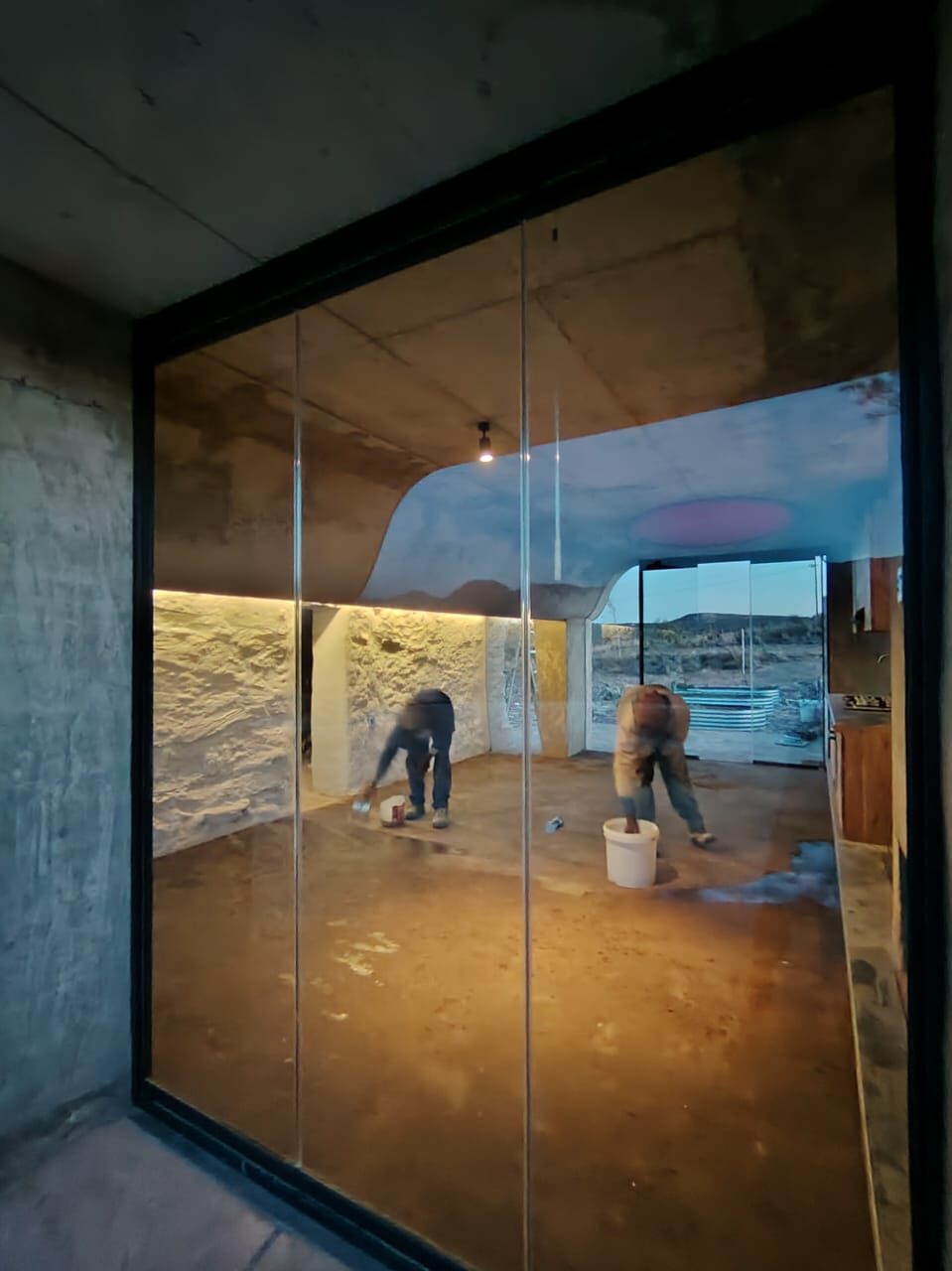
The earthen wall at the back of the building was formed directly from the excavation: the material cut away to sink the building into the hill became the wall that closes it against the hill. The floor is a rammed earthen floor — with input from Hanno Burcher of Earthman, who has practised rammed earth construction since first encountering the method through Martin Rauch of Lehm Ton Erde — the Austrian practitioner who has, over four decades, developed rammed earth into a precision building material. The stone covering on the roof was gathered from the veld immediately surrounding the building. Veld is an Afrikaans word for the open, semi-arid land — the scrub, the stone, the grass pasture of an unfenced landscape — for which English has no equivalent. The earthen floor, the earthen wall, the stone on the roof: all of it came from the ground within a few metres of where it now sits.
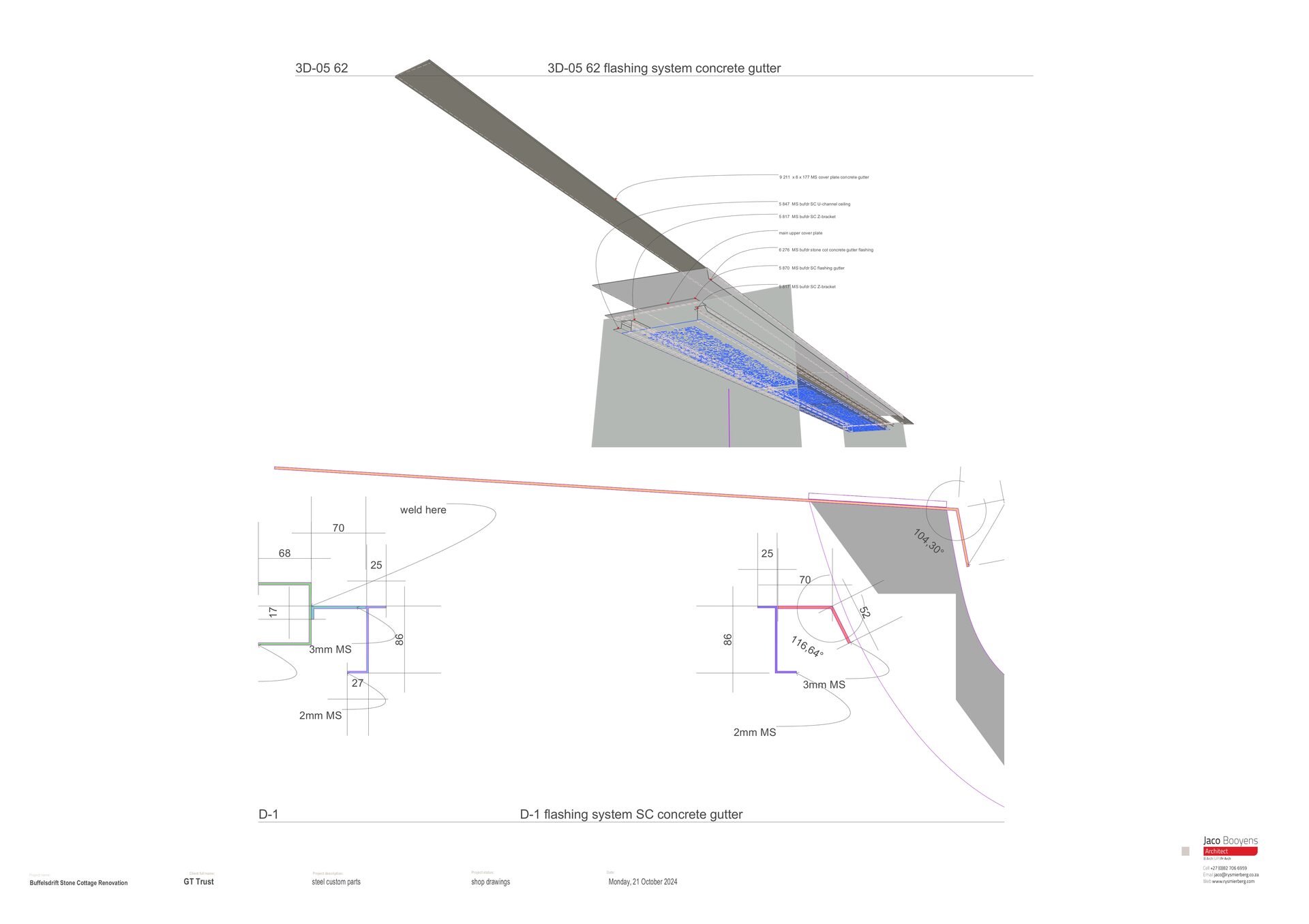
The new building is a separate structure — its concrete roof carried on its own series of walls and columns, with cast mud walls as infill below — the same material cut away to sink the building into the koppie, now returned as enclosure. The original stone cottage stands independently alongside it; the two do not touch. Each fold in the concrete slab conceals a beam and stiffens the span. The lowest fold becomes the curved concrete gutter: simultaneously the perimeter structural beam, the drainage channel collecting rainwater from all roof surfaces, and the element that swings around into the shared terrace — the threshold between old and new. All water is routed to a single outlet on the Towerkop side, where it drops to the stone paving below.
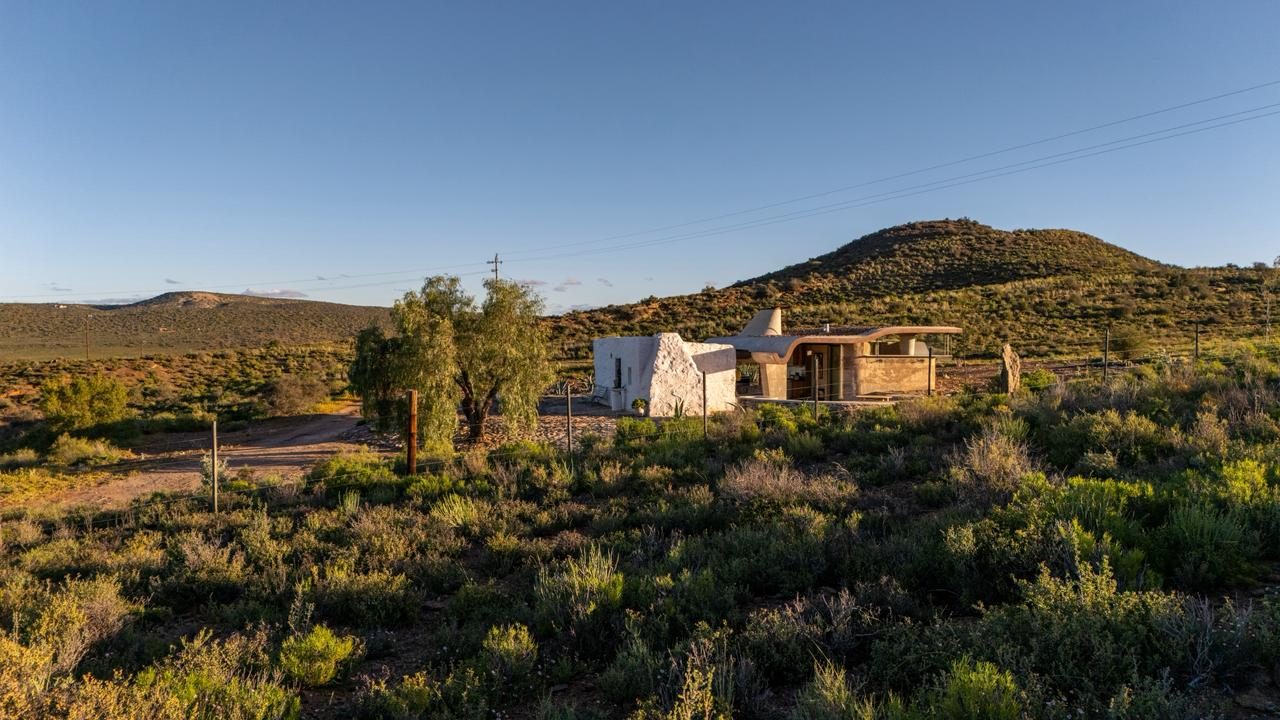
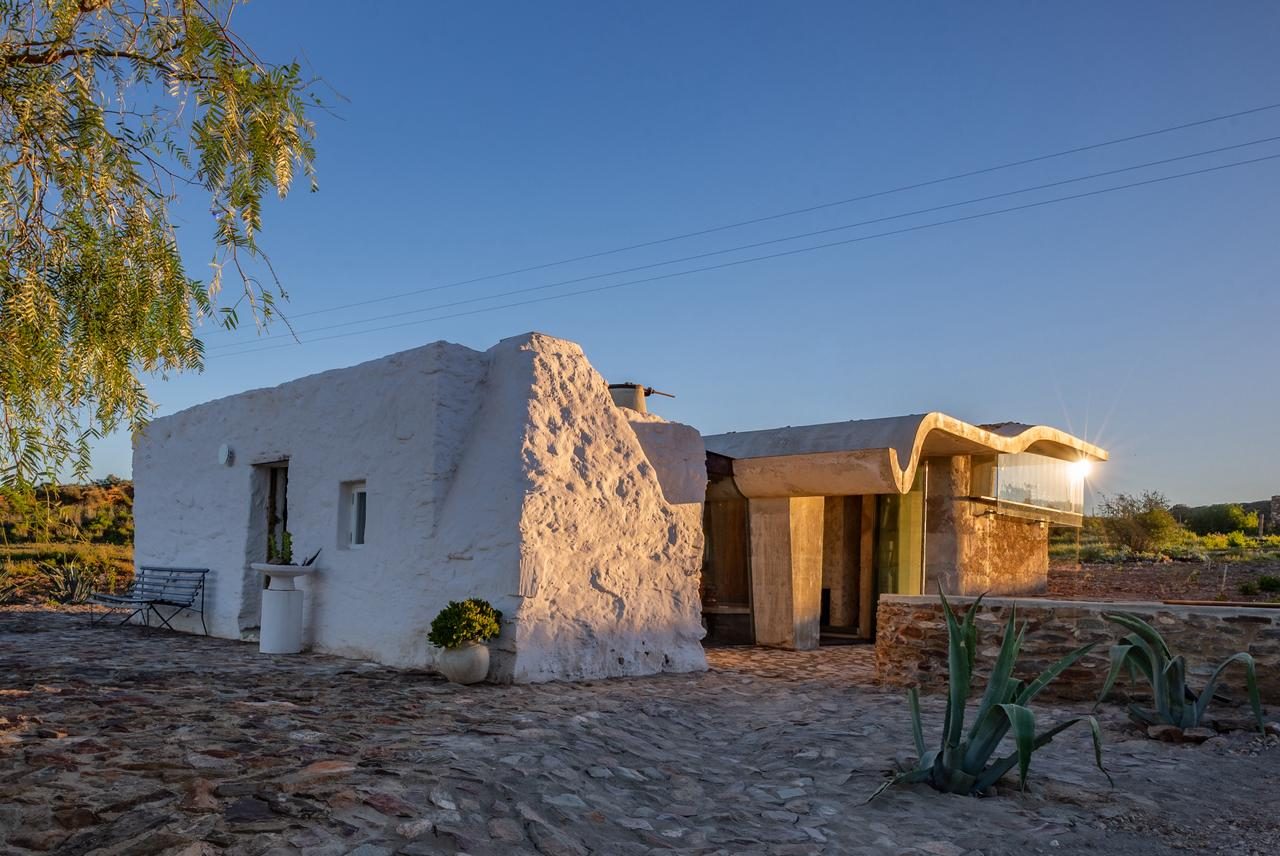
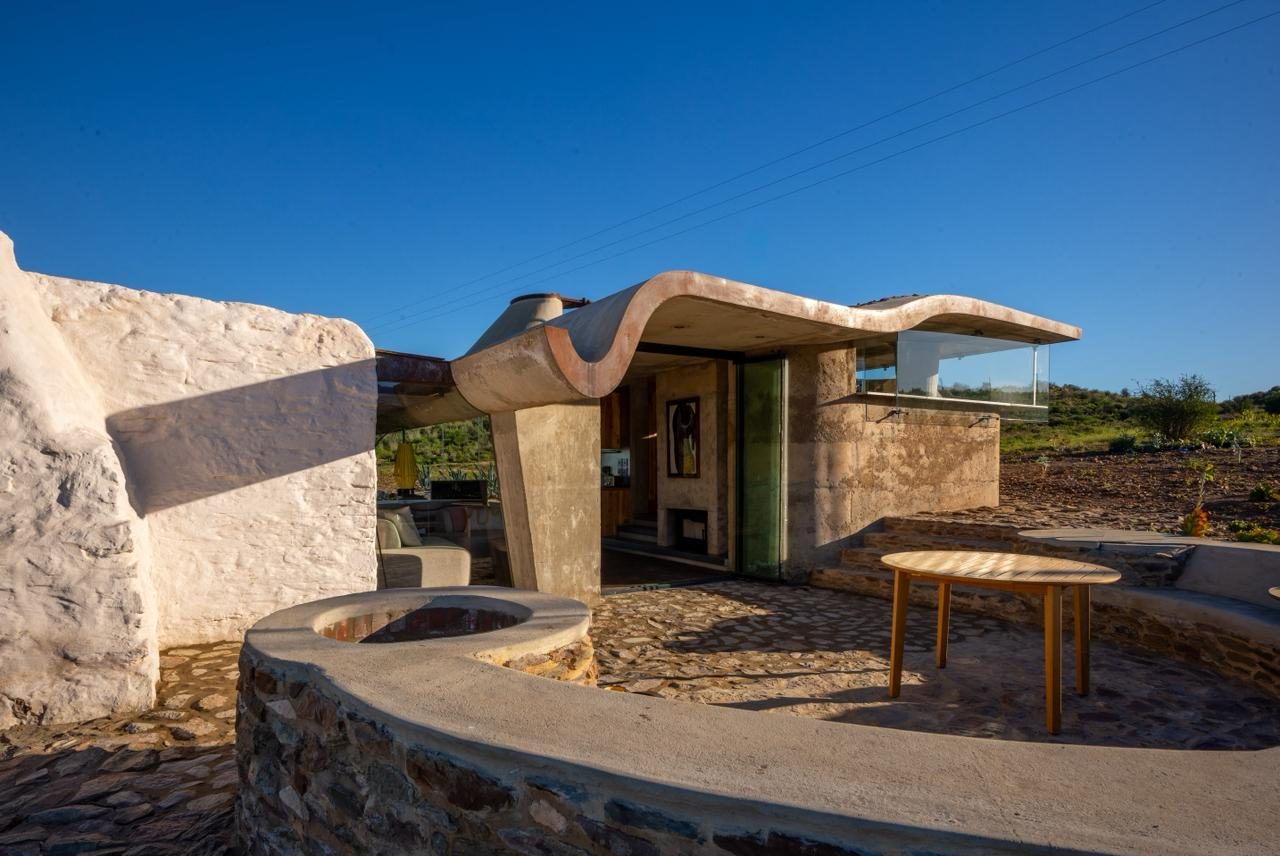
The roof build-up works in three layers. The first is broken peach pips — a waste product from the stone fruit farming of the Klein Karoo, where peaches, plums, and apricots are grown commercially across the valley floors. The crushed pips are a dry, lightweight, naturally insulating material: laid loose across the concrete surface, they create a simple heat barrier between the exterior and the thermal mass of the concrete below, slowing the rate at which the sun's heat penetrates the slab. Above the pips, a layer of Bidim mesh — a non-woven geotextile — holds the surface together and separates the pip layer from the final covering: veld klippies, the coarse gravel and small stones gathered from the ground immediately surrounding the building, as already described. Three materials, all from within reach of the site, stacked into a roof that insulates, drains, and disappears into the landscape.
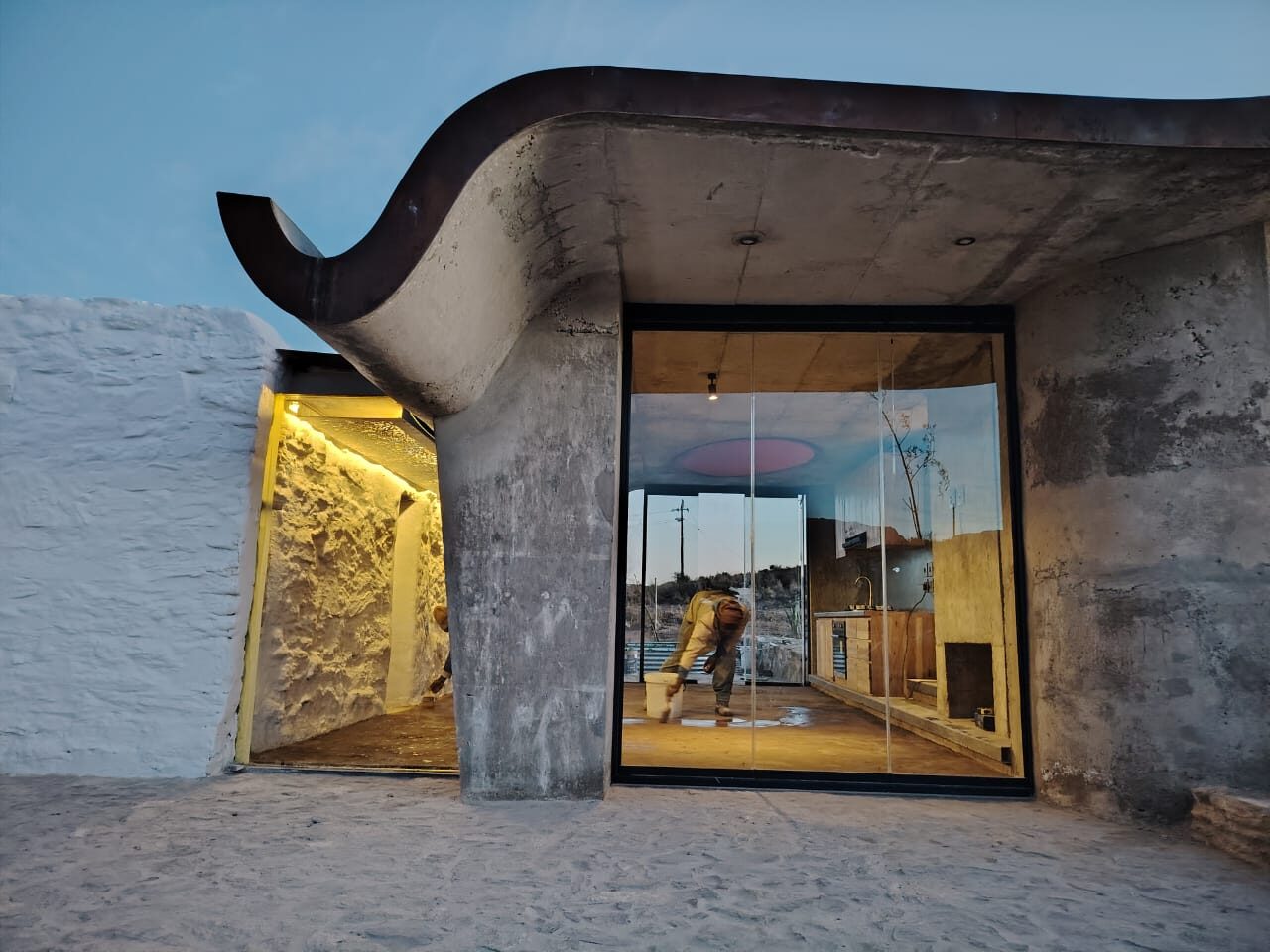
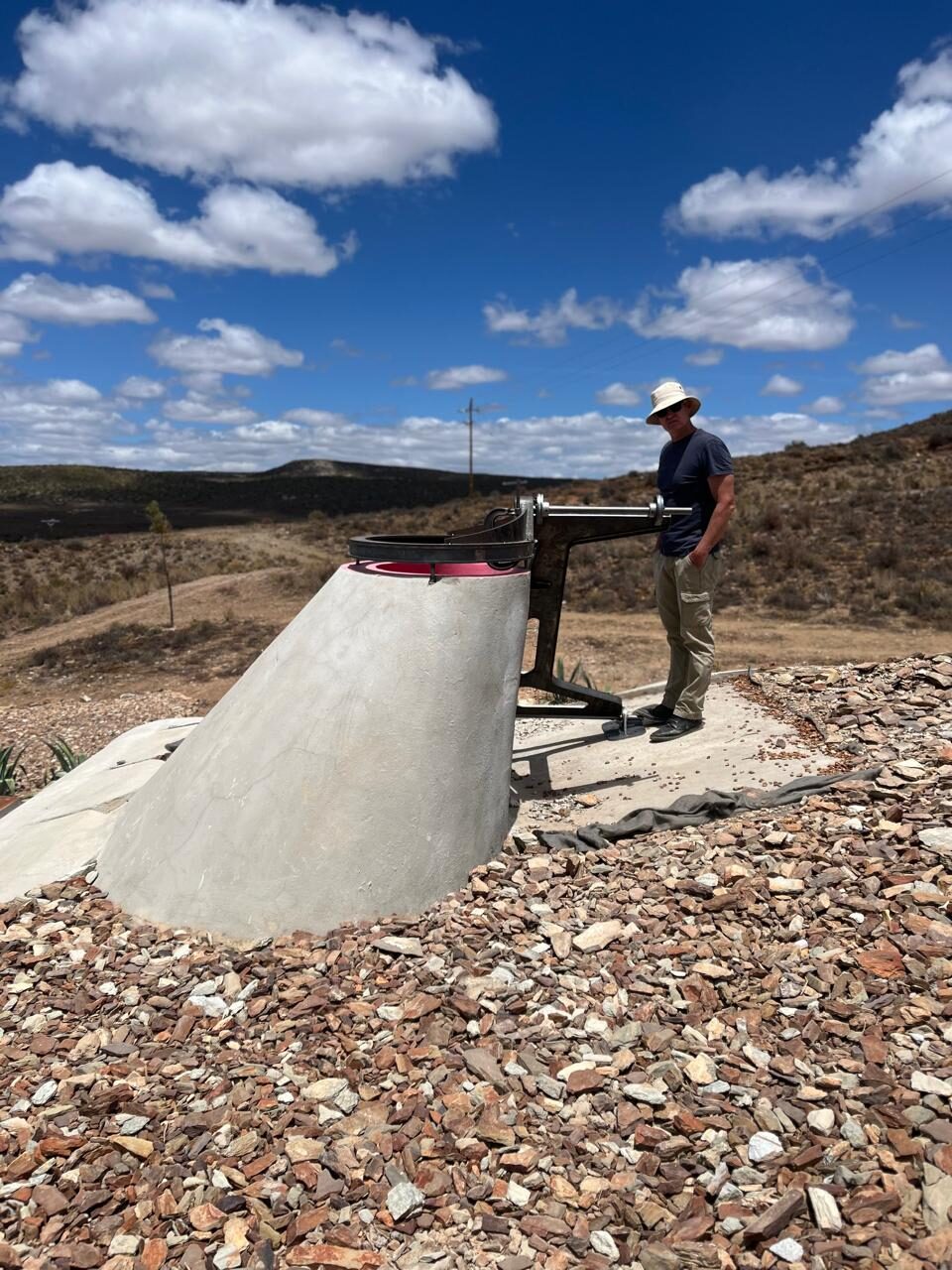
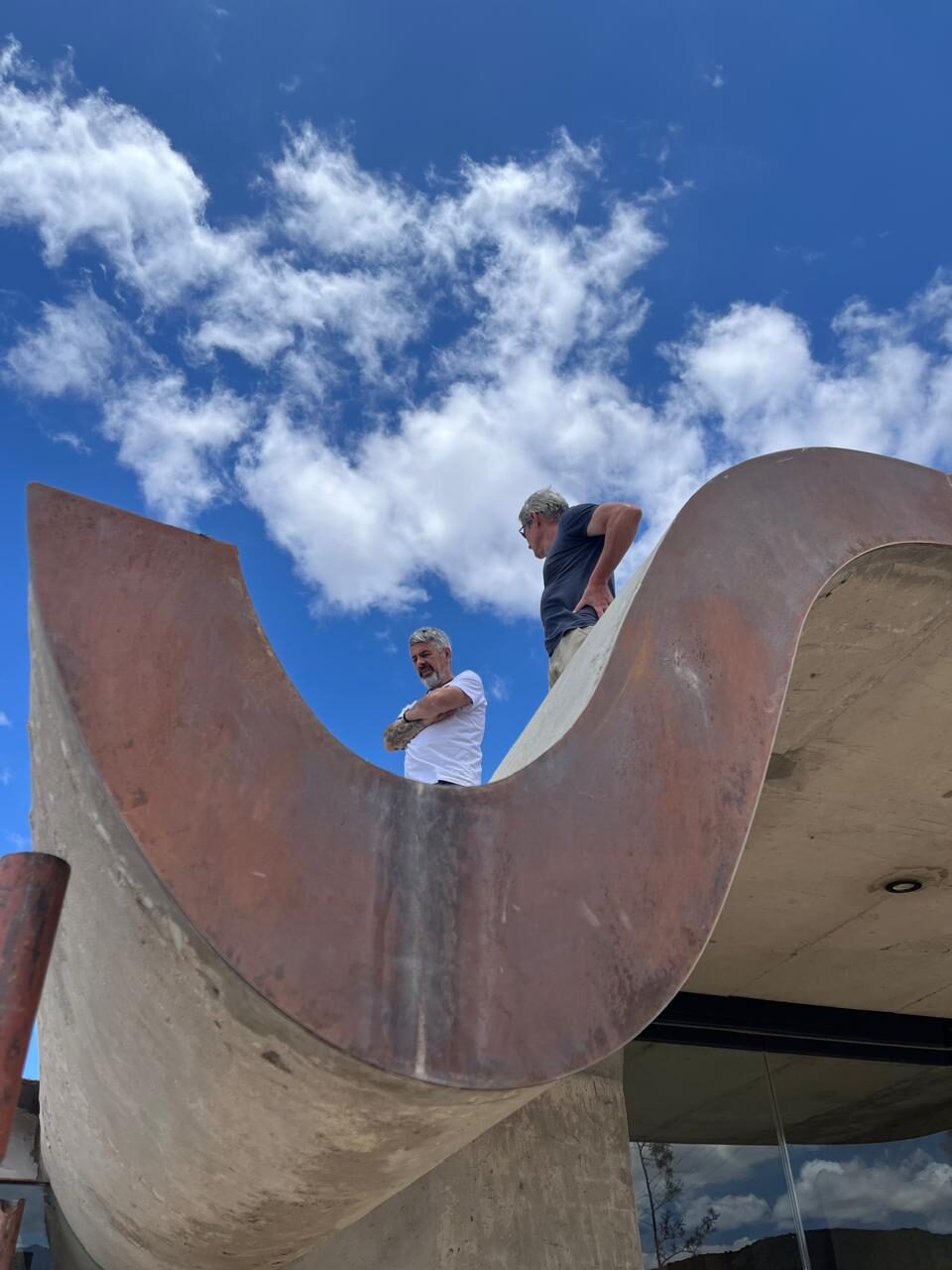
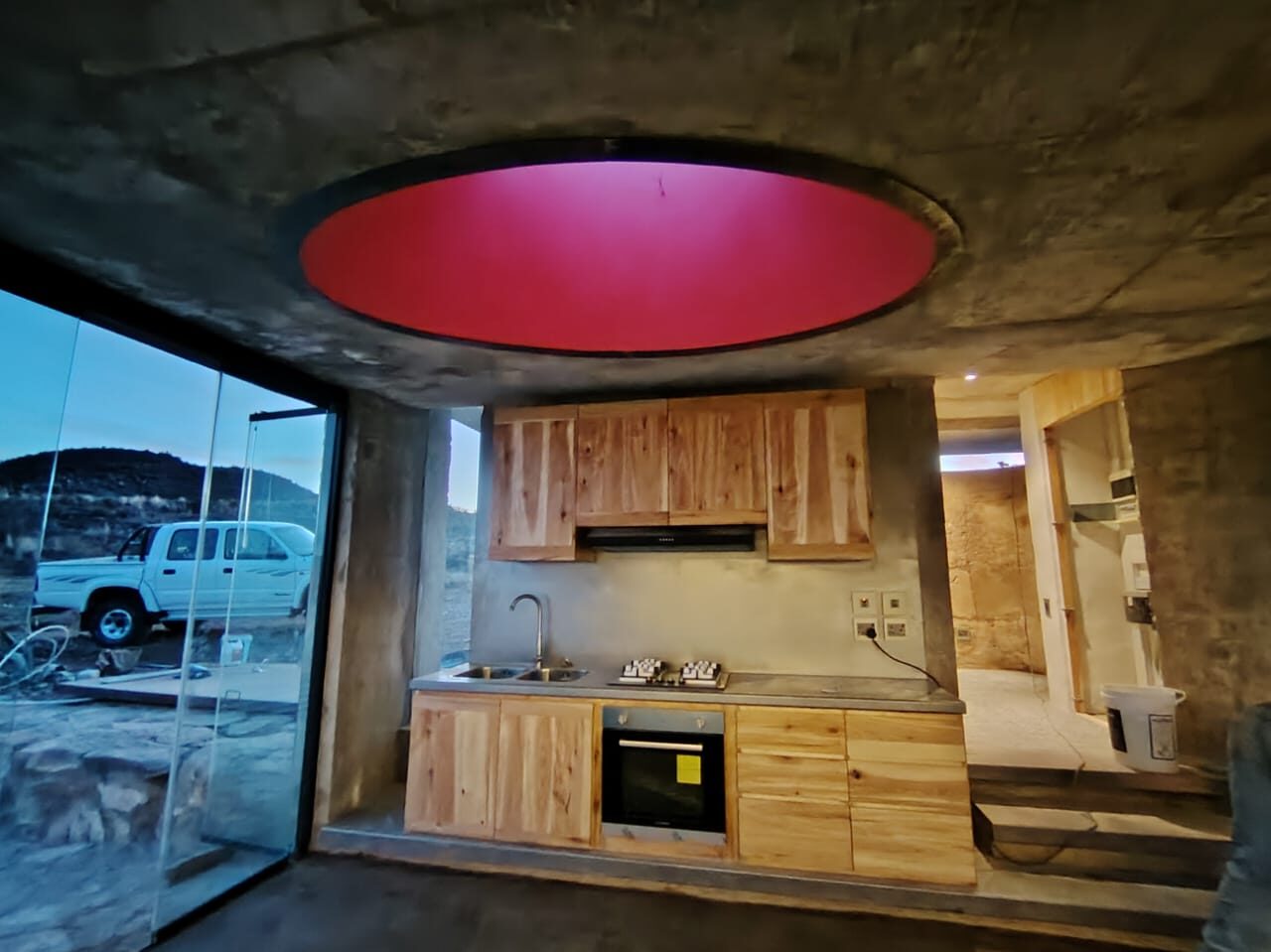
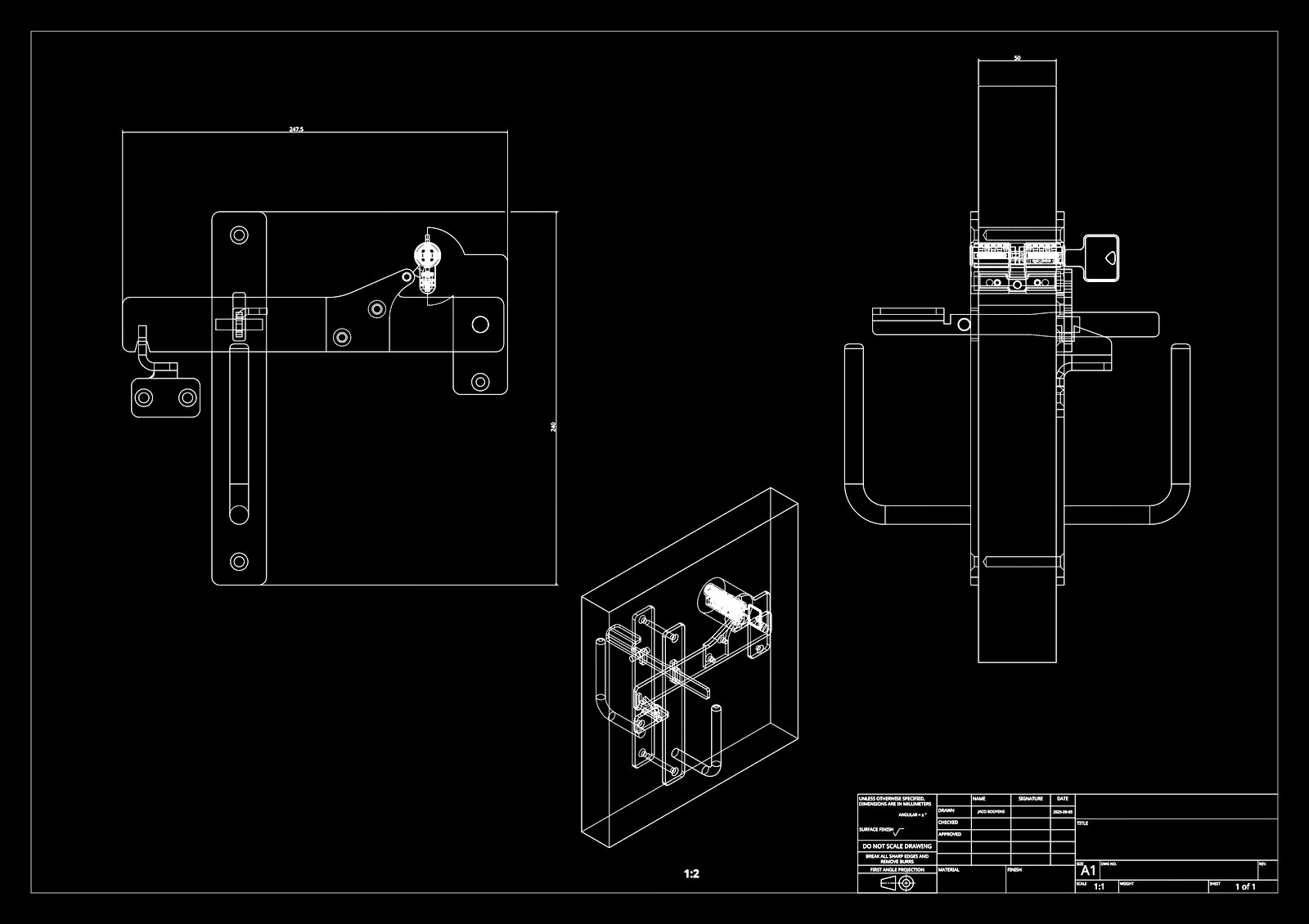
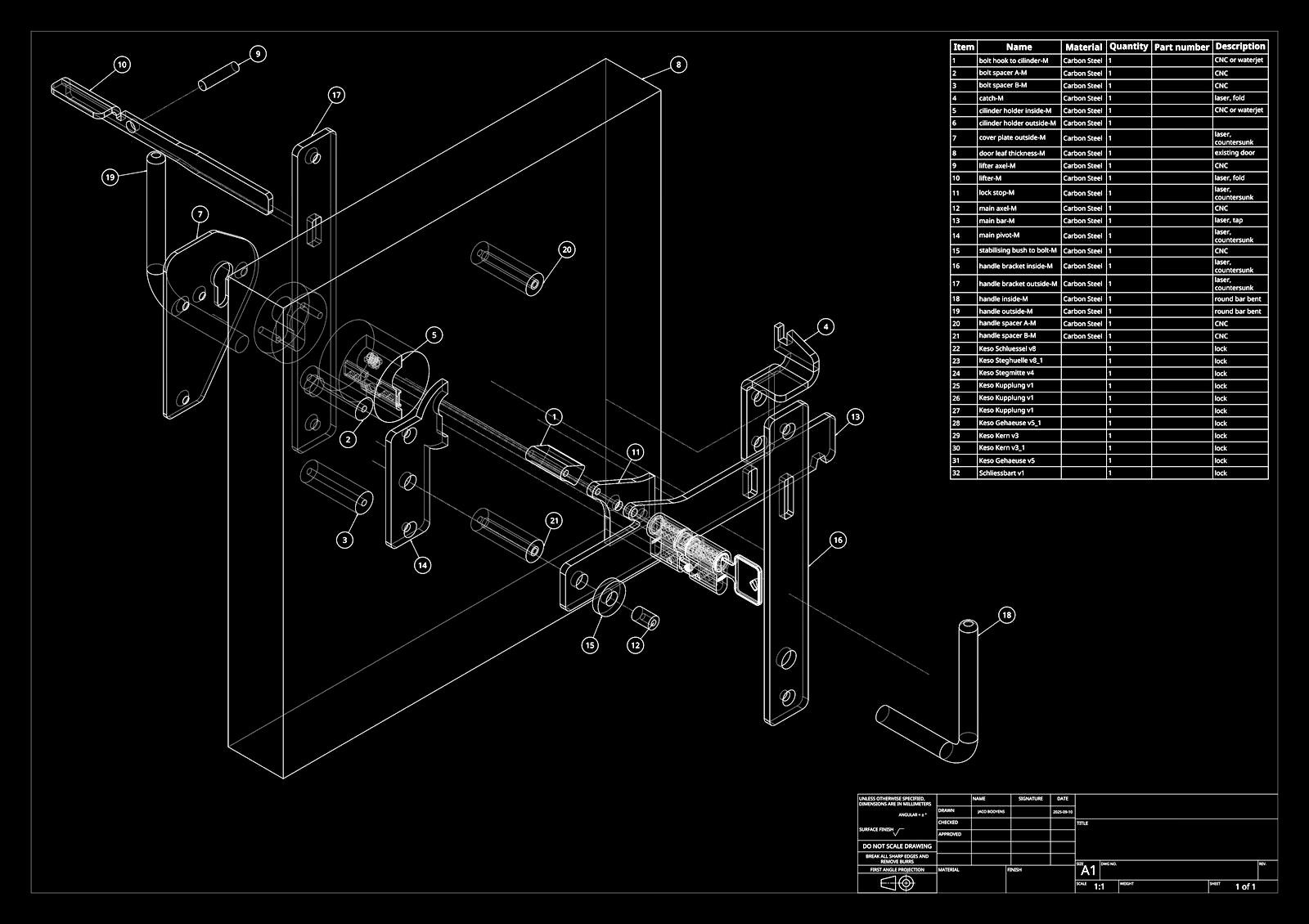
The door of the skaapwagtershuisie is original — Oregon pine Z-planks, very old, multiple layers of paint accumulated over the years. It needed a lock that understood what it was attached to.
The grendel is the Afrikaans word for small bolt — the sliding iron bar that secured farmstead doors across the Cape Colony from the 1600s onward. The mechanism is ancient: a bar drops into a catch, held by gravity, lifted by a shaped key inserted through a hole in the door. No cylinder, no patent, no factory. The farmer or his blacksmith made it on site from whatever iron was available. Each one unique.
This lock takes that same principle and re-engineers it in laser-cut and CNC-folded mild steel to a 32-component assembly. The lifter bar pivots on a machined axle. The catch, the cover plate, the handle brackets — all carbon steel, laser-cut, folded or CNC-machined to tolerance. The key mechanism is a Keso 25/10/25 euro barrel cylinder: a high-security Swiss lock core dropped into a body that a Cape blacksmith of 1780 would have recognised immediately.
The pattern of the lock face — the proportions, the visible fixings, the bar running across the door — is unchanged from the original grendel. The manufacturing method is three centuries removed.
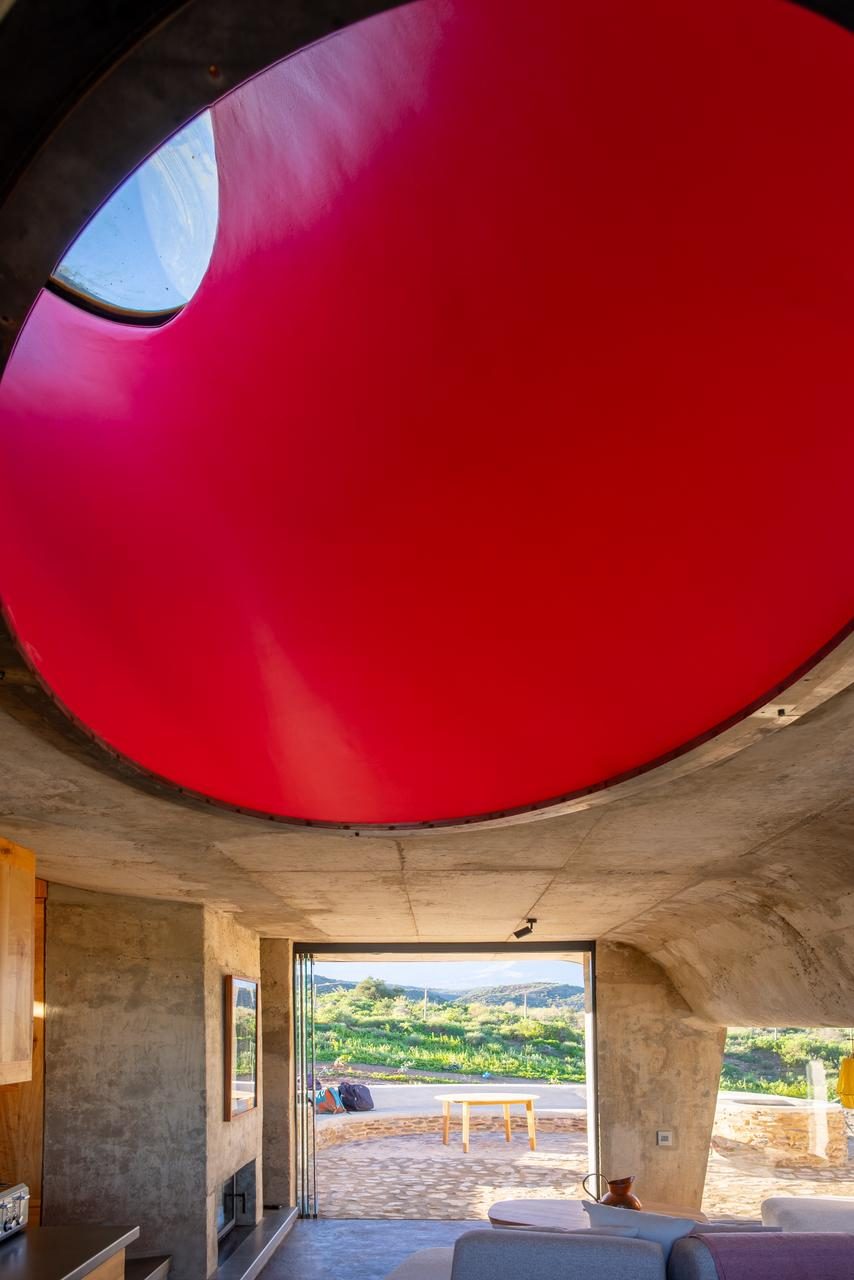
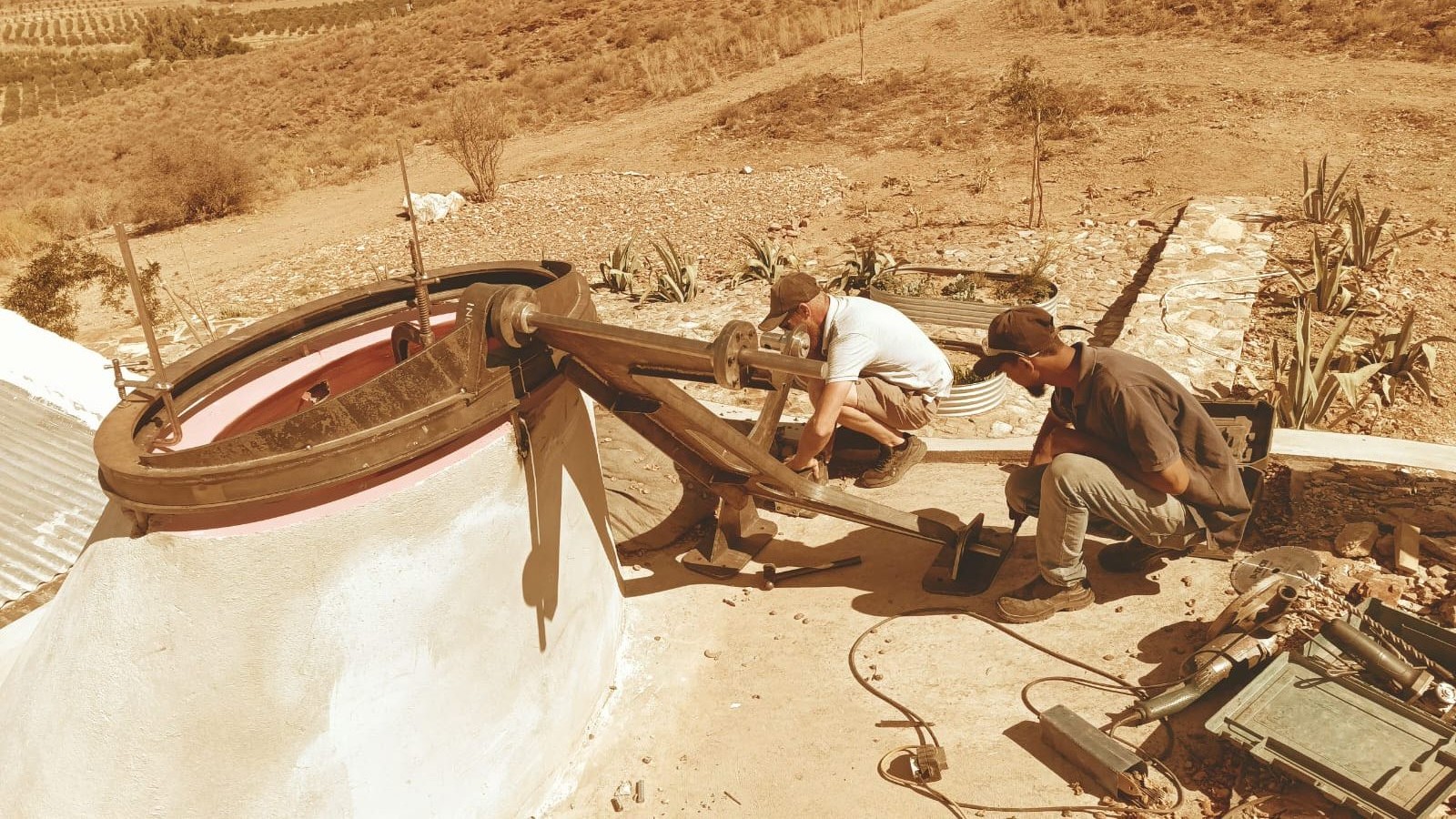
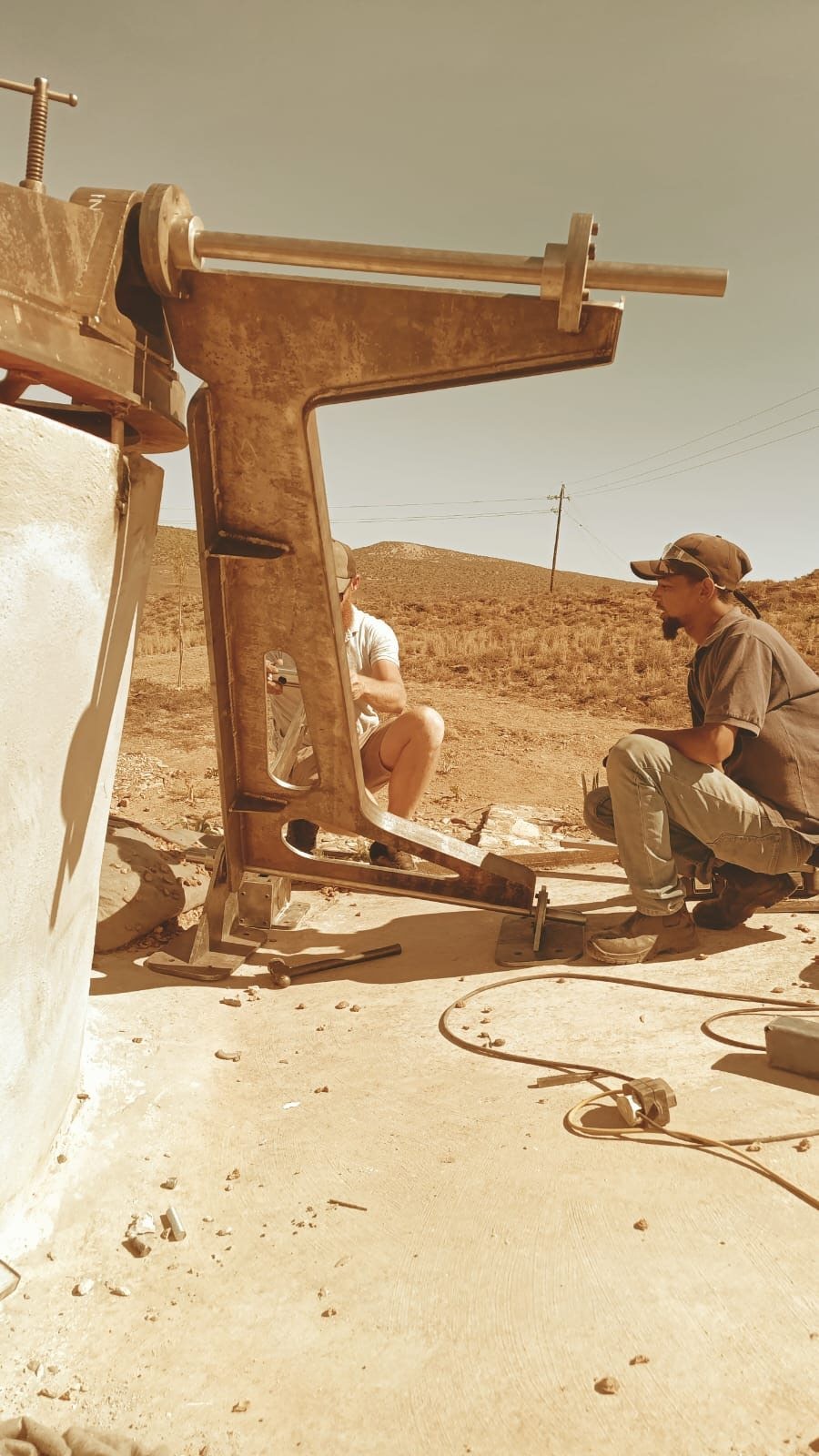
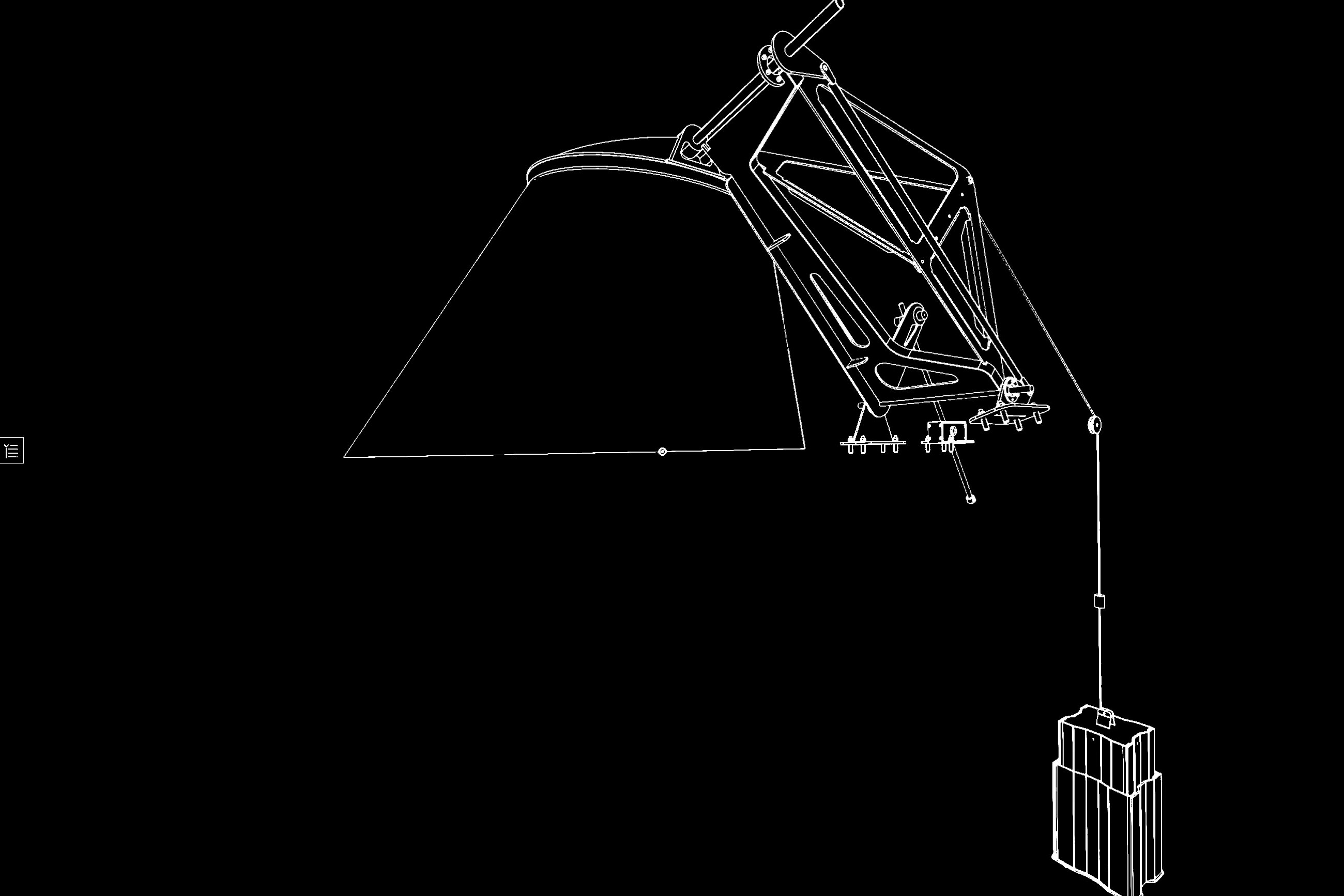
At the apex of the concrete roof sits a sun chimney — a vertical shaft that draws heat from the interior and pulls fresh air through the building by stack effect. Its roof is not fixed: it is an ellipse of glass, mounted on a steel lifting mechanism that opens the chimney completely to the Klein Karoo sky.
The sun chimney belongs to a lineage. At the Convent of La Tourette — Le Corbusier's 1960 monastery above Lyon — cylindrical concrete light wells puncture the roof and throw controlled shafts into the interior below: canons de lumière. The Skaapwagtershuisie chimney is ellipsoid, not round — its shape derived from the plan geometry and the angle of the shaft. The reference is not a claim of equivalence — it is a homage: Corb in the Karoo, the same argument about controlled light and vertical connection to the sky, worked out at a different scale, in a different climate, in concrete poured on a Klein Karoo hillside.
The reason is a distinction that matters to the architect: a view through glass is not the same as a view directly into the open sky. At altitude, in clear Karoo air, the difference is significant — the absence of a glass surface between the eye and the stars, the silence, the unmediated temperature of the night air. When the lid is open, the chimney becomes a vertical window to the sky without any material mediating the connection. The glass ellipse is therefore designed to be removable from the building entirely — lifted clear of the opening by a machine built into the concrete structure.
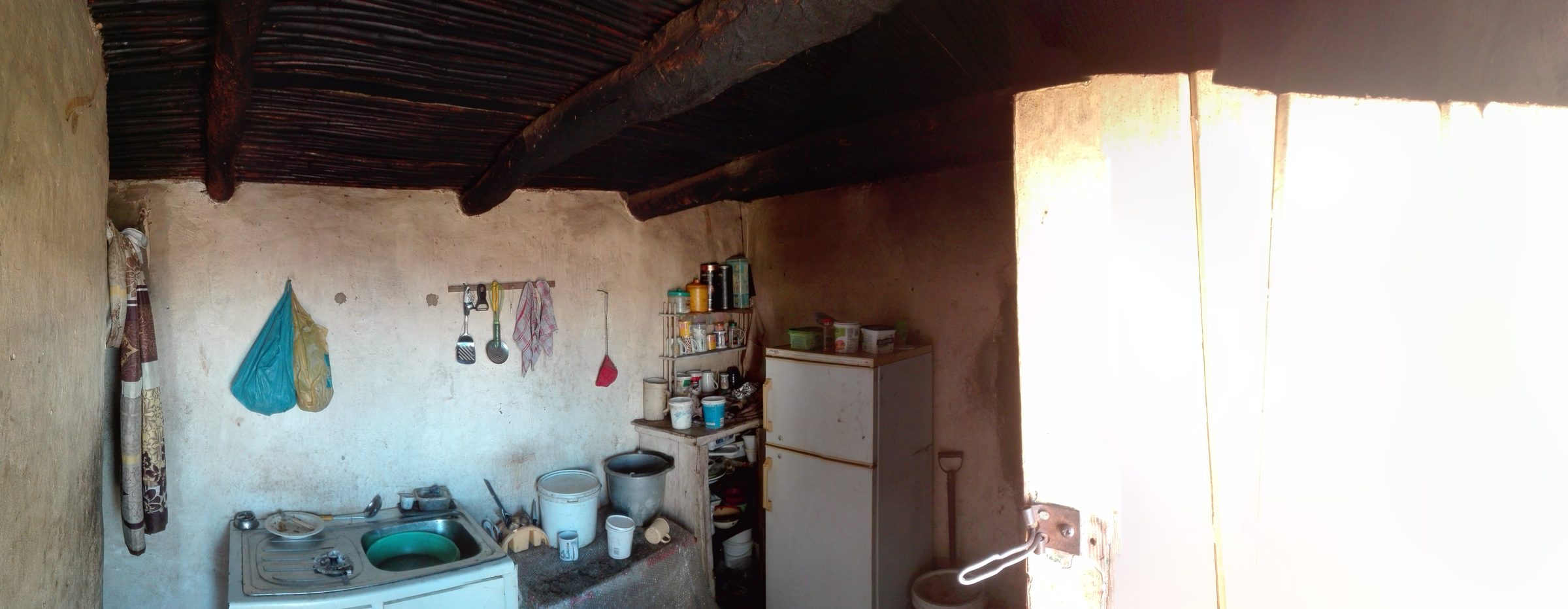
The machine is a steel counterweight-and-screw mechanism. A 120 kg counterweight balances the glass lid, bringing the effective lifting load close to neutral. The lift itself is driven by an acme lead screw — a machined trapezium-threaded shaft — turned by a hand crank accessible from the kitchen on the interior of the building. The entire opening sequence requires no electricity and no automation: the crank is turned, the screw advances, the counterweighted arm rises, and the glass ellipse lifts clear of the opening in a single arc. The mechanism is assembled from carbon steel structural sections, folded-plate pivot boxes, SKF ball bearings, and Teflon sliding joints that allow the arm to follow its arc without binding. Every component was modelled in Onshape and fabricated to tolerance — the same method as the rest of the project.
The internal geometry of the sun chimney is not arbitrary. The shaft is angled so that direct sunlight enters the building interior and falls onto the kitchen worksurface at approximately 15h00 — the light position calibrated to the latitude of Buffelsdrift and the arc of the afternoon sun. The shaft angle also accounts for the full annual range of the sun's position: the maximum elevation at the summer solstice (December in the southern hemisphere) and the minimum at winter solstice (June), so that light enters the shaft and reaches the worksurface throughout the year without obstruction. The chimney is, in this sense, a sundial built into the roof — a clock that marks the working afternoon with direct light.
In the bathroom, a column carries the roof where the plan demanded it and the space could not accommodate a conventional section. It is inverted — narrow at the base, wider at the top. The form was modelled in Onshape; the shutter was a folded steel plate, also drawn in Onshape and cut digitally. A single-use mould — the concrete taking its exact geometry on the first and only pour.
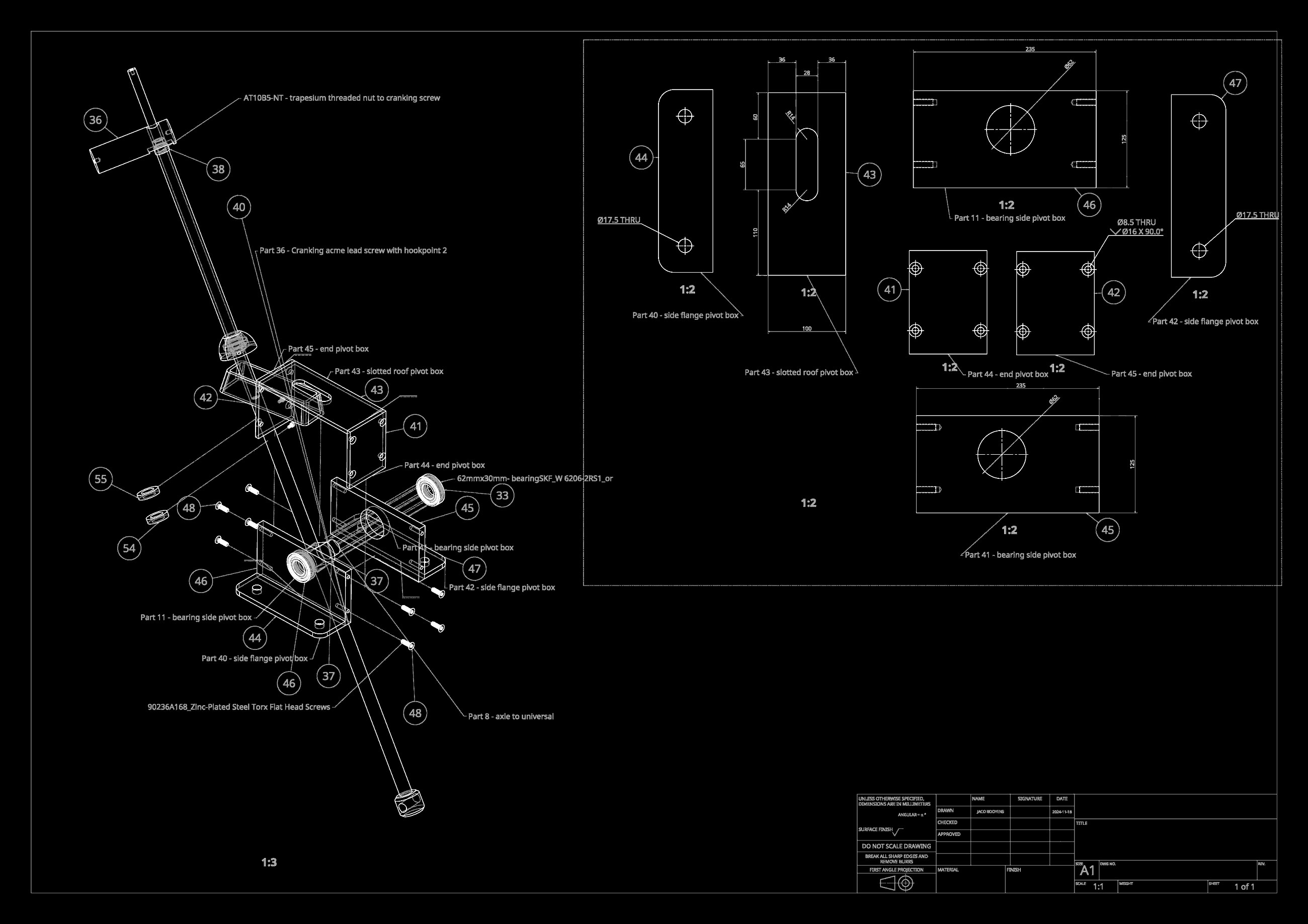
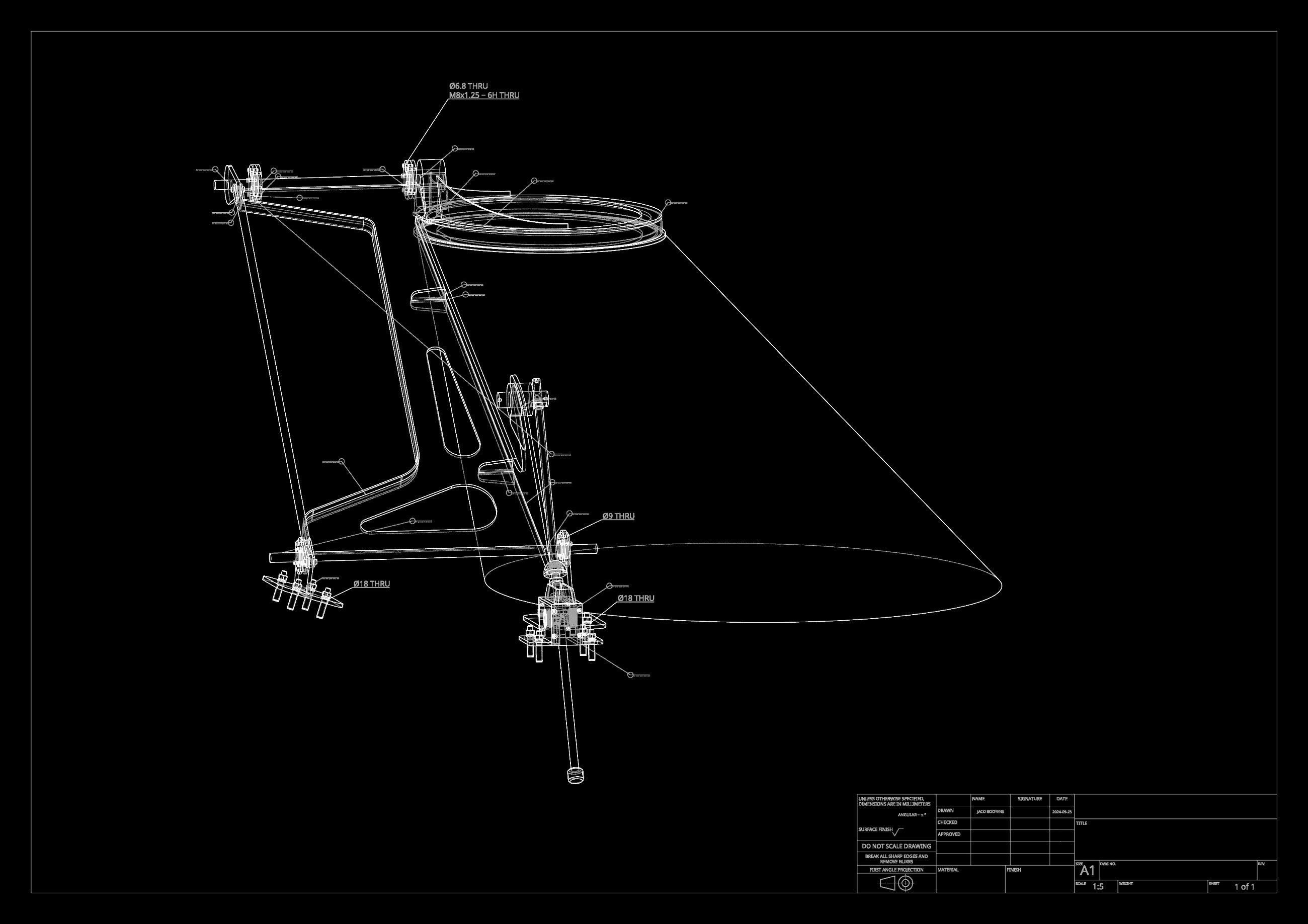
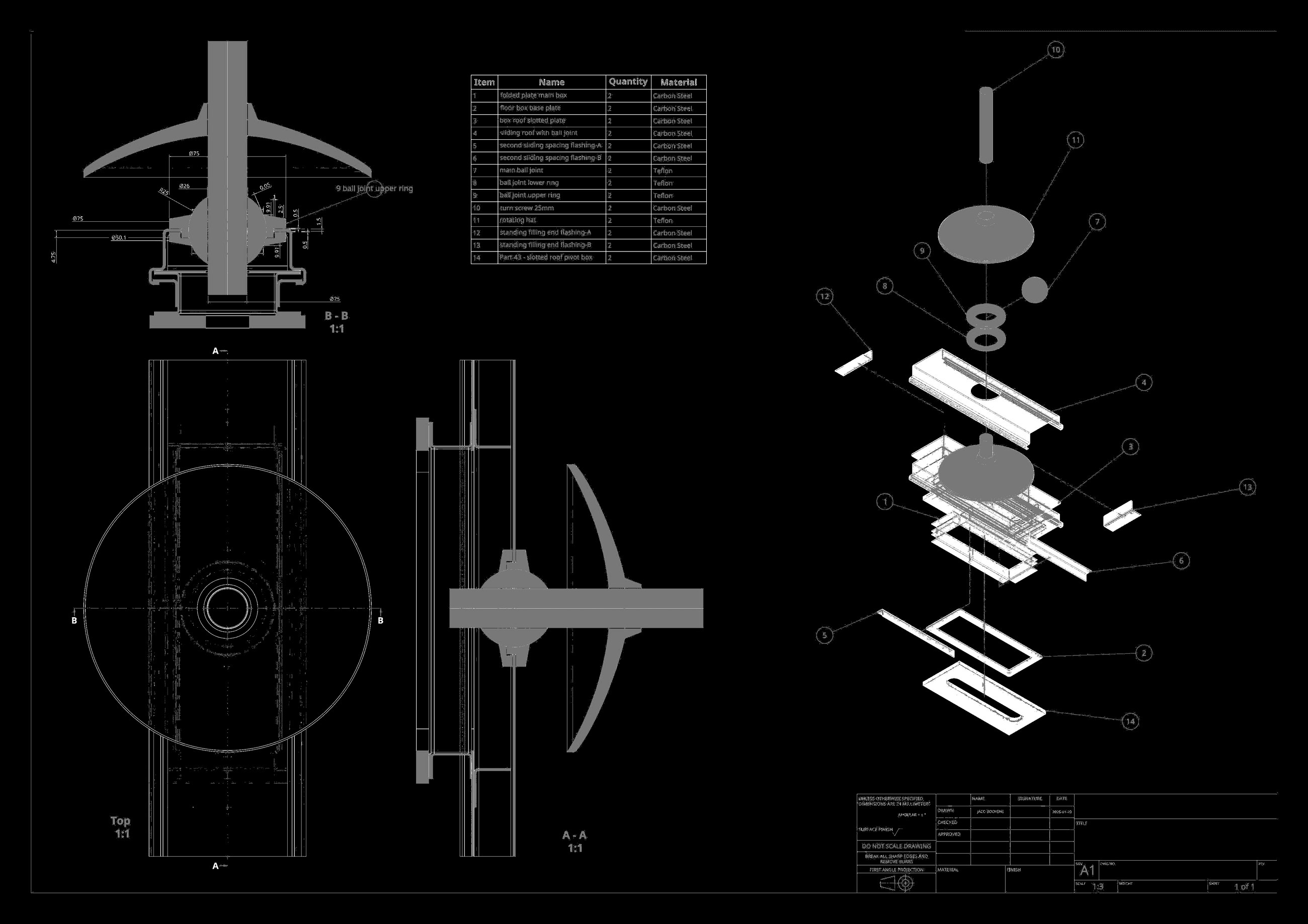
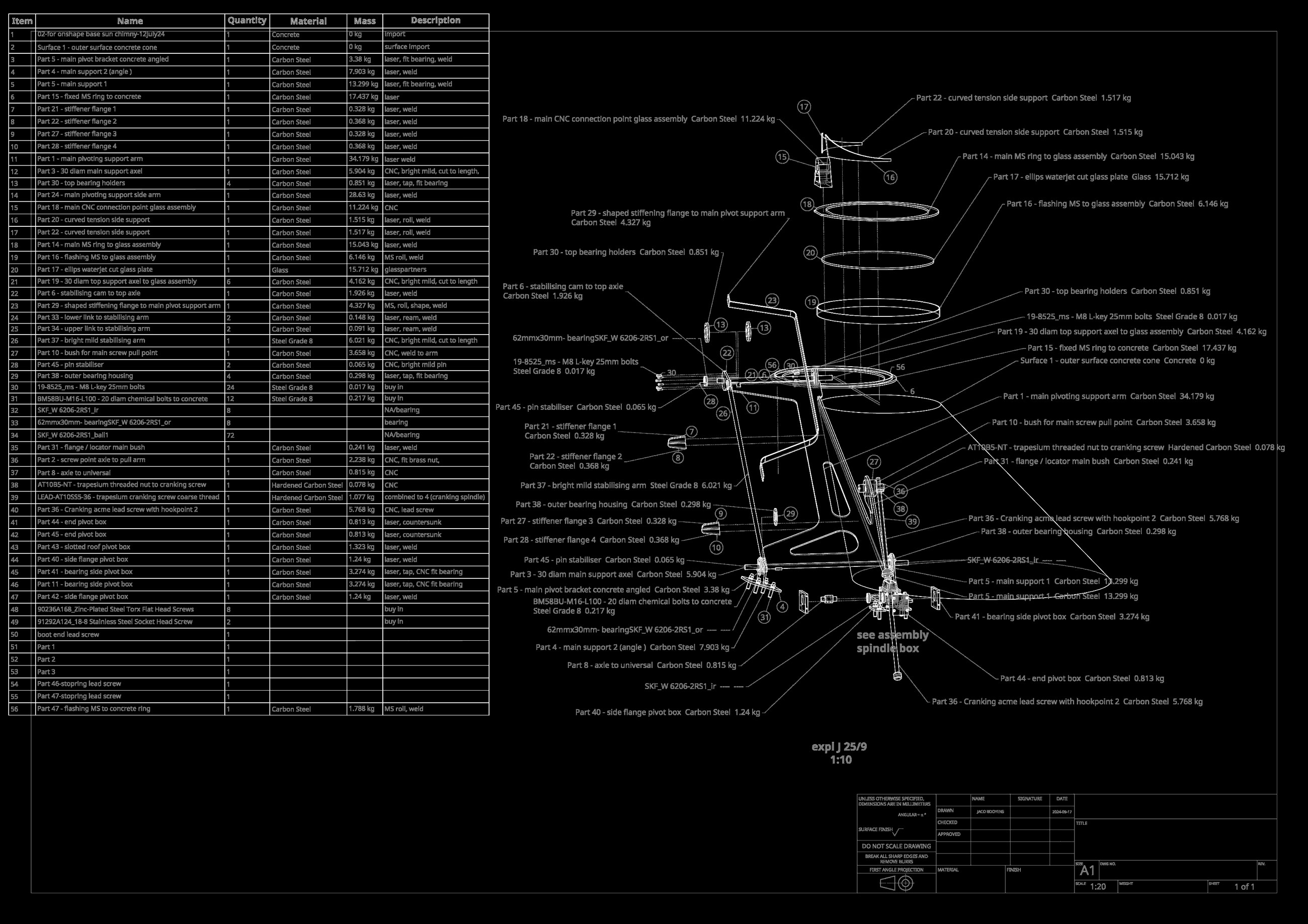
Every hardware component was custom-designed in Onshape from the point cloud data and fabricated to tolerances the original stone builders never required: glass hangers, sliding mechanisms, folded-plate connectors, machined brackets. The same methodology as Yzerfontein — parametric geometry driving physical fabrication — applied to a nineteenth-century building that predates digital tools by a century.
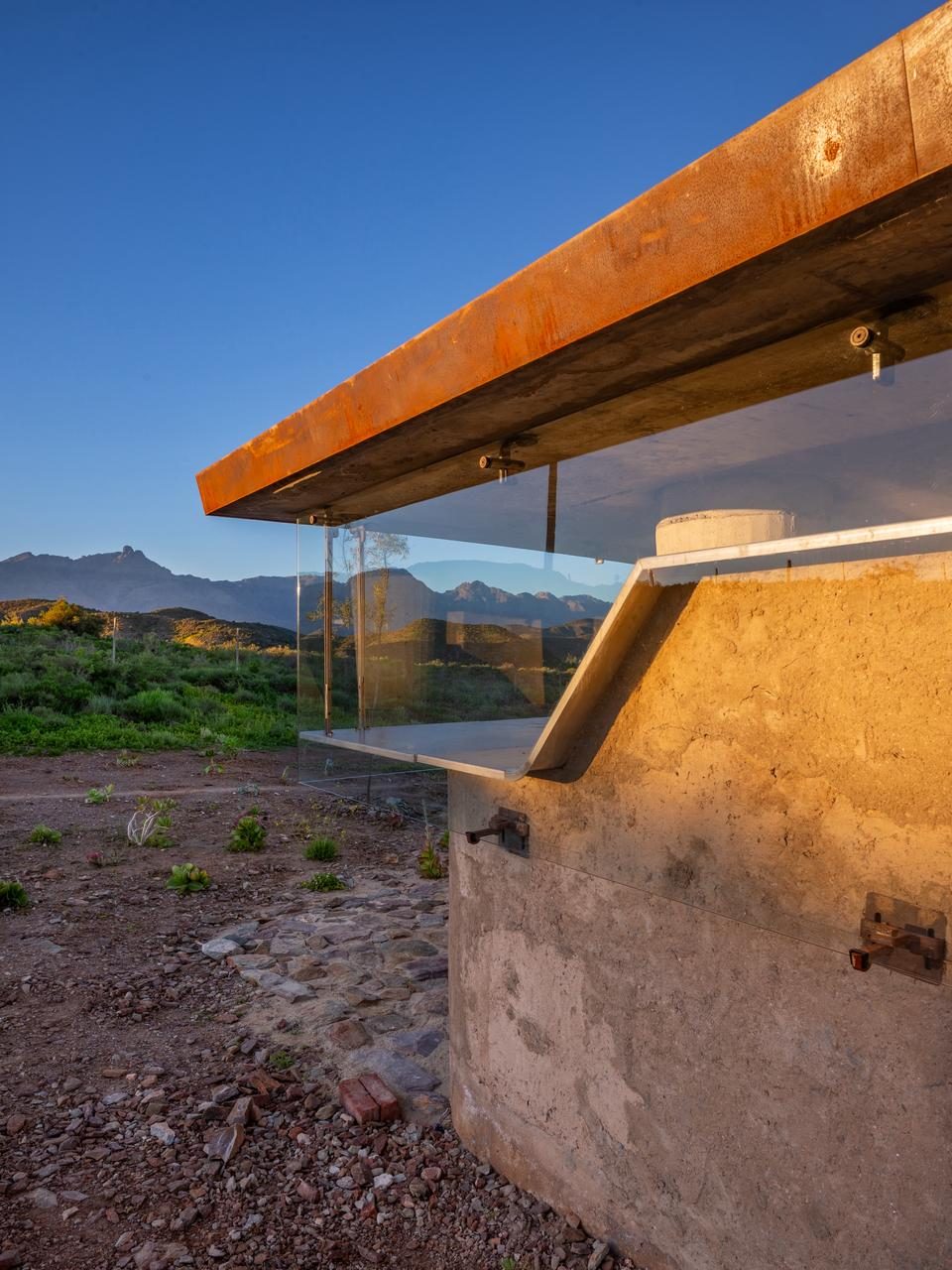
The glass panels of the building are hung frameless — suspended from the concrete soffit above and steadied at the base, with no conventional frame enclosing the edge of the glass. The system has two components: a top hanger bolted to the concrete soffit, from which the glass is suspended, and a lower support that catches the bottom edge and holds it in plane. Both were designed entirely in Onshape and fabricated from carbon steel.
At every point where steel meets glass, a soft interface was introduced to prevent the glass from bearing directly against metal. At the top hanger, machined PTFE teflon inserts and silicone rubber gasket washers line the contact faces — absorbing any differential movement and protecting the glass edge from stress concentration. At the bottom support, the lower glass hook catches a small 3D-printed ASA plastic insert that wraps around the glass edge. The insert was printed directly from the Onshape stepfile — no intermediate translation, no hand-fitting required on site. ASA was chosen for its dimensional stability and UV resistance: it holds its shape in the Karoo sun without creep.
The result is a glass edge that touches nothing rigid along its full perimeter. Steel is everywhere in the assembly; it never makes direct contact with the glass.
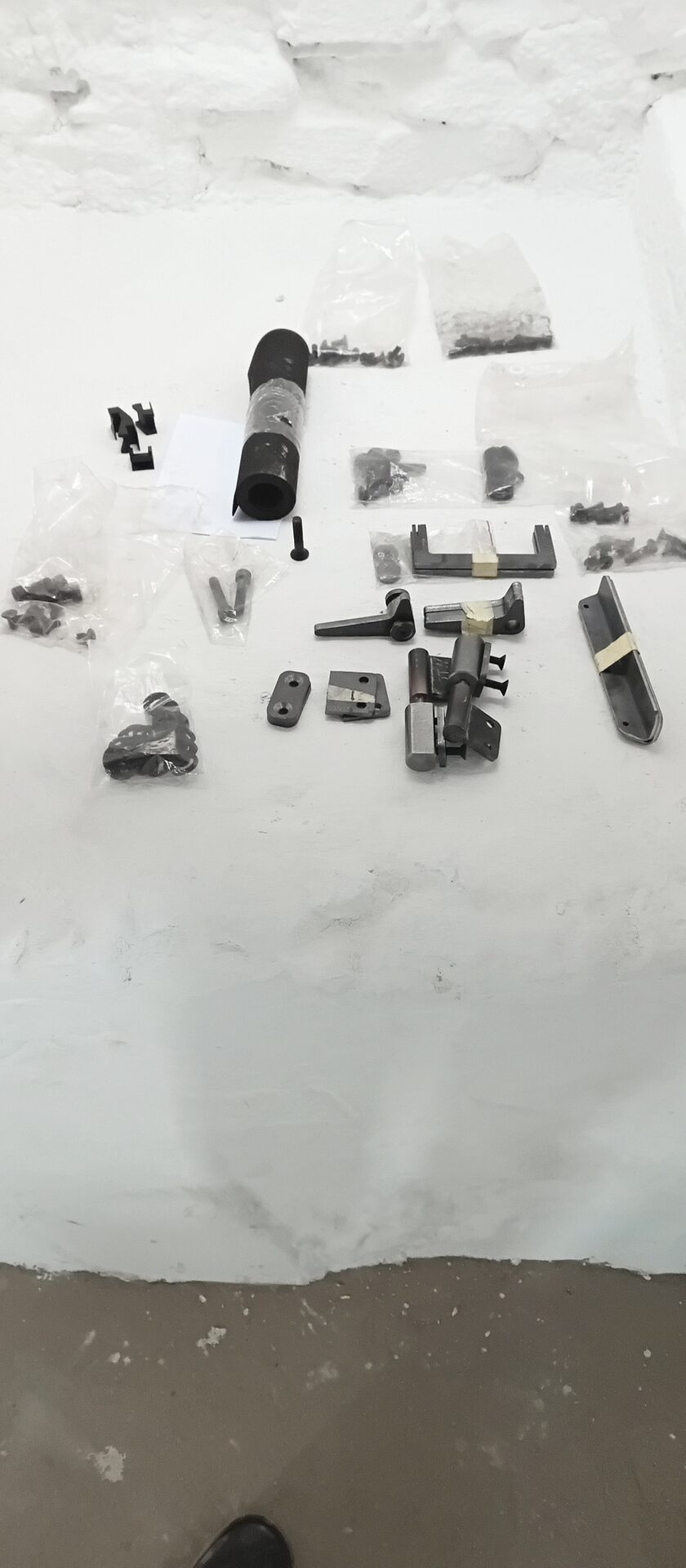
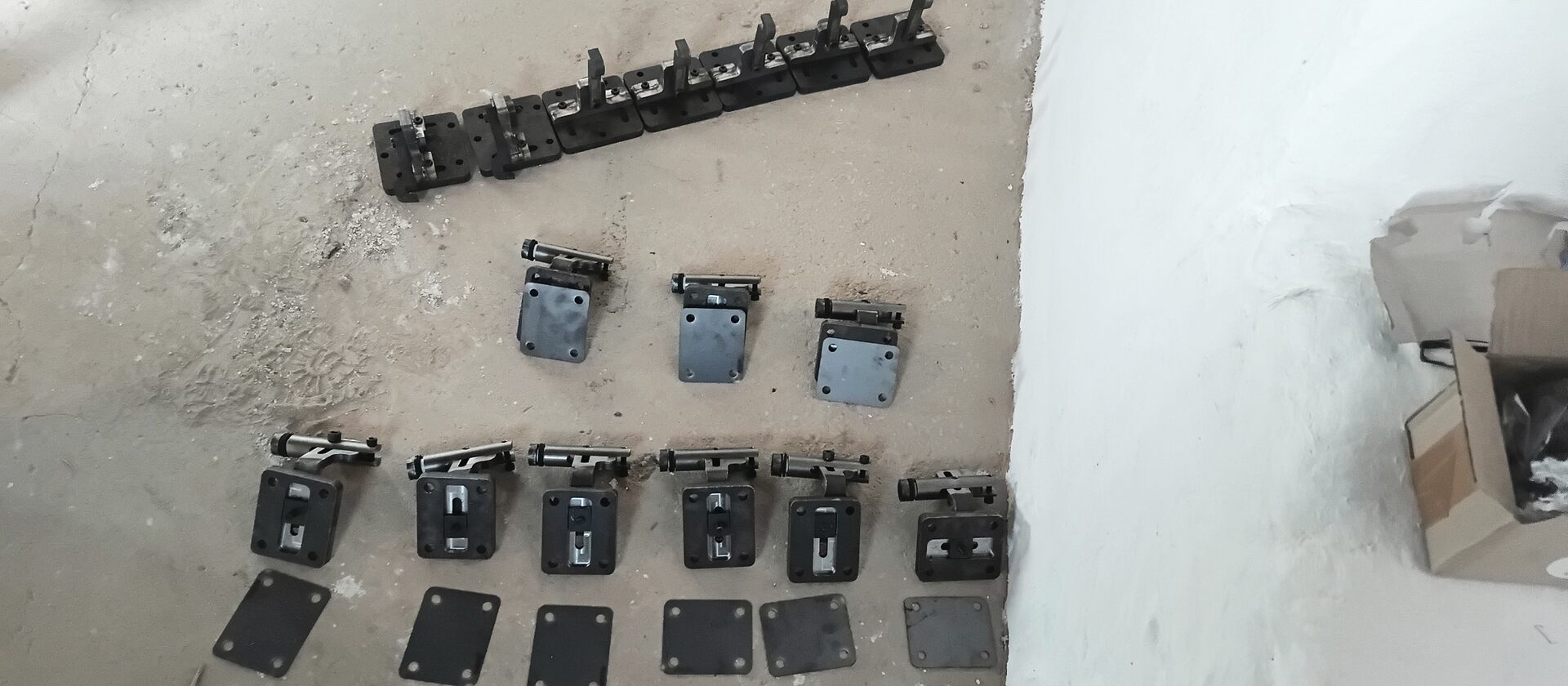
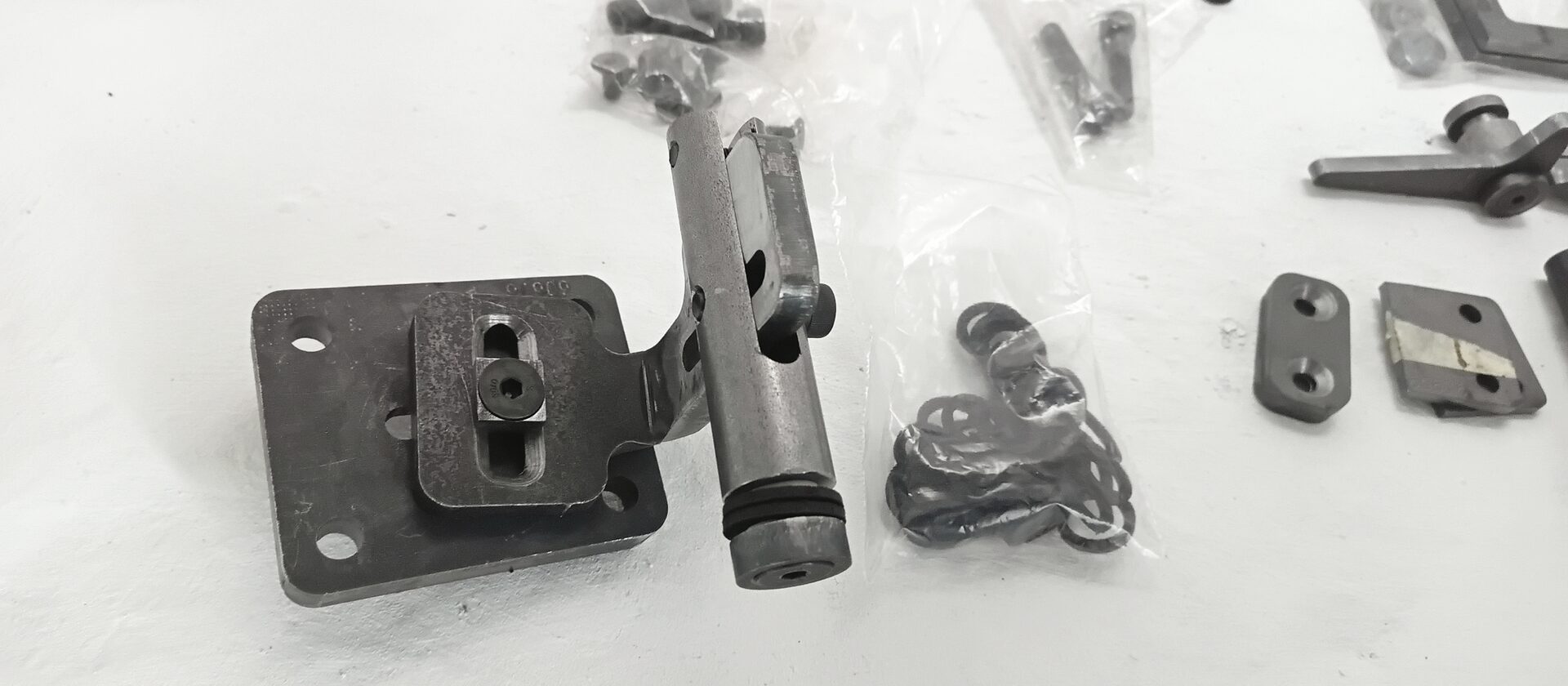
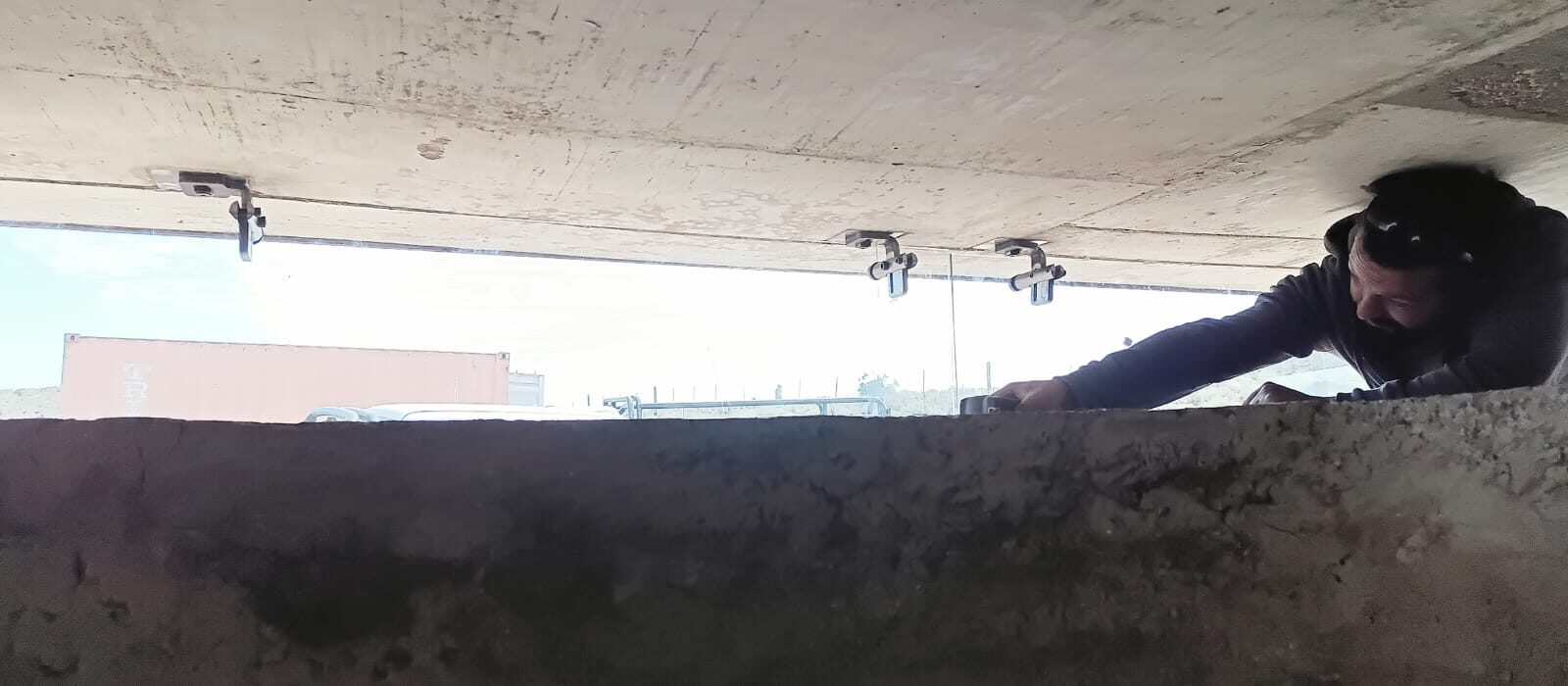
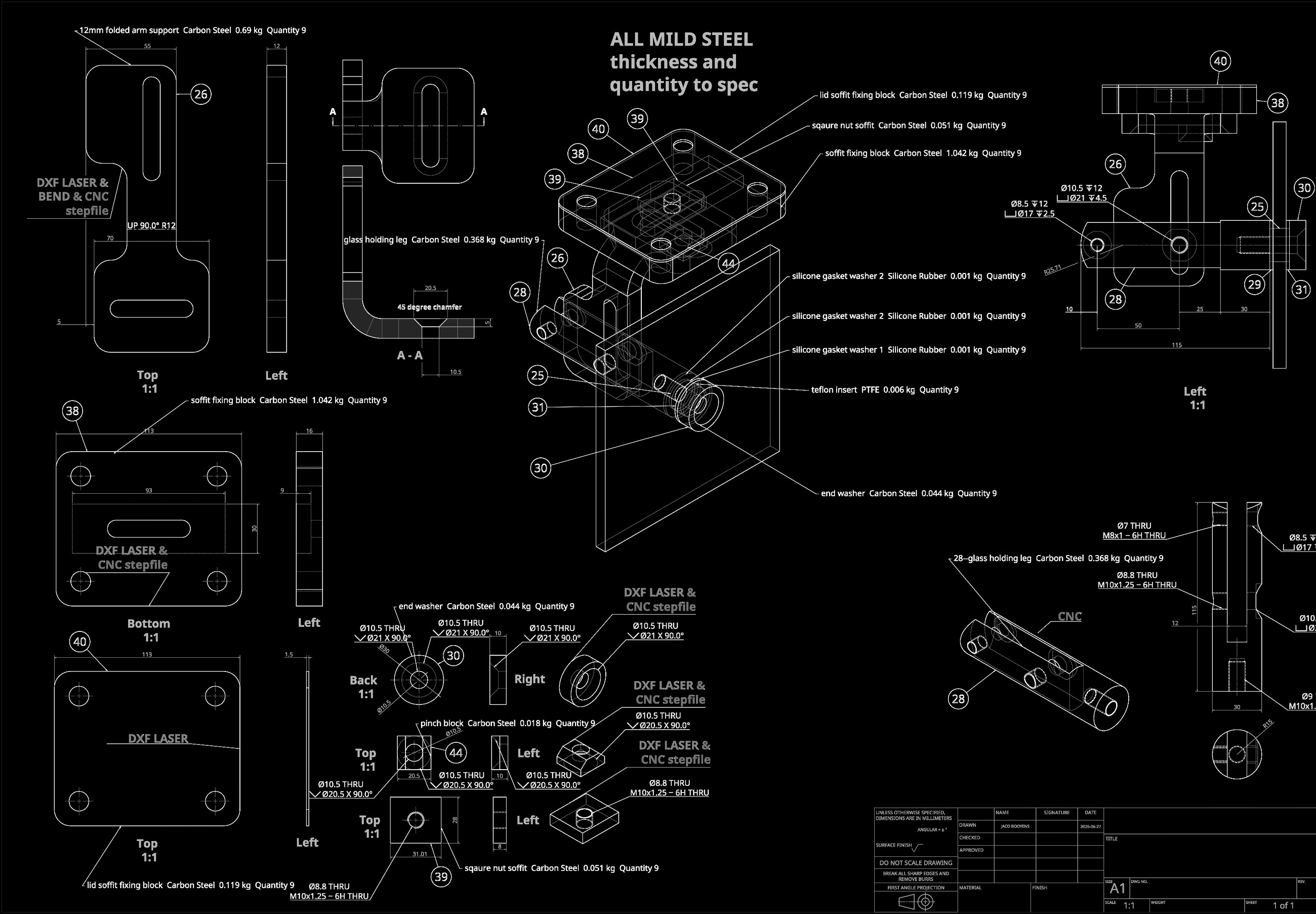
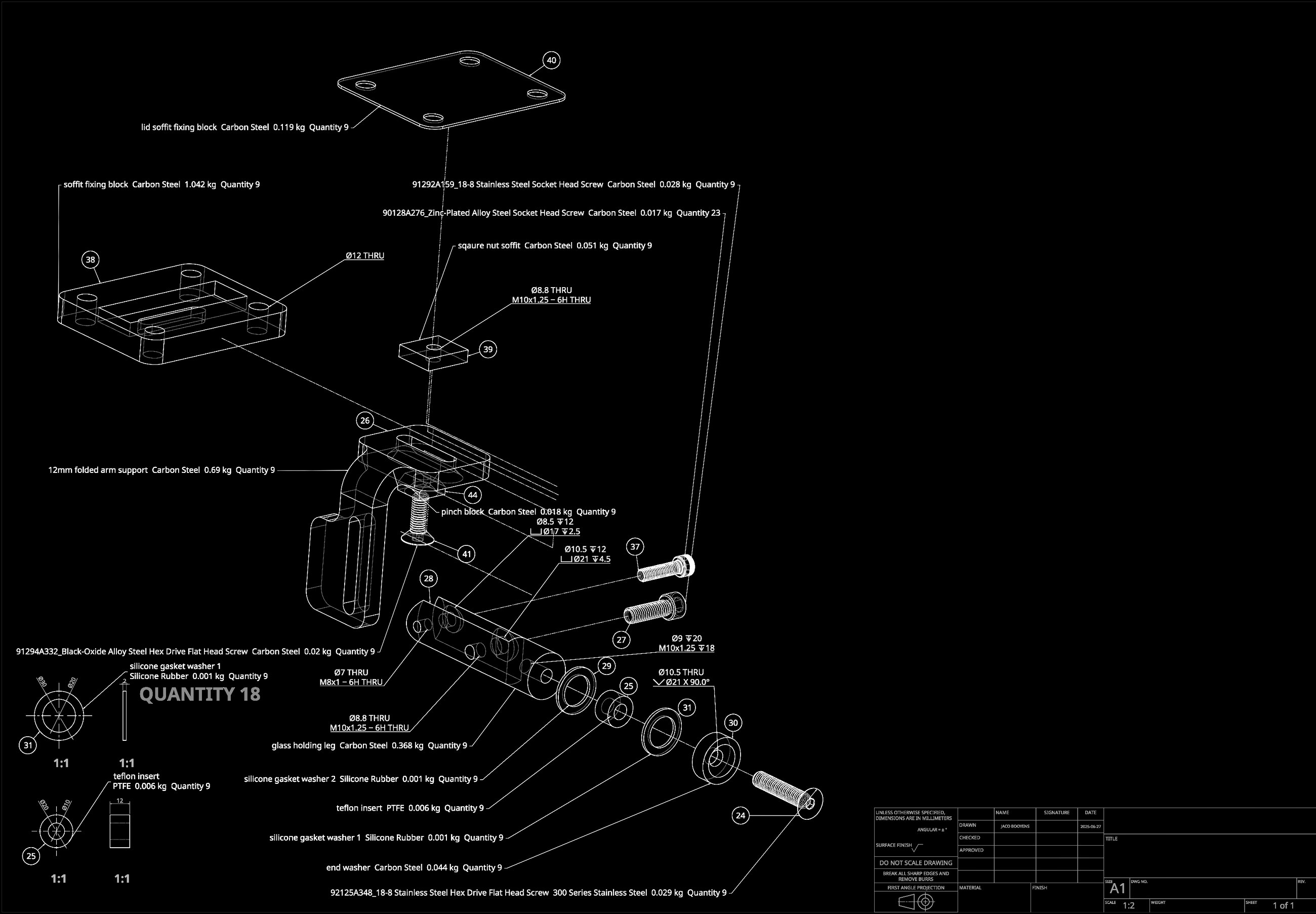
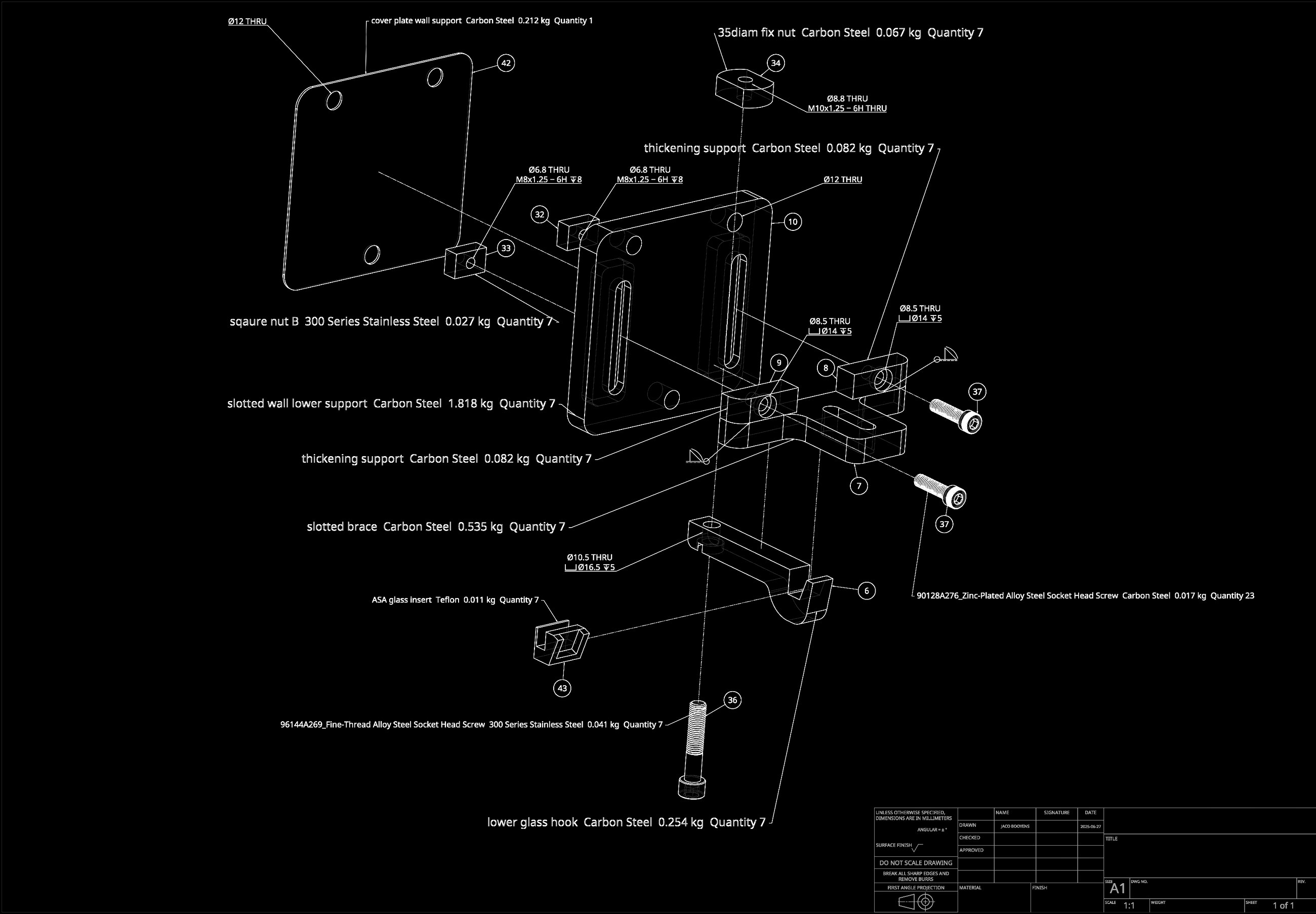
The building holds two almost contradictory material cultures in the same structure. On one side: rammed earth floors compacted by hand, stone walls laid without drawings, a roof sealed with broken fruit pips and gravel gathered from the surrounding veld — construction methods that belong to a tradition older than the colony, indifferent to precision, made from whatever the landscape immediately offered. On the other: glass hangers machined to accurate tolerances, 3D-printed plastic gaskets generated from a stepfile, a counterweighted lifting machine assembled from SKF bearings and an acme lead screw, every component modelled in Onshape before a single piece of steel was cut.
These are not in conflict. The earthen floor works because it is massive and imprecise — its thermal performance comes from bulk, not accuracy. The glass hanger works because it is exact — a tolerance error at the PTFE insert becomes a stress concentration at the glass edge. Each material is used at the scale and with the method that suits its nature. What the building demonstrates is that the two can occupy the same room: the rammed floor underfoot, the precision-hung glass overhead, both doing exactly what they are made to do.